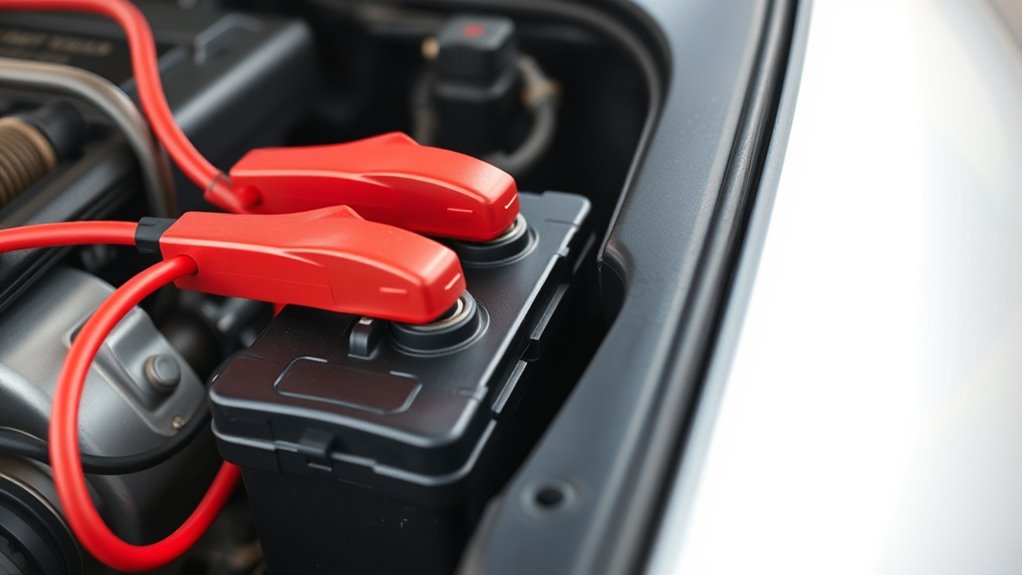
Jump a Car Using a Battery Charger: Step-by-Step Guide
Many drivers have faced the frustration of their car not starting, especially when they’re in a hurry or caught in bad weather. If you’ve ever been there, you’re not alone.
Luckily, jump-starting a car using a battery charger can be a straightforward fix.
If your car won’t start, check for signs like dim lights or a clicking sound. Choose a compatible battery charger and inspect your battery for damage. Connect the charger by attaching the red cable to the positive terminal and the black cable to a ground. Verify it’s off before connecting.
Monitor the charging process, then safely disconnect the cables. Avoid common mistakes for better battery life.
Stay tuned to uncover more tips on troubleshooting and maintaining your battery!
Key Takeaways
- Make sure the battery charger works with your car’s 12-volt system before you start.
- Connect the red cable to the positive terminal and the black cable to a metal ground on the car.
- Turn on the charger and keep an eye on the voltage and current as it charges.
- When you’re done, turn off the charger first, then remove the black cable, and finally the red.
- Regularly check and maintain your battery to help it last longer and avoid future problems.
When to Jump Your Car: Signs of a Dead Battery
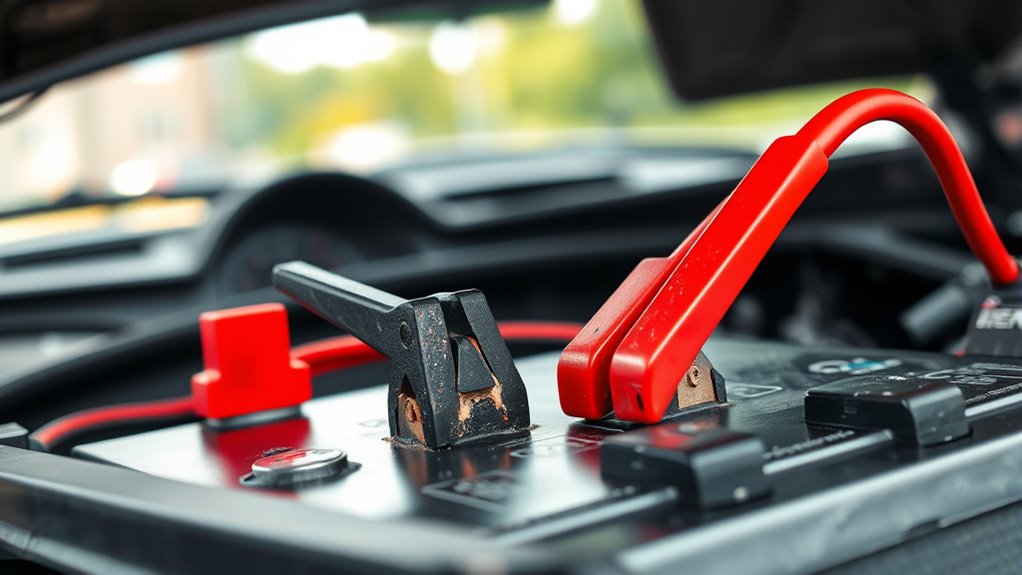
Have you ever turned the key in the ignition only to hear a faint click or nothing at all? That’s one of the most common signs of a dead battery. You might also notice dim headlights or flickering interior lights. These are clear indicators your battery’s struggling to hold a charge.
If your engine cranks slowly or not at all, it’s time to look into the issue further. A dashboard warning light can also signal battery problems. And if you’ve recently used electronics with the engine off and now your car won’t start, chances are your battery is drained.
Before jumping your car, make sure these symptoms are actually present. If you see any of these signs, don’t wait—grab your jumper cables or battery charger and get ready to revive your vehicle. Acting quickly can save you from being stranded.
How to Choose the Right Battery Charger for Your Car
Choosing the right battery charger for your car is pretty important if you want to get your vehicle up and running smoothly. You’ll want to consider the different types of chargers out there, make sure they match your car’s voltage, and also think about the amperage — because that affects how quickly your battery charges. Let’s go over these key points so you can pick the best one for your needs.
Charger Types Explained
In the matter of selecting a battery charger for your car, understanding the different types available can make all the difference. Here are four types to take into account:
- Smart Chargers: These automatically adjust the charging rate and turn off when the battery’s full, preventing overcharging.
- Portable Options: Great for on-the-go situations, these lightweight chargers can easily fit in your trunk.
- Trickle Chargers: Ideal for maintaining battery health, they provide a slow charge to keep your battery topped off.
- Jump Starters: These powerful devices can start your car without needing another vehicle, perfect for emergencies.
Choosing the right charger guarantees your car’s battery stays healthy and ready whenever you need it.
Voltage Compatibility Matters
In regard to picking the right battery charger for your car, understanding voltage compatibility is essential. Most car batteries operate at 12 volts, so you’ll want a charger that matches this voltage.
If you accidentally use a charger with a higher voltage, you risk damaging your battery or even causing a fire. To avoid voltage mismatches, always check the specifications of your charger before using it.
Many chargers come with adjustable settings, allowing you to select the right voltage for your battery. This feature adds flexibility but means you need to be careful.
Amperage and Charging Speed
When choosing a battery charger for your car, understanding amperage is key to charging speed. The amperage you select directly impacts how quickly your battery gets charged and how long the process takes.
Higher amperage chargers can charge your battery faster, but make sure they are compatible with your battery type to avoid any issues.
Larger batteries might need more amperage to charge efficiently, so keep that in mind when selecting a charger.
Some chargers come with different modes like fast and maintenance charging. Pick the one that fits your needs best.
Finally, look for chargers with safety features such as protections against overheating or overcharging to keep your battery and charger safe.
Prepare Your Car: Safety Tips Before Jumping
Before you get started, it’s a good idea to take a quick look at your battery. Make sure there are no visible signs of damage or corrosion—that can save you from potential issues later on. And don’t forget about ventilation! Ensuring there’s proper airflow around your car can help prevent any harmful gases from building up while you’re working on it.
Taking these simple precautions will help keep you safe and make the jump-start process a lot smoother.
Check Battery Condition
Checking your battery’s condition is essential for a safe jump start. Before you connect any cables, you need to assess your battery’s health. Here’s how you can do it:
- Visual Inspection: Look for corrosion around the terminals or any physical damage.
- Battery Testing: Use a multimeter to measure the voltage. A healthy battery should read around 12.6 volts or higher.
- Condition Indicators: Check for built-in indicators. A green light usually means the battery is good, while red signals a problem.
- Age Check: If your battery is over three to five years old, consider replacing it, even if it appears okay.
Ensure Proper Ventilation
After evaluating your battery’s condition, it’s important to guarantee proper ventilation in your vehicle. This step is vital for battery safety because gases can build up during charging.
Make sure your car is in a well-ventilated area to avoid any hazardous situations. Proper ventilation helps prevent gas buildup and reduces the risk of accidents.
Here’s a quick reference table on why ventilation matters:
| Ventilation Importance | Battery Safety | Tips |
|---|---|---|
| Reduces gas build-up | Prevents explosions | Open windows and doors |
| Improves air circulation | Minimizes fumes | Avoid enclosed spaces |
| Guarantees safe operation | Protects components | Check surroundings before starting |
Taking these precautions will help create a safer environment while charging your car battery.
Step-by-Step Guide to Connecting Your Battery Charger
Connecting your battery charger is simple and only takes a few steps. First, make sure you’re using the correct type of charger for your vehicle, whether it’s a trickle or fast charger. Always prioritize safety by wearing gloves and goggles.
Here’s how to connect it:
- Turn Off the Charger: Make sure your battery charger is off before you start connecting it.
- Connect Positive Terminal: Attach the red cable to the positive terminal of the dead battery.
- Connect Negative Terminal: Secure the black cable to the negative terminal of the dead battery, then connect the other end to a metal ground on the car.
- Turn On the Charger: Finally, switch on the charger and keep an eye on the connection.
Following these steps will ensure a safe and effective charging process for your vehicle.
Monitor the Charging Process: Tips for Optimal Charging
While your battery charger is running, it’s important to keep an eye on the charging process to make sure everything’s working correctly. If your charger has a display, check the voltage and current to ensure they’re within the right range for your battery.
Watch the charging time too; most batteries have a recommended charge duration. Overcharging can damage your battery, so try to avoid it. If you notice any strange sounds or smells, unplug the charger right away.
It’s also a good idea to check the connection points for heat periodically. A warm clamp might signal a problem, so make sure the connections are tight and free of corrosion. Staying alert during charging helps keep your battery healthy and performing well over time.
How to Confirm Your Battery Is Fully Charged?
Once you’ve watched the charging process and made sure everything looks good, it’s time to check if your battery is fully charged. Here’s how to do it:
Check the battery indicators. Most chargers have lights that show the charging status. A steady green light usually means your battery is fully charged.
Use a multimeter. Measure the battery voltage— a fully charged car battery should read around 12.6 to 12.8 volts.
Monitor how long it’s been charging. If you know the typical charging time for your battery type, compare it to how long it’s been charging. If it’s gone past that, it’s probably ready.
Listen for any sounds. Some chargers emit noises when the charge is complete. Pay attention to any changes in sound, as that can be a sign your battery is fully charged.
Confirming your battery is fully charged means you’re all set to hit the road!
How to Safely Disconnect Your Charger
Once your battery is fully charged, the first thing you want to do is turn off the charger. It’s a good idea to do this before you start unplugging anything, just to be safe and avoid any sparks or surprises.
After that, carefully disconnect the cables. Taking your time here helps keep everything secure and prevents any damage to the cables or your battery. And that’s pretty much it—safe and simple!
Turn Off Charger First
Before you disconnect the battery charger, make sure to turn it off first to avoid sparks or electrical issues. This step is especially important when working with different types of batteries.
Here’s how to do it safely:
- Locate the power switch: Find the off switch on your charger.
- Turn it off: Flip the switch to the “off” position and wait a moment.
- Unplug the charger: Once it’s off, carefully remove it from the outlet.
- Store safely: Keep the charger in a dry, cool place so it’s ready for next time.
Disconnect Cables Carefully
After you’ve powered off and unplugged the battery charger, it’s important to disconnect the cables carefully to avoid any shocks or damage. Start by removing the negative (black) cable first. This helps reduce the risk of a short circuit.
Once that’s off, carefully remove the positive (red) cable. Always handle the cables by their insulated ends to stay safe.
Next, make sure the cables are neatly coiled to prevent tangling or damage when storing. Good cable management keeps your workspace tidy and helps your charger last longer.
Finally, double-check that everything is unplugged and stored securely before you leave. Following these steps ensures a safe and smooth disconnection process.
Mistakes to Avoid When Jumping Your Car
When you’re jumping your car, missing important precautions can cause serious damage or even injury. Many people fall for common myths about the process, so it’s crucial to stay informed.
Here are four mistakes to watch out for:
- Connecting Cables Incorrectly: Always connect positive to positive, then attach negative to a grounded metal surface. This helps prevent sparks and damage.
- Not Using Safety Gear: Wear gloves and goggles to protect yourself from potential sparks or acid splashes.
- Jumping a Completely Dead Battery: A completely dead battery can be damaged by jumping. Make sure the battery has some charge before attempting to jump-start.
- Ignoring the Charger’s Settings: Set the charger to the right voltage and amperage. Using incorrect settings can harm the battery or the electrical system.
Troubleshooting Battery Issues: Why Your Car Won’t Start?
Have you ever turned the key in your ignition only to be met with silence? If so, you might be facing battery issues. A common symptom is dim headlights or clicking sounds when you try to start the engine, indicating low battery capacity.
Before you attempt a jump start, check the electrical connections for corrosion or looseness. These issues can prevent proper charging and may lead to further problems.
Also, consider whether you’ve been keeping up with your battery maintenance. Neglect can result in sulfation, which diminishes your battery’s effectiveness over time.
When you jump start your car, always prioritize charging safety by following the correct procedures to avoid damage.
If the car still won’t start after a jump, it might be time to test your battery or consult a professional. Identifying these issues early can save you time and frustration down the road.
Battery Maintenance Tips for Longevity
Keeping your battery in good shape is key to avoiding those frustrating no-start situations. Here are some essential battery maintenance tips to improve longevity:
- Regular Inspections: Check for corrosion on terminals and clean them as needed. This helps ensure good connections and peak performance.
- Charging Frequency: Don’t wait until your battery’s dead to charge it. Regularly charging your battery can prevent deep discharges and extend its life.
- Temperature Matters: Keep your battery in a stable environment. Extreme heat or cold can affect performance and lifespan, so try to park in shaded or sheltered areas.
- Limit Short Trips: Frequent short drives can prevent your battery from fully charging. Aim for longer trips occasionally to guarantee a full charge.
Frequently Asked Questions
Can I Jump My Car in Cold Weather?
Yes, you can jump your car in cold weather, but you’ll want to take some precautions. Cold temperatures can impact your battery’s performance, so make sure both batteries are fully charged before you try.
Use proper jump start techniques, like connecting the cables in the right order and making sure you get a solid connection. It’s also a good idea to let the dead battery warm up a bit before attempting to jump start it for better results.
Is It Safe to Jump a Hybrid Vehicle?
Absolutely, it’s safe to jump a hybrid vehicle! However, you should stay savvy about battery differences.
Hybrid safety’s essential, so always check your owner’s manual first. Use a quality charger designed for hybrids, and make sure the vehicle’s off before connecting.
Keep a cool head and avoid touching any exposed wires. With the right precautions, you can jumpstart your hybrid without hassle.
Just remember, safety first!
What if My Charger Doesn’T Have an Automatic Shut-Off?
If your charger doesn’t have an automatic shut-off, you’ll need to stay alert. Keep an eye on the charging process and make sure everything looks normal.
Set the charger to the right settings and check on it regularly. It’s also important to follow safety tips, like keeping the charger away from moisture and ensuring good ventilation.
If you hear strange sounds or smell something unusual, disconnect the charger immediately. Always put safety first to prevent any potential hazards while charging your vehicle’s battery.
How Long Does It Take to Charge a Dead Battery?
How long do you think it takes to charge a dead battery?
Charging time can vary from a few hours to overnight, depending on the charger and battery health.
If your battery’s in good shape, a quality charger might bring it back in just a few hours. But older batteries may take longer to charge.
Always check your charger’s specifications and keep an eye on the process to make sure everything’s working properly!
Can I Use Any Charger for My Car Battery?
No, you can’t use just any charger for your car battery. Charger compatibility matters because different battery types like lead-acid or lithium-ion need specific chargers.
Always check your battery’s specifications and match them with the charger to avoid damage. Using the wrong charger can lead to inefficient charging or safety hazards.
It’s best to stick with a charger designed for your battery type to get the best performance and stay safe.
Conclusion
Jumping your car with a battery charger might seem intimidating at first, but with a little know-how, it’s actually pretty straightforward.
Getting your engine to roar back to life is a satisfying feeling, especially after dealing with a dead battery.
Just follow these simple steps and steer clear of common mistakes, and you’ll soon be confident handling car troubles.
Remember, keeping your battery healthy with a battery charger is key for smooth rides ahead!