7 Simple Steps to Safely Connect Your Car Battery Charger
Many car owners know the stress of a dead battery and the fear of mishandling a charger. You’re not alone—safely connecting a car battery charger can feel intimidating at first.
But with a little guidance, you can do it confidently and avoid any accidents.
To safely connect your car battery charger, first, gather your tools and safety gear. Identify your battery type and turn off your vehicle.
Hook up the charger by attaching the red clamp to the positive terminal and the black to the negative. Adjust charger settings for ideal performance, then monitor the charging process closely.
Once fully charged, safely disconnect the charger in the reverse order.
Want to find out more tips for a secure charging experience?
Key Takeaways
- Gather the necessary tools and safety gear, like gloves, goggles, and a compatible battery charger, to keep everything safe and straightforward.
- Check the battery type and its specific charging needs so you don’t accidentally damage it during the process.
- Turn off your vehicle first, then connect the charger securely, attaching the red clamp to the positive terminal and the black to the negative.
- Keep an eye on the charging indicators, and disconnect the charger once the battery is fully charged or if you notice any issues.
- When removing the cables, start with the negative, and make sure you’re wearing safety gear. Be careful to avoid letting tools touch metal parts.
Gather Your Tools and Safety Gear

Before you start charging your car battery, it’s crucial to gather all necessary tools and safety gear. First, pull together a tools checklist that includes a car battery charger, jumper cables, and a multimeter. These items are important for a successful charging process.
Next, don’t forget your safety essentials. Grab a pair of safety goggles and gloves to protect your eyes and hands. A fire extinguisher can be a lifesaver in case of any unexpected incidents, so keep one nearby just in case.
Ensure you have a clean, well-lit workspace to avoid any hazards while you work. Double-check that your charger is compatible with your battery type; this’ll save you time and prevent damage. By being prepared with the right tools and safety essentials, you’ll set yourself up for a smooth and safe battery charging experience.
Identify Your Battery Type and Charger
Before you start charging, it’s really important to figure out what kind of battery you have and what charger you should be using. Different types of batteries, like lead-acid or lithium-ion, need specific chargers to work safely and effectively.
Getting to know these details beforehand helps you charge your battery the right way and keeps you away from any potential problems or accidents.
Battery Type Overview
Understanding your car battery type is essential for safe charging. Vehicles usually use lead acid batteries, lithium-ion batteries, gel batteries, or AGM batteries. Each type has unique features that influence how you should charge them.
Lead acid batteries are reliable but need regular maintenance, while lithium-ion batteries tend to last longer and handle deeper charging cycles. Gel batteries are sealed and require careful charging to prevent damage.
AGM batteries are spill-proof and also need specific chargers. Always follow maintenance tips tailored to your battery type to ensure it lasts longer. Identifying your battery correctly helps you pick the right charger and stay safe during the process.
Charger Specifications Explained
Knowing your battery type helps you pick the right charger. Different chargers are made for different needs, so understanding voltage ratings and amperage settings is key for the best performance.
Always double-check that your charger matches your battery’s specifications before plugging in. Here’s a quick reference table to guide you:
| Battery Type | Charger Type | Safety Features |
|---|---|---|
| Lead-Acid | Standard | Overcharge protection |
| AGM | Smart/Automatic | Temperature control |
| Lithium-Ion | Dedicated | Short-circuit prevention |
| Gel | Manual | Reverse polarity alert |
| Flooded | Solar | Built-in fuses |
Follow these maintenance tips and consider your battery’s specs to ensure safe and efficient charging.
Turn Off Your Vehicle Before Charging
Before you start charging your car battery, make sure your vehicle is turned off. It’s a small step, but it’s really important for safety. Turning off the car helps prevent any electrical issues and makes sure your charger can do its job properly.
Doing this also helps protect your vehicle from potential damage. Plus, it keeps everything safe for you too. So, before plugging in, just take a second to turn off your car — it’s worth it!
Importance of Safety First
While you might be eager to get your vehicle charged, turning off your engine first is really important for safety. This simple step helps you avoid potential hazards like electrical shorts or battery damage.
By following this safety tip, you’re not just protecting your vehicle but also keeping yourself safe. When the engine’s running, various systems are active, which can create risks during charging.
You also lower the chance of sparks igniting any nearby flammable substances. Taking a moment to switch off your engine can prevent accidents and make the charging process smoother.
Prioritizing safety first is a smart move that pays off in the long run.
Preventing Electrical Damage
To prevent electrical damage during charging, always turn off your vehicle first. This simple step helps protect both your car’s electrical system and the charger. When your engine is running, it can create voltage spikes that might harm sensitive electronic components. Following this battery maintenance tip ensures a safer charging environment.
Also, check all connections and make sure they’re secure before you start charging. Loose connections can cause arcing or short circuits, which increase the risk of damage. Taking these precautions not only extends your battery’s life but also keeps your vehicle’s electrical system in good shape. Always put safety first to avoid costly repairs later on.
Ensuring Proper Functionality
Ensuring your vehicle is turned off before charging is essential for optimal battery performance.
Starting to charge with the engine running can interfere with the battery’s health.
It can lead to uneven charging and potential damage over time.
This practice not only puts your battery at risk but also reduces charging efficiency.
How to Hook Up Your Charger Right?
Hooking up your charger correctly is essential for safety and efficiency. First, make sure your car is turned off and parked somewhere with good ventilation.
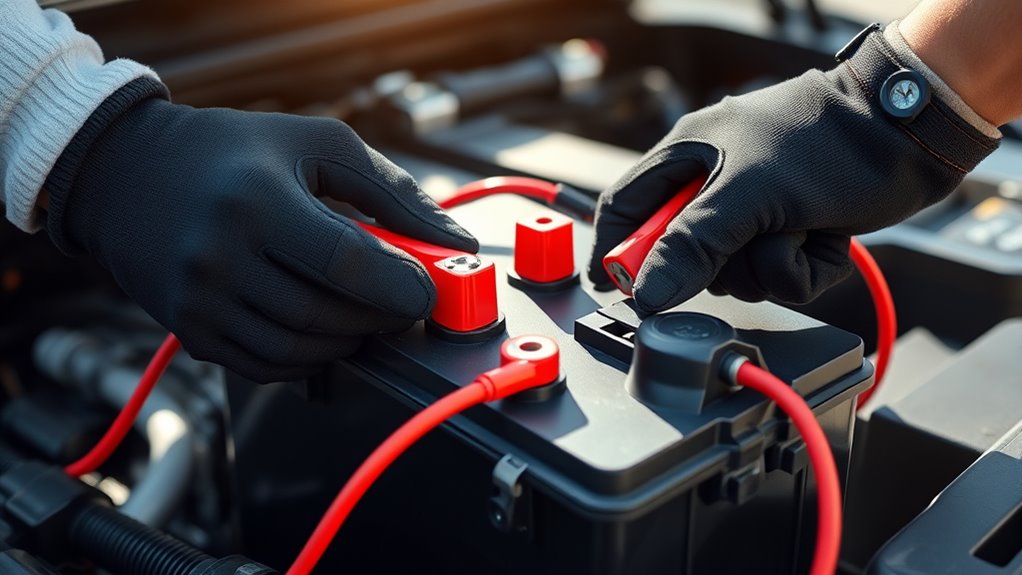
Identify the positive and negative terminals on your battery. Attach the red (positive) clamp to the positive terminal and the black (negative) clamp to the negative terminal. This simple step helps prevent sparks and damage.
Double-check that your connections are secure. If you’re using a smart charger, it usually handles the charging process automatically, ensuring your battery stays in good shape.
Make sure you only connect the clamps to the battery terminals to avoid any risks. Once everything is hooked up, plug in the charger and follow the manufacturer’s instructions.
Always wear safety glasses and gloves for extra protection. Following these steps will help you charge your vehicle’s battery safely and effectively.
Adjust Charger Settings for Optimal Charging
After connecting your charger, adjusting its settings can really improve the charging process. First, check the available charging modes on your device. Most chargers have options like standard, fast, or trickle charging. Picking the right one based on your battery’s condition is key.
If your battery is deeply discharged, a slower mode might be better. It helps to charge safely and prevents damage. Next, set the ideal voltage for your battery type. Lead-acid batteries usually need around 12.6 to 12.8 volts, while lithium batteries might require different settings.
Be sure to refer to your battery’s specifications for guidance. Making these adjustments ensures a safer, more efficient charging experience.
Monitor the Charging Process and Stay Safe
While your car battery is charging, it’s important to keep an eye on the process to make sure everything runs smoothly. Monitoring the charging indicators helps you spot any issues early and keeps your battery in good shape.
Here’s a quick reference table to guide you:
| Charging Indicator | Meaning | Action Required |
|---|---|---|
| Steady Green | Fully charged | Disconnect the charger |
| Blinking Yellow | Charging in progress | Continue monitoring |
| Steady Red | Fault detected | Stop charging and check |
| Flashing Green | Maintenance needed | Inspect battery health |
| No Light | No power | Check connections |
Safely Disconnect Your Car Battery Charger After Charging
Once your battery’s charged and you’ve checked the indicators, it’s time to safely disconnect the charger. First, turn off the charger completely. This step is important because it helps prevent sparks when you disconnect.
Next, use proper techniques: always remove the negative (black) cable first, then the positive (red) cable. Doing it in this order helps reduce the risk of short circuits.
While disconnecting, make sure you’re wearing safety gloves and goggles to protect against any potential battery acid or sparks. Also, double-check that the charger is unplugged from the wall before touching any cables.
After you’re done, ensure everything is secure and tidy. Following these safety steps keeps you safe and helps your battery last longer. With these simple tips, you can finish your charging session confidently and safely.
Frequently Asked Questions
Can I Charge My Battery in Cold Weather?
Yes, you can charge your battery in cold weather, but keep in mind that battery performance drops in cold temperatures. Charging might take longer, and the battery may not accept a full charge efficiently.
If possible, warm the battery slightly before charging. Make certain you use a charger designed for low temperatures to guarantee safety and effectiveness.
Always monitor the battery’s condition during the process to prevent any issues.
How Long Does It Take to Charge a Car Battery?
Charging a car battery can feel like waiting for a snail to cross a marathon! Typically, it takes anywhere from 4 to 24 hours, depending on the battery and charger power.
If you’ve got a high-powered charger, you might see results faster, but patience is key. If you’re in a hurry, a quick boost can help, but don’t expect a full charge.
Keep your charger handy for those unexpected moments!
What Should I Do if My Charger Sparks?
If your charger sparks, unplug it from the battery right away and check for any damage. Sparks can be a sign of a problem, so it’s best to be cautious.
Make sure you’re using a charger that’s made for your specific battery type. Double-check that all connections are clean, tight, and secure before plugging it back in.
If sparks keep happening, stop using the charger and refer to the manual or get advice from a professional. Keeping safety in mind helps prevent accidents and keeps everyone safe during the charging process.
Can I Use a Charger on a Dead Battery?
Yes, you can use a charger on a dead battery, but make sure it’s compatible. Check your battery maintenance tips to confirm you’re using the right charger type for your specific battery.
If you’re unsure, it’s a good idea to look at your vehicle’s manual or the charger’s guidelines. Always double-check compatibility before connecting your charger.
This helps you avoid potential damage and ensures you get the best performance from your battery.
Is It Safe to Charge While the Battery Is Still in the Car?
Charging a battery in your car can feel like dancing on a tightrope—one wrong move, and it’s over. Yes, it’s generally safe to charge your battery while it’s still in the car, but you need to follow some precautions.
Make sure you’ve got good ventilation and check for corrosion. Regular battery maintenance is key; it helps extend the life of your battery and keeps you safe on the road.
Conclusion
By following these seven simple steps, you’re not just charging your battery; you’re helping extend your vehicle’s lifespan. Remember, a little caution can go a long way—like a sturdy bridge over turbulent waters.
Always double-check that your tools are ready, your settings are correct, and stay alert throughout the process. Safety first, after all.
With these precautions, you can connect your car battery charger confidently. This way, your car will be ready to hit the road whenever you are. Safe travels ahead!