How Do You Calculate Gear Ratio Simply?
Are you often frustrated trying to figure out how gear ratios work? You’re not alone—many people struggle with understanding how to calculate gear ratios and why they matter.
Whether you’re into DIY projects or just want to optimize your machinery, knowing this can make a big difference.
To calculate gear ratio simply, you just divide the number of teeth on the driven gear by the number of teeth on the driving gear. For instance, if your driving gear has 10 teeth and the driven gear has 30, the gear ratio is 3:1.
This means the driven gear turns once for every three turns of the driving gear.
Understanding this can really help you optimize performance, and there’s even more to uncover about gear setups and their effects.
Key Takeaways
- Divide the number of teeth on the driven gear by the number of teeth on the driving gear to find the gear ratio.
- For example, if the driving gear has 10 teeth and the driven gear has 30 teeth, the ratio is 3:1.
- A higher gear ratio means more torque but less speed, while a lower ratio offers more speed and less torque.
- Always simplify ratios for easier performance analysis and understanding of gear interactions.
- Double-check your calculations to avoid mistakes and ensure accurate gear performance evaluation.
What Is Gear Ratio and Why Does It Matter?
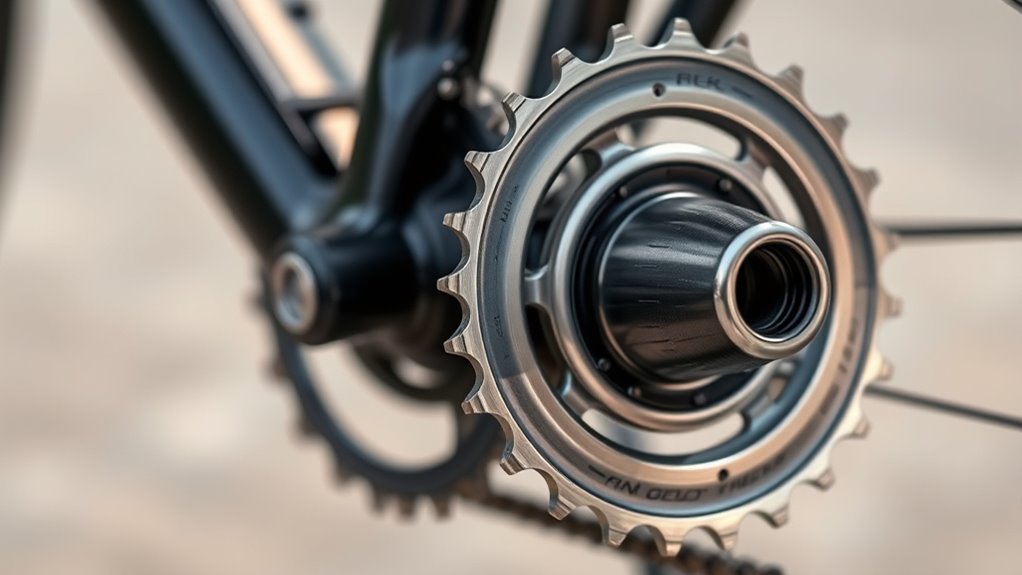
Gear ratio is a fundamental concept in mechanical systems, affecting everything from bicycles to cars. When you understand gear mechanics, you unlock the ability to optimize performance.
Basically, the gear ratio defines the relationship between the number of teeth on two gears. This ratio determines how much torque and speed you gain or lose.
The gear ratio reveals how the teeth on two gears interact, influencing your torque and speed.
For instance, a higher gear ratio means you get more torque but at the expense of speed. This is especially useful when climbing steep hills.
On the flip side, a lower gear ratio allows for higher speeds but gives you less torque. By adjusting gear ratios, you can greatly improve efficiency in your system, whether you’re racing or commuting.
Knowing the right gear ratio helps you make smarter decisions about your vehicle’s performance. It’s not just theoretical — it’s practical and essential for anyone looking to maximize efficiency.
The Simple Formula for Calculating Gear Ratios
Understanding gear ratios is key to maximizing performance, and calculating them is simpler than you might think.
The core of gear ratio fundamentals lies in the relationship between the number of teeth on two gears.
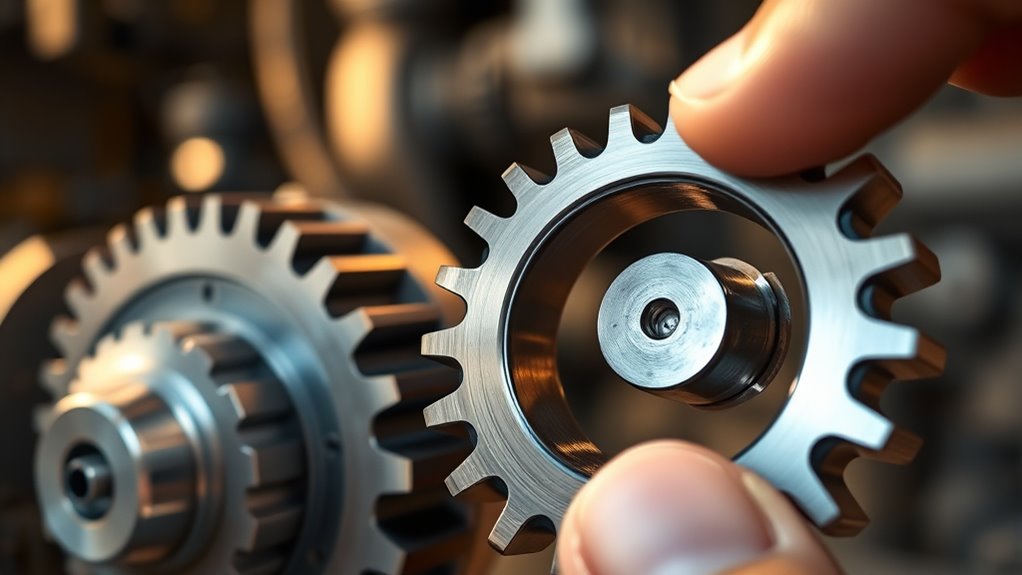
To find the gear ratio, just divide the number of teeth on the driven gear (the one being turned) by the number of teeth on the driving gear (the one doing the turning).
For example, if your driving gear has 10 teeth and the driven gear has 30, your gear ratio is 30 divided by 10, which equals 3:1.
This means the driven gear turns once for every three turns of the driving gear.
By understanding these gear teeth relationships, you can easily see how different gear combos will affect performance, speed, and torque.
With this simple formula, you’re well on your way to mastering gear ratios!
Step-by-Step Guide to Calculate Gear Ratio
Calculating gear ratios doesn’t have to be complicated. Just follow these simple steps:
- Identify the number of teeth on both the driving gear (input) and the driven gear (output).
- Use the formula: Gear Ratio = Number of Teeth on Driven Gear divided by Number of Teeth on Driving Gear.
- Analyze your gear selection based on the ratio to make sure you get the right torque distribution.
Here’s a quick reference table to help you visualize:
| Driving Gear Teeth | Driven Gear Teeth | Gear Ratio |
|---|---|---|
| 10 | 40 | 4:1 |
| 15 | 30 | 2:1 |
| 20 | 60 | 3:1 |
| 25 | 50 | 2:1 |
Using this method, you can easily find the gear ratio for any setup. Enjoy enhancing your performance!
How to Identify the Gears in Your Setup
Identifying the gears in your setup is simple and key to boosting performance. Start by checking out the types of gears you have—common ones are spur, bevel, and worm gears. Each has a specific role, so knowing what they do helps you make better adjustments.
Next, look at what material the gears are made of. Gears can be metal, plastic, or composite. Metal gears are tough but heavier, while plastic ones are lighter and quieter.
Pay attention to how the gears are arranged—whether they’re in series or parallel—and how they work together. This setup affects how efficient your system is. Knowing the gear types and materials helps you evaluate performance and make the right changes.
With this info, you’re all set to optimize your gear system and improve its performance.
Typical Gear Ratios for Bicycles and Cars: What You Need to Know
In relation to optimizing performance, knowing typical gear ratios for bicycles and cars is essential. It helps you choose the right setup for your needs, whether you’re cruising on a bike or driving a car.
Here are some key ratios to keep in mind:
Bicycles: Common gear ratios range from 1:1 for climbing steep hills to 3:1 for flat terrain, making pedaling more efficient.
Road Bikes: Usually use ratios around 2.5:1, balancing speed and climbing ability.
Mountain Bikes: Tend to have lower ratios like 1.5:1, better suited for rough terrain.
Car Transmissions: Typically fall between 3:1 and 4:1, optimizing acceleration and fuel efficiency.
The Impact of Gear Ratios on Performance and Speed
Understanding gear ratios helps you pick the right setup for your bicycle or car. It also plays a big role in how performance and speed are affected. When you change gear ratios, you’re tuning your vehicle for specific situations.
Here’s a quick look at how different gear ratios impact speed and performance:
| Gear Ratio | Performance Tuning | Speed Optimization |
|---|---|---|
| Low | Better acceleration | Lower top speed |
| Medium | Balanced response | Moderate speed |
| High | Speed-focused | Less torque |
How Gear Ratios Work in Different Machines
Understanding how gear ratios work is pretty important if you want to get a handle on how different machines operate. Basically, gear ratios determine how speed and torque are transferred between gears, which can make a big difference in how a machine performs.
In cars, for example, gear ratios help you find that sweet spot between speed and power. When you’re changing gears, you’re essentially adjusting the gear ratio to match what you’re trying to do—like going faster or climbing a hill.
In industrial machines, gear ratios are all about boosting efficiency and performance. They help machines run smoothly and do more work with less effort. So, whether it’s in your car or in big factory equipment, understanding gear ratios gives you a better idea of how these machines work behind the scenes.
Gear Ratio Basics Explained
Gear ratios are important because they determine how machines work, affecting speed and torque. Understanding the terminology helps you see how different gear types connect and operate.
Here’s a simple comparison of gear types to make things clearer:
- Spur Gears: Great for simple tasks, they transfer high speed with little noise.
- Helical Gears: These run smoother and handle heavier loads, making them ideal for big machinery.
- Bevel Gears: Used when gears need to change the direction of rotation, often found in drills.
- Worm Gears: Perfect for high torque at low speeds, commonly used in conveyor systems.
Applications in Automotive Systems
While you might not realize it, gear ratios are crucial in automotive systems. They influence everything from how quickly your car accelerates to how fuel-efficient it is.
Choosing the right gear ratio helps optimize engine performance and makes your transmission work more smoothly. This makes your drive feel more responsive and comfortable.
Here’s a quick look at how different ratios affect your vehicle:
| Gear Ratio | Effect on Performance | Common Application |
|---|---|---|
| Low Ratio | Better acceleration | Sports cars |
| High Ratio | Improved fuel economy | Highway driving |
| Balanced Ratio | Versatile performance | Daily commuters |
Impact on Industrial Machinery
In automotive systems, gear ratios are crucial for performance, but their influence reaches well beyond just vehicles. In industrial machinery, understanding gear ratios is key to improving how your equipment runs.
Higher gear ratios can boost efficiency by reducing energy loss during operation. Proper gear selection helps you manage torque, keeping your machinery running smoothly under different loads.
Adjusting gear ratios allows for better speed control, which is vital for precise manufacturing. Plus, effective gear ratios help distribute loads evenly, extending the lifespan of your equipment.
Real-World Uses of Gear Ratios
When you hear about gear ratios, you probably think of cars and bikes right away. They’re pretty important because they help determine how smoothly your vehicle accelerates or how easily your bike can handle different terrains.
Knowing how gear ratios work can actually make a big difference in your driving or cycling experience. For example, in a car, a lower gear ratio can give you better torque for climbing hills, while a higher ratio might help you go faster on the highway. On a bike, adjusting the gear ratio can make pedaling easier when you’re going uphill or allow you to pick up speed on flat roads.
Getting a good grasp of these real-world uses can really help you get the most out of your vehicle or bike, making rides smoother and more efficient.
Automotive Applications
Gear ratios are really important in automotive performance, influencing everything from how quickly your car accelerates to how fuel-efficient it is. Knowing how they work can help you make smarter choices for your vehicle.
For example, lower gear ratios mean faster acceleration, which is perfect for sports cars. On the other hand, higher gear ratios can boost fuel economy when you’re cruising on the highway.
Adjusting gear ratios also helps tune your engine for specific driving conditions. Plus, different types of transmissions like automatic and manual use gear ratios to give you a better driving experience.
Bicycle Performance Enhancement
Understanding how gear ratios affect your bicycle can really boost your riding experience. When you pick the right gear ratio, you make pedaling more efficient and keep a smooth cadence without getting tired.
A higher gear ratio means more speed but takes more effort, while a lower ratio makes pedaling easier — perfect for climbing hills. Balancing torque is key; it helps you apply the right amount of force without straining.
Try out different gear settings to find what works best for your riding style and terrain. Whether you’re cruising on flat roads or tackling steep inclines, mastering gear ratios can make your rides more enjoyable and efficient.
Common Mistakes When Calculating Gear Ratios
Calculating gear ratios can be tricky, especially if you miss some common pitfalls. Getting the ratio wrong can cause performance issues or even mechanical failures, so it’s important to pay attention.
Here are four common gear mistakes to watch out for:
- Ignoring the Gear Teeth Count: Always double-check how many teeth each gear has. Skipping this step can throw off your calculations.
- Confusing Input and Output Gears: Make sure you know which gear is driving and which is driven. Mixing them up will give you the wrong ratio.
- Forgetting to Simplify Ratios: If your ratio can be simplified, do it! A reduced ratio is easier to understand and use.
- Rounding Too Early: Don’t round numbers before finishing your calculations. Early rounding can lead to big inaccuracies in your final result.
Tips for Optimizing Gear Ratios for Better Efficiency
Getting the right gear ratio is just the starting point; improving it can really boost performance and efficiency. Focus on selecting gears based on what you need—speed, torque, or a mix of both.
Next, try tuning for efficiency. Test out different gear combos to find that perfect balance where power transfer is maximized and losses are minimized. Using simulation tools can help predict how changes will impact performance.
Don’t forget about maintenance. Worn gears can cause inefficiency, so regularly check for wear and replace parts when needed.
Also, consider the weight of your setup. Lighter systems often handle different ratios better, which can improve overall efficiency. By staying proactive in these areas, you can fine-tune your gear ratios for the best results and get the most out of your machinery or vehicle.
Frequently Asked Questions
Can Gear Ratios Change With Different Gear Materials?
Yes, gear ratios can change with different gear materials. The material affects durability and performance.
For example, metal gears usually have better strength and wear resistance compared to plastic ones. This impacts how well they mesh and transfer power.
When you look at gear durability, you’ll see that stronger materials can handle higher loads. This might actually change the effective gear ratio in real-world use.
How Do Temperature Changes Affect Gear Performance?
Ever wondered how heat can impact your gears? Temperature changes can really affect their performance, mainly through thermal expansion.
When gears heat up, they expand, which can change the clearances and cause more friction. This extra friction can strain the lubrication, making it break down faster.
If you’re not mindful of temperature swings, you might notice your gears wearing out quicker. Over time, this can lead to costly repairs or replacements.
What Tools Are Needed for Measuring Gears Accurately?
To measure gears accurately, you’ll need a few essential tools. Start with a caliper for precise gear measurements.
A micrometer can also help with finer details. Don’t forget a gear tooth counter; it’s vital for gear tooth counting.
You might want a dial indicator to check runout and alignment. With these gear measurement techniques, you’ll guarantee your measurements are spot-on, leading to better gear performance in your applications.
Are There Any Software Tools for Calculating Gear Ratios?
Think of gear design as a puzzle waiting to be solved. Yes, there are several software applications that help you calculate gear ratios quickly.
Tools like Gearotic or KISSsoft let you input your gear specifications and instantly show you the ratios you need.
These programs make your calculations easier, so you get accurate results without the hassle. So, dive into these applications and make your gear design process smoother and more enjoyable!
How Do Gear Ratios Influence Noise Levels in Machinery?
Gear ratios directly influence noise levels in machinery by affecting gear efficiency. When you pick the right ratio, it helps transfer power more smoothly.
A well-matched gear ratio reduces noise by minimizing vibrations and mechanical strain. If you notice too much noise, adjusting the gear ratio can boost efficiency and cut down on sound.
This makes your machinery run quieter and more effectively overall.
Conclusion
In the world of mechanics, understanding gear ratios can be the difference between cruising smoothly down a hill and struggling up a steep incline. Whether you’re pedaling your bicycle or maneuvering a car, the right gear ratio can improve efficiency and performance.
So, while one gear might spin slowly and steadily, another can whir rapidly, showcasing the dance of power and speed. Mastering these ratios not only optimizes your ride but also boosts your experience on the road.
To calculate gear ratio simply, you divide the number of teeth on the driven gear by the number of teeth on the driving gear. This gives you a clear idea of how many turns the driven gear makes for each turn of the driving gear.
Knowing how to calculate gear ratio simply can help you choose the best gears for your needs, making your ride smoother and more efficient.