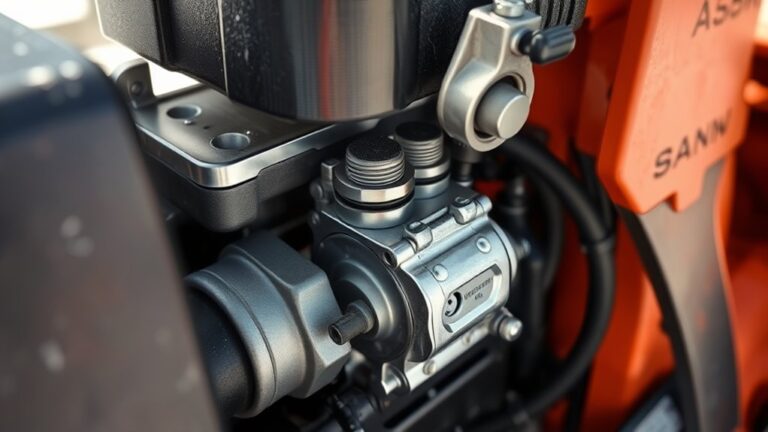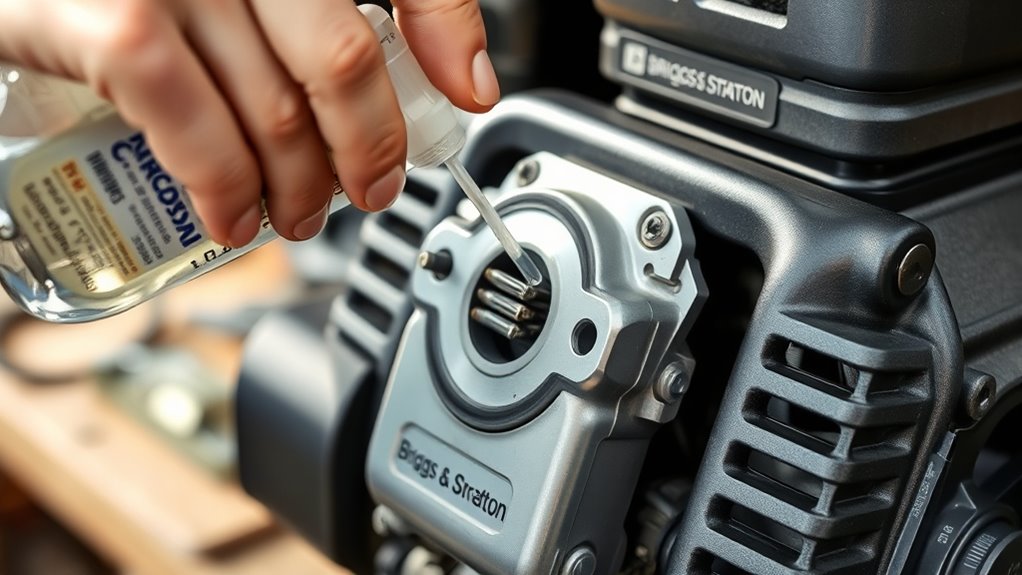
Quick Guide to Clean Briggs and Stratton Carburetor Without Removing
Many Briggs and Stratton engine owners know the frustration of dealing with a carburetor that’s clogged or not running smoothly, but removing it can feel daunting. You’re not alone—cleaning the carburetor without removal is a common goal for many DIY enthusiasts.
Thankfully, with the right approach, you can keep your engine running smoothly without taking out the whole component.
To clean your Briggs and Stratton carburetor without removal, start by gathering essential tools like screwdrivers, carburetor cleaner, and a soft brush.
Access the carburetor near the air filter and tilt the engine if needed. Scrub the components with the cleaner and rinse with clean fuel.
After reassembling, test your engine for unusual sounds or leaks, and check fuel flow.
You’ll find more detailed steps and tips to guarantee your engine runs smoothly.
Key Takeaways
- Find the carburetor near the air filter and make sure you have good lighting so you can see everything clearly during cleaning.
- Tilt the engine or take off the air filter cover to get easy access to the carburetor.
- Spray carburetor cleaner on dirt and deposits, then gently scrub with a soft brush. Be careful not to damage any parts.
- Once cleaned, rinse the components with clean fuel to wash away any leftover residue.
- Put everything back together carefully, making sure all parts are in the right place and secure before running the engine.
Identify Common Engine Problems
When you’re troubleshooting a Briggs and Stratton engine, it’s important to recognize common problems that can come up. One major issue is poor engine performance, which can be caused by a few different things. If your engine has trouble starting or runs unevenly, it might be due to stale fuel or a dirty air filter. These issues can make your engine less fuel-efficient and work harder than it should.
Another common problem is overheating, often caused by low oil levels or a clogged cooling system. If you hear unusual noises or notice a drop in power, it’s a good idea to look into it. Regular maintenance, like checking spark plugs and using good quality fuel, can help prevent many of these problems. Staying proactive and fixing issues early will keep your Briggs and Stratton engine running smoothly and efficiently for years to come.
Spot Signs of a Clogged Carburetor
Noticing signs of a clogged carburetor can save you from bigger engine problems down the line. Keep an eye out for common symptoms like rough idling, stalling, or difficulty starting your engine.
If your equipment struggles to gain power or runs inconsistently, it’s probably time to investigate further. Fuel leaking from the carburetor or air filter is another red flag, indicating a possible blockage.
Black smoke or the smell of gasoline are clear signs there’s an issue. Regular maintenance is key, so consider how often you clean the carburetor. If you use your equipment often, aim to do it every season.
For less frequent use, a good cleaning once a year can help prevent these clogged symptoms. Staying proactive will improve performance and extend the life of your equipment, ensuring smooth operation when you need it most.
Gather Essential Tools for Cleaning
To clean your Briggs and Stratton carburetor effectively, you’ll need a few essential tools. Start by gathering a screwdriver set, as you’ll need it to access various parts.
A can of carburetor cleaner is vital; it helps break down the gunk and deposits inside. Don’t forget a soft brush—this’ll assist in scrubbing away stubborn residue without damaging sensitive components.
You should also have a clean cloth handy for wiping surfaces and collecting debris. For precision work, a pair of needle-nose pliers can be invaluable in extracting small parts.
Finally, consider wearing safety goggles and gloves to protect yourself during the cleaning process. With these essential tools in your arsenal, you’ll be well-equipped to apply effective cleaning techniques and restore your carburetor’s performance without removing it.
Access the Carburetor Without Removal
Accessing the carburetor without removal can save you time and effort during your maintenance routine. Start by locating the carburetor on your Briggs and Stratton engine, usually near the air filter.
Use techniques like tilting the engine or removing obstructive parts, such as the air filter cover, to create a clear path. Make sure you have good lighting to spot any dirt or debris.
Keep your tools handy, like screwdrivers or wrenches, to easily detach any parts blocking access. As you work, wear gloves to protect your hands and prevent spills.
If you notice leaks or heavy buildup, it might be time to consider a deeper clean or seek professional help. With these strategies, you can efficiently access the carburetor and keep your engine running smoothly without removing it.
Clean the Carburetor Step-by-Step
To clean your Briggs and Stratton carburetor effectively, first gather all the supplies you’ll need. This way, everything is within reach and you won’t have to stop halfway through the process. Once you’ve got everything ready, you can move on to accessing the carburetor components. Make sure you can reach all the parts that need a good cleaning so nothing gets overlooked.
After you’ve got everything open and accessible, it’s time to clean those parts thoroughly. Use the appropriate cleaning tools and solutions to remove any dirt, grime, or fuel residue. Once everything is spotless, carefully reassemble the carburetor, making sure all parts are in their correct places. That way, your engine will run smoothly and perform like it’s brand new!
Gather Necessary Supplies
Gathering the right supplies is essential for effectively cleaning your Briggs and Stratton carburetor. Start by creating a supply checklist to make sure you have everything you need.
You’ll need carburetor cleaner, a soft brush, and compressed air to remove dirt and debris. Essential materials like rags or paper towels will help you wipe down parts and catch any spills.
Don’t forget a small container for screws and small components; it’ll keep everything organized. A pair of gloves is also a good idea to protect your hands from chemicals.
Finally, have a screwdriver set ready for any adjustments. With these supplies gathered, you’ll be prepared to tackle the cleaning process efficiently.
Access Carburetor Components
With your supplies in hand, you’re ready to access the carburetor components. First, make sure the engine is off and cool. Remove the air filter cover to see the air filter’s importance; a clean air filter boosts performance and efficiency.
Take out the air filter and inspect it for dirt or damage. If it’s dirty, replace it to help with your carburetor maintenance. Next, locate the carburetor and look for any visible debris or buildup.
You might need to remove the throttle linkage or other obstructions carefully to get better access. Keep track of any screws and parts as you work. Remember, clear access is key for thorough cleaning in the next steps.
Clean and Reassemble Parts
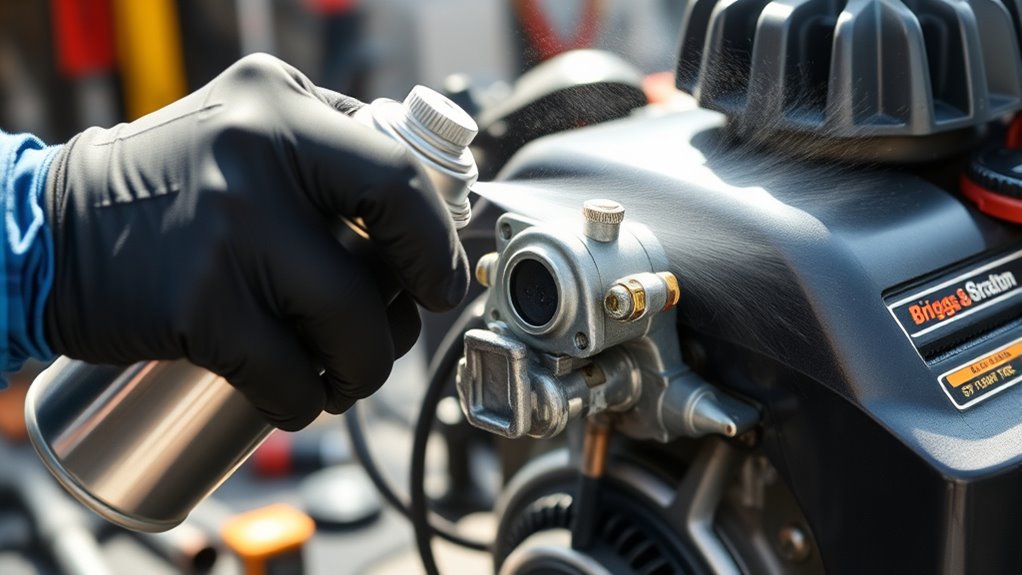
Now it’s time to clean the carburetor thoroughly. Start by spraying all surfaces with carburetor cleaner, paying close attention to the jets and passages. Let the cleaner sit for a few minutes to break down any gunk.
Next, use a soft brush or cloth to scrub away stubborn deposits, making sure not to damage any parts. Rinse everything with clean fuel to wash away any leftover residue.
Once everything’s clean, dry the parts completely. When reassembling, follow your notes and ensure all gaskets are seated properly. This step is crucial for a good seal.
Choose the Right Carburetor Cleaner
Choosing the right carburetor cleaner can greatly impact the performance of your Briggs and Stratton engine. With different carburetor types out there, it’s important to pick a cleaner that fits your specific needs.
Look for features that boost the cleaner’s effectiveness to get the best results. Make sure the cleaner is compatible with your carburetor type to avoid any damage.
Consider the solvent type—going for a non-toxic, biodegradable option is safer for both you and the environment. Also, choose products that are easy to use, like sprays or soak formulas, to make the cleaning process simpler.
Reassemble Components After Carburetor Cleaning
Carefully reassembling the components after cleaning your Briggs and Stratton carburetor is key to making sure it runs well. Start by gathering all your cleaned parts and set up a clean workspace to avoid dirt or debris.
Use proper reassembly techniques. Begin with the float and needle, making sure they fit snugly in their slots. Pay close attention to how everything lines up—misalignment can cause fuel leaks or engine issues.
Next, put the bowl back on and tighten the screws, but don’t overtighten or you might crack the bowl. Check the gaskets and seals before putting everything together. Replace any worn parts to prevent problems down the line.
Finally, reinstall the air filter and intake manifold carefully. Once everything is in place, double-check for loose components. A thorough reassembly helps ensure your engine performs its best when you test it out.
Test Your Engine After Cleaning
Once you’ve reassembled your Briggs and Stratton carburetor, it’s important to test your engine to make sure everything’s working properly. This step helps confirm that your cleaning was effective and can improve engine performance.
Start the engine by turning on the ignition and letting it run for a few minutes. Listen carefully for any unusual sounds that might indicate a problem.
Next, gently rev the engine. It should respond quickly and smoothly without sputtering or stalling.
Finally, check around the carburetor for any signs of fuel leaks. If you see any, it could mean there’s a seal issue that needs attention.
Troubleshoot After Carburetor Cleaning
After cleaning your carburetor, it’s a good idea to do some troubleshooting to make sure everything’s running smoothly. First off, check if the fuel is flowing properly. Sometimes, clogged lines or filters can cause issues, so give everything a quick look.
Next, take a peek at the spark plug. Is it dirty or worn out? A healthy spark plug is key to good engine performance. If it looks questionable, replacing it might do the trick.
Finally, start up the engine and see how it runs. Pay attention to how smoothly it accelerates and whether it stalls or idles rough. These steps will help you spot any remaining problems so you can get your engine back to running efficiently.
Check Fuel Supply Issues
When troubleshooting fuel supply issues after cleaning your Briggs and Stratton carburetor, start by checking the fuel line for blockages or kinks. A clear fuel line is essential for proper engine function.
Next, inspect the fuel filter; a clogged filter can restrict fuel flow, leading to performance problems. Here are a few steps to take into account:
- Examine the fuel line for any visible damage or obstructions.
- Replace the fuel filter if it’s dirty or shows signs of wear.
- Ensure the fuel tank has enough fuel and that the fuel is fresh.
Inspect Spark Plug Condition
Inspecting the spark plug condition is essential, since a faulty spark plug can hinder your engine’s performance even after you’ve cleaned the carburetor. Start by removing the spark plug and checking its condition.
Look for signs of wear, such as cracks or carbon buildup. Depending on the spark plug types you’re using, some may need replacing more frequently than others. If it’s worn out, replace it with the correct type for your engine.
Follow maintenance tips like regularly checking the gap and cleaning the plug to guarantee peak performance. A healthy spark plug can improve combustion, boost efficiency, and help your engine run smoother.
Don’t overlook this important step in your maintenance routine!
Test Engine Performance Stability
Once you’ve cleaned the carburetor, it’s important to test the engine’s performance stability to make sure everything’s working properly. Start the engine and watch how it runs.
Look for signs that your engine tuning and fuel mixture are set correctly. Here are a few key checks:
- Smooth Idle: Make sure the engine idles evenly without stalling or surging.
- Acceleration Response: See how quickly the engine responds when you give it throttle.
- Exhaust Emissions: Check for excessive smoke or strange smells, which could mean the fuel mixture is too rich.
If you notice any problems, try fine-tuning the carburetor or checking for air leaks. A steady engine performance indicates you’re on the right track after cleaning.
When to Call a Pro for Carburetor Troubles?
How can you tell if it’s time to call in a professional for your carburetor issues? If your engine keeps stalling, idles roughly, or is hard to start, it might be time to get some help. While you can handle minor cleaning and adjustments, some problems are better left to the pros.
If you’ve tried basic troubleshooting and still have issues, don’t hesitate to reach out for professional service. They can diagnose hidden problems like fuel leaks or internal damages that you might miss.
If you notice a strong smell of fuel or find that your engine’s performance gets worse after your attempts, these are clear red flags.
Frequently Asked Questions
Can I Clean a Carburetor Without Special Tools?
Yes, you can clean a carburetor without special tools. For effective maintenance, start by spraying carburetor cleaner into the openings and letting it soak.
You can also use a soft brush to remove any gunk. Make sure to clean the fuel lines and filter as well.
Regular maintenance like this will help keep your engine running smoothly, so don’t overlook this simple task!
How Often Should I Clean My Carburetor?
You should clean your carburetor at least once a season, especially if you use your equipment often.
Many folks believe that a clean carburetor runs better and lasts longer. Turns out, they’re right! Regular maintenance helps prevent clogs and keeps your equipment performing its best.
If you notice rough idling or poor fuel efficiency, it might be time to clean it, no matter how often you usually do.
Is It Safe to Use Carburetor Cleaner Indoors?
No, it’s not safe to use carburetor cleaner indoors. These cleaners often contain strong chemicals that can produce harmful fumes, which can be dangerous to your health.
If you need to clean a carburetor, try using safer, eco-friendly cleaner options that are made for indoor use. Always make sure your space is well-ventilated if you have to work inside.
But it’s best to handle these products outside whenever possible to keep yourself safe indoors.
What Are the Risks of Not Cleaning the Carburetor?
Neglecting to clean your carburetor is like ignoring a ticking time bomb. It can cause your engine to sputter and stall, making your ride unreliable.
Over time, gunk and deposits build up, choking your engine’s efficiency. This buildup can lead to poor performance and even damage.
You might end up facing costly repairs instead of smooth operation. Regular maintenance, like cleaning, can save you headaches and keep your engine running smoothly.
Don’t let dirt steal your power. A little upkeep goes a long way in preventing bigger problems down the road.
Can I Use Water to Clean the Carburetor?
You shouldn’t use water to clean the carburetor. While it might seem like a quick fix, water can cause rust and damage sensitive parts.
For effective carburetor maintenance, stick to approved cleaning methods like carburetor cleaner or solvent. These products break down grime without adding moisture.
Always make sure to dry all parts thoroughly before reassembling. This helps maintain peak performance and prolongs your engine’s life.
Conclusion
Now that you’ve cleaned your Briggs and Stratton carburetor, it’s time for the moment of truth. Will your engine roar back to life or sputter in defiance? As you turn the key, hold your breath—this is where your hard work pays off.
If it runs smoothly, you’re in the clear! But if it doesn’t, don’t panic. Remember, you’ve got the skills to troubleshoot. Sometimes, a little tweaking is all that’s needed to get everything running perfectly.
And if all else fails, calling a pro might just save the day. With your carburetor cleaned, your Briggs and Stratton engine should run like new.