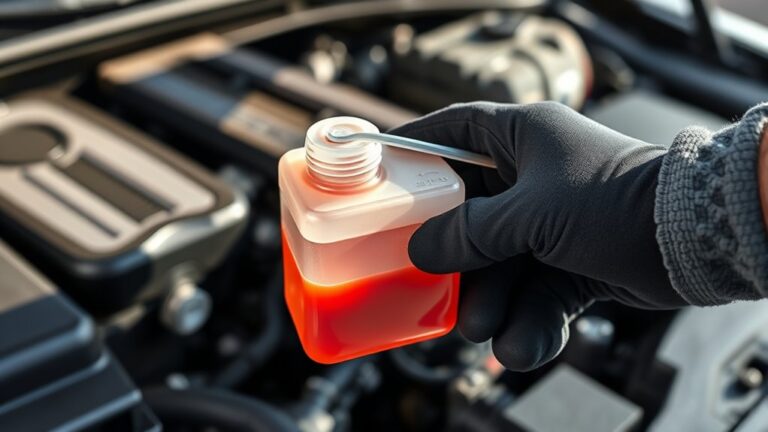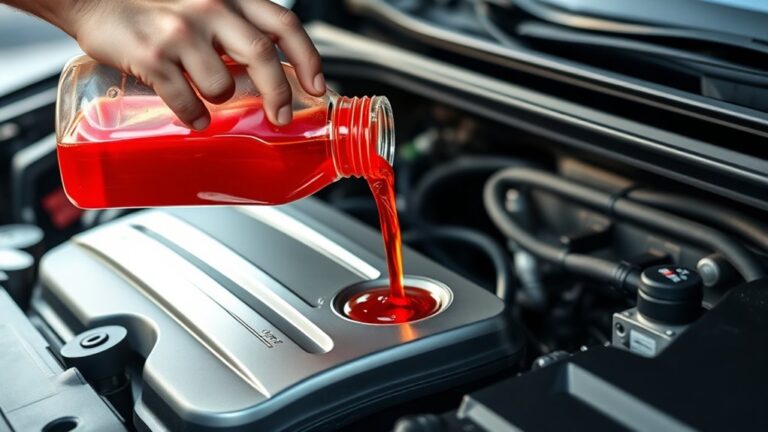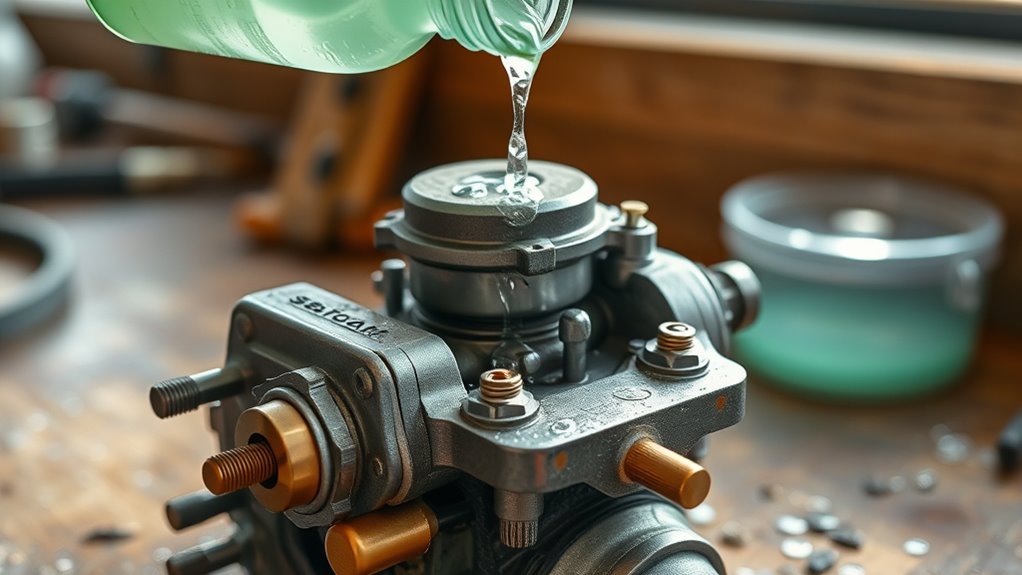
How Will Seafoam Clean a Carburetor?
Struggling with engine stumbles, rough idling, or poor acceleration? You’re not alone—many people face these issues, often caused by dirty carburetors.
Luckily, Seafoam is a popular solution to help clean and restore your engine’s performance.
Seafoam cleans your carburetor by penetrating and breaking down stubborn deposits. It effectively dissolves gum and varnish, ensuring ideal fuel flow and engine performance.
By adding Seafoam directly into the carburetor throat or fuel tank, you improve fuel atomization and elevate combustion. This helps prevent future buildups, boosting your engine’s lifespan and throttle response.
If you’re curious about the best practices for using Seafoam, there’s more you can uncover on the topic.
Key Takeaways
- Seafoam penetrates and dissolves carbon deposits, gum, and varnish inside the carburetor, helping it run smoothly again.
- It cleans both fuel and oil systems, making sure everything flows better and runs more efficiently.
- Regular use prevents buildup, so you won’t need to clean it as often.
- The active ingredients boost fuel atomization, which improves combustion and engine performance.
- Easy to use, Seafoam can be added directly to the carburetor or fuel tank for effective cleaning.
What Is Seafoam and How Does It Work?
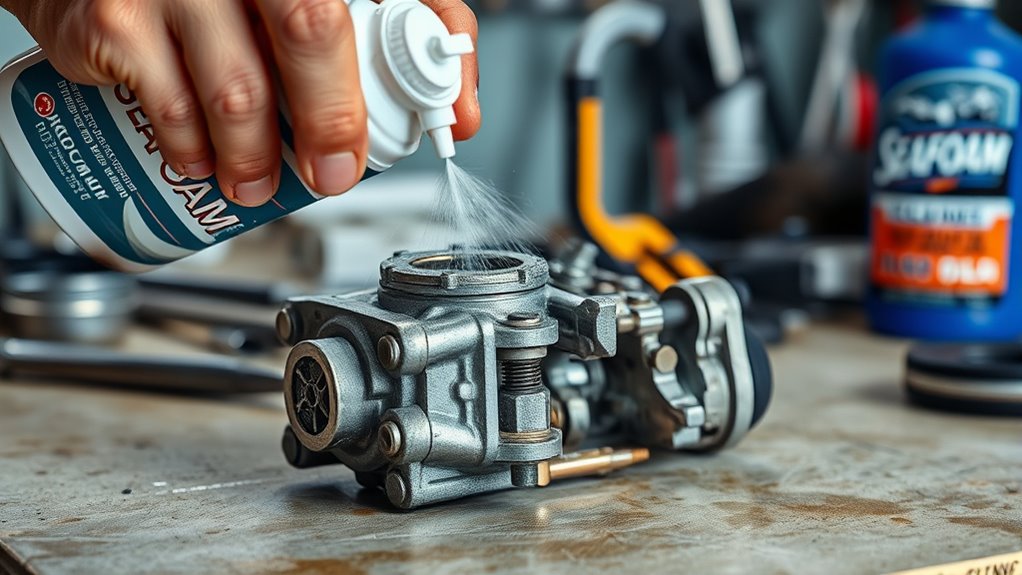
When you’re looking to clean your carburetor effectively, Seafoam can be a real game changer. This powerful product has been around since the 1940s, originally developed to tackle fuel system problems.
Seafoam works by penetrating deposits in your carburetor, breaking them down, and preventing future buildup. It’s like giving your engine a deep clean from the inside out.
One of the great things about Seafoam is that it can clean both fuel and oil systems, making it pretty versatile for different engines. You just add it to your fuel tank or oil, and it starts doing its thing.
The active ingredients dissolve gum and varnish, which helps improve fuel flow and overall engine performance. It’s a simple way to keep your engine running smoothly.
Signs Your Carburetor Needs a Cleaning
A well-functioning carburetor is key to your engine’s performance, but certain signs can indicate it’s time for a cleaning. If you notice rough idling or stalling when starting, these are common carburetor symptoms that shouldn’t be ignored.
You might also experience poor acceleration, which can signal that fuel isn’t flowing properly. Furthermore, if your engine backfires or you see a drop in fuel efficiency, your carburetor likely needs attention.
To prevent these issues, it’s crucial to keep an eye on your cleaning frequency. Regular maintenance can help you avoid larger problems down the road. If it’s been a while since your last cleaning, don’t wait for symptoms to worsen.
Instead, take action before they escalate into bigger headaches. By staying proactive, you’ll guarantee your engine runs smoothly and efficiently.
Why Use Seafoam for Carburetor Cleaning?
Using Seafoam for carburetor cleaning is a great way to bring your engine back to life. It not only cleans but also helps boost carburetor efficiency, giving your engine a performance boost. This fuel additive works by removing stubborn carbon deposits and varnish, making your engine run smoother.
It’s super easy to use—just add Seafoam to your fuel tank or pour it directly into the carburetor. This simple step can make a big difference in how your engine performs.
Here’s a quick look at the benefits:
| Seafoam Benefits | Carburetor Efficiency |
|---|---|
| Cleans fuel systems | Improves fuel atomization |
| Prevents future buildup | Enhances throttle response |
| Increases engine lifespan | Optimizes combustion |
Adding Seafoam into your regular maintenance helps keep your carburetor in top shape. You’ll notice better acceleration and improved fuel economy, making your drives more enjoyable. Don’t overlook this easy and effective way to boost engine performance!
Getting Your Carburetor Ready for Seafoam
Before you dive into using Seafoam, it’s important to prepare your carburetor for the best results. Proper prep ensures that Seafoam will clean and restore your system effectively.
Start by turning off the engine. Make sure everything is cool and powered down — safety first! Then, remove the air filter to get direct access to the carburetor.
Turn off the engine and ensure everything is cool before removing the air filter for carburetor access. Safety first!
Next, inspect for any debris or build-up that could block Seafoam’s cleaning action. It’s a good idea to gather your tools, including a spray nozzle for precise application.
Taking these simple steps will set you up for success. Once you’re ready, you’ll be all set to use Seafoam and give your carburetor the thorough clean it needs.
Step-by-Step Instructions for Using Seafoam
To effectively clean your carburetor with Seafoam, start by adding the product directly into the carburetor throat. Make sure the engine is off, and carefully pour about one ounce of Seafoam for every gallon of fuel.
Then, turn on the engine and let it run for a few minutes to allow the fuel additive to circulate through the system. Next, gently rev the engine to help dislodge any stubborn deposits.
If you notice any excessive smoke, don’t worry. That’s normal and a sign that the Seafoam is working. After about ten minutes of running, turn off the engine and let it sit for a little while.
This step is key for good carburetor maintenance. Finally, restart the engine and take it for a short drive to see how it’s running. Your carburetor should now be cleaner and more efficient!
Essential Safety Tips for Using Seafoam
While cleaning your carburetor with Seafoam can boost performance, it’s important to stay safe. Taking the right precautions helps ensure a smooth, hazard-free process.
Here are some key safety tips to keep in mind:
- Wear safety gear: Always put on gloves and goggles to protect your skin and eyes from chemicals.
- Guarantee proper ventilation: Work in a well-ventilated space to avoid breathing in fumes. Open windows or use fans if needed.
- Keep flammables away: Store Seafoam and other flammable items away from heat sources or open flames.
- Follow instructions carefully: Read the Seafoam label and follow the manufacturer’s guidelines for safe use.
Common Mistakes to Avoid When Using Seafoam
Using Seafoam can really boost your carburetor’s performance, but it’s easy to make mistakes that can get in the way. One common error is adding too much Seafoam, which can cause excessive buildup or even damage. Just follow the manufacturer’s recommended amount for the best results.
Another mistake is not letting the engine run long enough after applying Seafoam. You want to give it time to circulate and break down deposits, so idle the engine for a while. Also, skipping the cleaning of fuel filters or lines can limit how well Seafoam works.
Always check these components are clear before you start. Lastly, don’t forget to do regular maintenance. Seafoam is a helpful tool, but relying on it alone won’t give you lasting results. Avoiding these mistakes will help you get the most out of Seafoam when cleaning your carburetor.
Troubleshooting Common Issues After Using Seafoam
After applying Seafoam, you might notice some common issues that can affect your engine’s performance. While Seafoam usually works well, troubleshooting these problems is key to keeping your carburetor running smoothly.
One issue you might see is rough idling. This could happen if there’s leftover cleaner residue causing uneven engine operation.
Rough idling may occur due to leftover cleaner residue, resulting in uneven engine operation.
If your engine stalls often, it might mean the cleaning wasn’t complete or the fuel mixture isn’t quite right.
You may also notice more smoke coming from the exhaust. That’s often a sign that too much Seafoam was used.
Lastly, check for any fuel leaks around the carburetor. Sometimes cleaning can loosen old seals, leading to leaks.
Addressing these problems quickly can help restore your engine’s performance and make sure your Seafoam investment pays off. Stay alert, and your carburetor will keep running smoothly!
Post-Cleaning Maintenance Tips After Using Seafoam
To keep your engine running smoothly after using Seafoam, it’s important to do some post-cleaning maintenance. Start with a quick inspection to make sure everything looks good. Check for leaks, listen for any strange noises, and see how it’s performing.
Next, set up a maintenance routine to keep your carburetor and engine in top shape. Regular checks and cleaning can help prevent problems down the line. Consider these tasks:
| Task | Frequency |
|---|---|
| Change fuel filter | Every 10,000 miles |
| Inspect spark plugs | Every 5,000 miles |
| Clean air filter | Every 3,000 miles |
| Check fuel lines | Every 15,000 miles |
| Test battery health | Every 6 months |
Following these steps will help maintain your engine’s performance and longevity.
How Does Seafoam Compare to Alternative Cleaning Solutions?
Maintaining your engine’s performance isn’t just about using Seafoam; it’s also smart to compare it with other cleaning solutions. When you’re looking at alternatives, focus on how effective they are compared to Seafoam.
Here are some key points to consider:
- Cost-Effectiveness: Seafoam usually gives you more bang for your buck compared to specialized cleaners.
- Ease of Use: Its simple application makes Seafoam a popular choice for DIYers.
- Residue: Some other products can leave behind residue that causes problems, but Seafoam generally evaporates cleanly.
- Versatility: Seafoam works on many engine parts, unlike some cleaners that are more specialized.
Frequently Asked Questions
Can Seafoam Harm Other Engine Components During Cleaning?
No, Seafoam typically won’t harm other engine components during carburetor cleaning. In fact, it’s designed to protect your engine while effectively cleaning.
When you use it as directed, it helps remove carbon deposits and gunk without damaging sensitive parts. Just make sure to follow the instructions closely, and you’ll improve your engine’s performance while keeping it safe.
Regular maintenance with Seafoam can lead to better engine protection and longer engine life.
Is Seafoam Effective for Both Two-Stroke and Four-Stroke Engines?
Think of Seafoam as a magic elixir for your engine. It’s effective for both two-stroke and four-stroke engines, providing significant cleaning benefits.
As you add it to your fuel system, you’ll notice improved engine performance, with cleaner fuel lines and smoother operation. This versatile product tackles carbon buildup and boosts efficiency in all types of engines.
How Often Should I Use Seafoam for Maintenance?
You should use Seafoam for maintenance every 3,000 miles or with every oil change. Regular carburetor cleaning helps prevent buildup and keeps your engine running smoothly.
If you notice reduced performance or rough idling, consider using it more often. Incorporating Seafoam into your routine can help prevent costly repairs later on.
Keeping your carburetor clean with Seafoam is a simple way to ensure your engine stays in good shape and performs at its best.
Can I Use Seafoam With a Fuel Injector System?
Yes, you can use Seafoam with a fuel injector system. It helps clean deposits and boost performance.
For best results, follow the recommended Seafoam amount, usually one ounce per gallon of fuel. This helps keep your fuel system in good shape and ensures smoother engine operation.
Regular use can keep your injectors clean and improve fuel efficiency, making your vehicle run better overall.
Is Seafoam Safe for All Types of Fuel?
Using Seafoam in your fuel is like polishing a gem; it brings out the best in your engine. Yes, Seafoam’s safe for all types of fuel, including gasoline and diesel. Its cleaning benefits help remove deposits and contaminants, enhancing performance and efficiency.
Just remember to follow the recommended guidelines for your specific fuel type. With Seafoam, you’re giving your engine a treat that keeps it running smoothly for the long haul.
Conclusion
To sum up, using Seafoam to clean your carburetor can really make a difference. When your engine’s performance seems stuck or sluggish, a little Seafoam can help clear out the gunk and restore efficiency.
If you’ve been dealing with rough idling or poor acceleration, you might find your fix with a simple can of Seafoam. It’s a straightforward way to give your engine a fresh start.
So, why not give it a try? Seafoam can transform your engine from sluggish to smooth by effectively cleaning your carburetor.