Fixing a Gear Shift Stuck in Park: A Step-by-Step Guide
Dealing with a gear shift stuck in park can be incredibly frustrating, especially when you’re in a rush or trying to get somewhere. You’re not alone—many people struggle with this frustrating problem at some point.
Luckily, there are simple steps you can take to fix it and get back on the road.
If your gear shift’s stuck in park, start by pressing the brake pedal fully. Look for the shift lock release near your shifter and use a flathead screwdriver to press it.
Turn the ignition on without starting the engine while gently wiggling the gear shift.
Check for low transmission fluid or issues with your brake system if it remains stuck.
Keep going to uncover more troubleshooting tips and solutions to get you back on the road.
Key Takeaways
- Make sure the brake pedal is fully pressed down to activate the shift interlock system before trying to shift gears.
- Find and use the shift lock release, usually located near the gear shift, to override the lock mechanism.
- Check the transmission fluid level because low fluid can cause shifting problems.
- Inspect the brake components for issues, like frayed shift cables or problems with brake sensors.
- If the problem continues, it’s best to get professional help to fix any underlying mechanical issues.
Immediate Solutions for a Stuck Gear Shift

If your gear shift is stuck in park, don’t panic; there are a few quick fixes you can try. First, make sure your brake pedal is fully pressed down, since many cars have a safety feature that stops shifting without it.
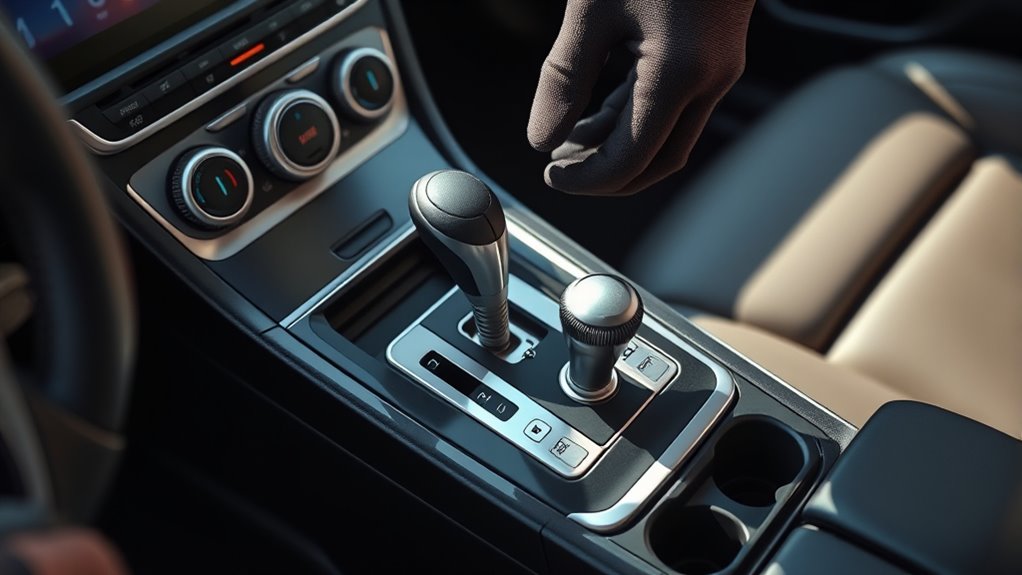
If that doesn’t do the trick, look for the shift lock release. It’s usually a small slot near the gear shift, often covered. You can use a flathead screwdriver to open the cover and press the release button inside.
Another trick is to turn on your ignition without starting the engine. Sometimes, this can free up the gear shift. If these tips don’t work, try gently wiggling the gear shift while pressing the brake pedal.
Common Reasons Your Gear Shift Gets Stuck
While there are a few quick fixes for a gear shift stuck in park, understanding the root causes can help prevent future problems. One common reason is gear shift malfunctions, which can happen if components are worn out or if the mechanism is faulty.
If the shift cable is frayed or damaged, it can stop the gear shift from moving smoothly. Transmission issues, like low fluid levels or internal wear, can also cause the gear shift to get stuck.
Additionally, if your brake system isn’t working properly, it might not activate the shift interlock, keeping the gear shift locked in park. Lastly, a dead battery can interfere with your electrical system and prevent the gear shift from functioning correctly.
How to Check Your Brake System
Checking your brake system is crucial for making sure your gear shift works smoothly. Start by looking at the brake fluid level; if it’s low, it can mess with your braking ability. If needed, top it off with the recommended type.
Next, check your brake pads for wear. If they’re thin or uneven, it’s time for a replacement. Don’t forget to inspect your brake lines for leaks or damage, as these can cause serious issues.
Also, make sure your brake sensors are working properly. Faulty sensors can lead to unexpected problems. Regular maintenance keeps everything in check and helps you avoid surprises.
What’s the Shift Interlock System and Why Does It Matter?
The shift interlock system is basically a safety feature in your car that stops you from shifting out of the park position unless you press the brake pedal. It’s there to make sure you don’t accidentally shift into a drive or reverse while the car is moving or in an unsafe situation.
This system really matters because it helps prevent accidents that could happen if someone shifts gears at the wrong time. But sometimes, it can run into problems, and you might find your gear stick getting stuck in park when you don’t want it to be. That can be pretty frustrating and could even leave you stranded until it’s fixed.
Shift Interlock System Explained
If you’ve ever found your gear shift stuck in park, understanding the shift interlock system can be really helpful. This system is designed to stop you from shifting out of park without pressing the brake pedal first.
The interlock function makes sure your vehicle only changes from park when it’s safe to do so, preventing accidental movement. The shift mechanism connects your gear shift to the brake pedal.
When you press the brake, it releases the interlock, letting you shift gears. If this system malfunctions, you might not be able to move your gear shift, which can be frustrating and even unsafe.
Knowing how it works can help you troubleshoot problems easily.
Purpose Of The System
Understanding the purpose of the shift interlock system is key for safe driving. It makes sure your vehicle can’t shift out of park unless you press the brake pedal, which makes shifting safer.
Basically, it stops you from accidentally changing gears when the car is stationary, helping to reduce the chance of unintended movement. When you press the brake, you’re activating the system so you can shift into drive or reverse.
This feature is especially important in busy areas or if children are nearby. By keeping the vehicle in park until you’re ready to drive, the shift interlock system helps keep you safe on the road.
Common Issues Encountered
While driving, you might encounter some common issues with the shift interlock system that can leave your gear shift stuck in park. One common problem is a faulty brake light switch, which stops the system from recognizing that you’ve pressed the brake pedal. If that switch fails, your gear shift won’t move.
Low transmission fluid can also cause shifting problems, so it’s a good idea to check your levels if you’re stuck. Sometimes, debris around the gear shift can jam it, so keep that area clean.
Troubleshooting techniques like checking fuses or inspecting wiring can help identify the issue. Remember, fixing these common problems can save you time and frustration on the road!
How to Check and Maintain Your Transmission Fluid Level
Maintaining the right transmission fluid level is crucial for your vehicle’s performance. Low fluid can cause shifting problems and lead to more serious issues down the road.
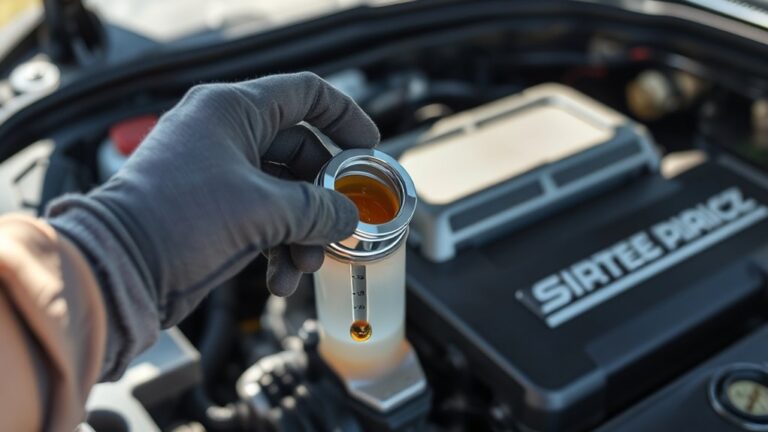
Start by parking your car on a level surface and letting the engine run for a few minutes. Then, locate the transmission dipstick, which is usually near the back of the engine.
Pull out the dipstick, wipe it clean with a rag, and reinsert it. Remove it again to check the fluid level. Make sure it’s within the recommended range.
Here’s a quick reference table for fluid maintenance:
| Action | Frequency |
|---|---|
| Check fluid level | Monthly |
| Change fluid | Every 30,000 miles |
| Inspect for leaks | Monthly |
| Clean dipstick | Each check |
| Use correct fluid type | Always |
Regularly checking your transmission fluid helps keep it at the right level and prevents costly repairs. Don’t skip this important maintenance step—your vehicle will thank you!
What to Do When the Key Won’t Turn?
If your key won’t turn in the ignition, it can be really frustrating, especially if you’re in a hurry. First, check if the gear shift is fully in the “Park” position; sometimes, if it’s not quite in park, the key won’t turn.
If it’s in park but still stuck, try gently wiggling the steering wheel while turning the key. Sometimes, the steering lock mechanism can cause ignition problems.
If that doesn’t work, take a look at your key for any damage or dirt. A worn or dirty key might not engage the ignition properly. You can also try using a spare key if you have one, as it might fit better.
Lastly, think about your battery’s condition. A low or dead battery can cause ignition issues and prevent the key from turning. If nothing seems to work, it’s best to consult a professional to avoid causing more damage.
How to Troubleshoot Electrical Issues With Your Gear Shift
Troubleshooting electrical issues with your gear shift can save you time and hassle, especially when it gets stuck in place. Start by checking the following:
- Inspect Gear Shift Sensors: Make sure the sensors aren’t damaged or misaligned. If they’re not working right, it can stop the gear from shifting properly.
- Examine Wiring Connections: Look for loose or frayed wires around the gear shift area. A bad connection can cause your gear shift to act up.
- Test the Brake Light Switch: This switch often affects the shift mechanism. If it’s faulty, it might keep your gear shift locked in park.
- Check the Battery: Sometimes a weak battery can lead to electrical problems. Make sure your battery is fully charged and in good shape.
Signs You Need to Replace Your Gear Shift Cable
When your gear shift starts acting up, it might be a sign that the gear shift cable needs replacing. One of the main signs is having trouble shifting gears. If you feel resistance or a delay when moving the lever, it could be due to cable wear.
When your gear shift shows resistance or delays, it may indicate that the gear shift cable is worn and needs replacing.
Another clue is if your gear shift slips out of gear unexpectedly. This often points to a problem with the cable. Keep an ear out for strange noises like grinding or popping sounds when shifting. These sounds usually mean the cable isn’t working right.
Sometimes, adjusting the cable can help. But if you find yourself doing it often without any improvement, it’s probably time to think about replacing it. Lastly, if your gear shift feels loose or wobbly, that’s a warning sign you shouldn’t ignore.
Addressing these issues early can save you from more costly repairs later on. So if you notice any of these symptoms, it’s best to get your gear shift cable checked out.
How to Manually Override the Shift Lock
If your gear shift is stuck in park, don’t worry—you can manually override the shift lock to get going again. First, you’ll want to find the shift lock release, which is usually located near the gear shifter. It might be a small slot or button—just take a look around the area.
Once you’ve located it, grab the override tool or a flathead screwdriver if you don’t have the special tool. Gently insert it into the release slot and press down or hold it there. This will disengage the lock so you can shift out of park and into the desired gear. Just be sure to keep an eye on your surroundings and proceed carefully!
Locate The Shift Lock Release
To manually override the shift lock, you’ll need to find the shift lock release, usually located near the gear shifter. This release lets you shift out of park when needed.
Here’s how to find it: First, check the owner’s manual for your specific vehicle. It often has detailed info on the location.
Next, look for a small slot or button next to the shifter. Some vehicles have a cover that needs to be removed to access the release.
You might also feel for a spring-loaded mechanism. If you see a tiny hole, you may have to press a small button inside it.
Once you find the shift lock release, you’ll be one step closer to shifting gears manually.
Use The Override Tool
After locating the shift lock release, you can use an override tool to manually shift out of park. This is an important emergency procedure when your gear shift is stuck.
First, insert the override tool, often a flathead screwdriver, into the shift lock release slot. Apply gentle pressure to engage the override mechanism, which will free the shifter from its locked position.
Once released, you can shift to neutral or drive. Be cautious; this is a temporary fix. If you’re unable to resolve the issue, it’s wise to seek professional help to address any underlying problems.
Always remember, using the override tool should be done carefully to avoid damaging the mechanism.
Tips for Preventive Maintenance of Your Gear Shift
While it’s easy to overlook your gear shift during routine maintenance, keeping it in good condition can prevent frustrating issues down the line. Here are some tips for preventive maintenance:
- Routine Inspections: Check your gear shift regularly for any signs of wear or damage. Look for loose components or signs of corrosion.
- Gear Shift Lubrication: Apply lubricant to the gear shift mechanism as recommended in your vehicle’s manual. This helps ensure smooth operation and prevents sticking.
- Clean the Shift Area: Remove any debris or dirt around the gear shift. Keeping the area clean helps avoid jams and allows for proper function.
- Test Regularly: Make it a habit to test your gear shift before long drives. This quick check can catch issues early and save you time and money.
Frequently Asked Questions
Can I Drive With a Gear Shift Stuck in Park?
No, you can’t drive with a gear shift stuck in park. It’s important to fix the issue quickly because it usually points to automatic transmission problems.
You’ll want to do some gear shift troubleshooting to figure out what’s causing the problem. It could be something simple like a faulty brake switch or something more complicated.
Ignoring it could cause more damage, so don’t hesitate to get professional help. That way, you can get your vehicle moving again safely.
Will a Stuck Gear Shift Drain My Car Battery?
A stuck gear shift can feel like a chain locking your wheels. Luckily, it won’t drain your battery. If your car’s not on, the gear shift might seem like a stubborn anchor, but it won’t use up power while you’re parked.
Just remember to turn off any accessories because they can slowly drain your battery over time. So, no worries—your battery is safe even if that gear shift is being stubborn.
How Much Does It Cost to Fix a Stuck Gear Shift?
Fixing a stuck gear shift can cost anywhere from $100 to $400, depending on the problem.
You’ll want to consider both parts and labor costs when figuring out the total. If you’re comfortable with DIY, try some troubleshooting steps first.
Check the brake pedal switch or look at the linkage; these are common causes. If those don’t do the trick, it’s a good idea to see a mechanic for a proper diagnosis and fix.
Can Weather Affect My Gear Shift Performance?
Just as winter’s chill can freeze a river’s flow, weather can greatly impact your gear shift performance. Temperature effects often disrupt gear shift mechanics; cold can thicken transmission fluid, making shifts sluggish. Extreme heat might cause components to expand, leading to misalignment.
If you notice issues during drastic weather changes, it’s worth checking your vehicle. Don’t let the elements dictate your drive. Stay proactive to guarantee smooth shifts.
Is It Safe to Use Force on a Stuck Gear Shift?
It’s generally not safe to use force on a stuck gear shift. While you might feel tempted, applying too much pressure can damage the gear shift mechanisms or other parts of your vehicle.
Instead, try some troubleshooting techniques first. Check for obstructions, make sure the brake is engaged, and listen for any unusual sounds.
If those steps don’t work, it’s better to consult a professional rather than risking further damage to your vehicle.
Conclusion
To sum it up, tackling a stuck gear shift doesn’t have to feel like climbing a mountain.
By understanding the common issues and following these steps, you can shift from frustration to freedom in no time.
Remember, regular maintenance is your best friend in preventing future problems.
Don’t let a little hiccup keep you from the open road. Stay proactive, and keep your gear shift in top shape!