10 Steps to Adjust Carburetor Idle for Optimal Performance
Having a smoothly running engine is what every vehicle owner dreams of, but many people struggle with carburetor issues that cause rough idling and poor performance. If you’ve ever felt frustrated trying to get your engine to run just right, you’re not alone.
Properly adjusting your carburetor idle can make a huge difference in how your vehicle runs, and it’s easier than you might think.
To adjust your carburetor idle for ideal performance, first, identify common issues like fuel mixture imbalances and vacuum leaks. Gather necessary tools, including a screwdriver and vacuum gauge.
Warm up your engine, then locate the idle adjustment screw. Make small adjustments and observe the idle quality. Test engine performance after adjustments and fix any remaining issues.
Regular maintenance is essential for keeping your carburetor healthy. Stick around to uncover detailed steps and tips for perfecting your adjustment process.
Key Takeaways
- Warm up the engine for 5 to 10 minutes so you get accurate idle adjustments and stable readings. This helps ensure everything is running smoothly before you make changes.
- Find the idle speed screw and make small adjustments. After each tweak, let the engine settle so you can see how it responds.
- Check regularly for clogged jets and dirty air filters. These can mess with the fuel mixture and cause rough idle or stalls.
- Use a vacuum gauge to measure vacuum levels and fine-tune them for better idle performance. This can really help optimize how your engine runs.
- Keep a record of all your adjustments and how the engine responds. Tracking this can help you see what’s working and make future tweaks easier.
Identify Common Carburetor Idle Issues
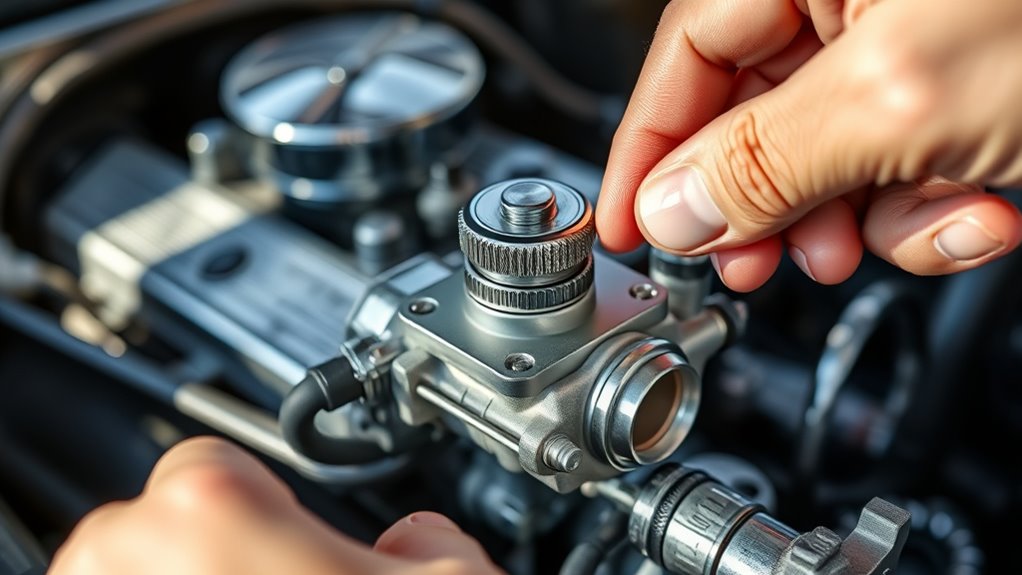
When troubleshooting your carburetor, it’s important to recognize common idle issues that can affect how your engine runs. One of the first things to check is the fuel mixture. If it’s too rich or too lean, you’ll notice poor throttle response, which can cause stalling or rough idling. A clogged jet or dirty air filter can also throw off this balance.
Another common problem is an improper adjustment of the idle speed screw. If it’s set too low, the engine might struggle to stay steady at idle. If it’s too high, you could experience an erratic idle that makes driving rough.
You should also look out for vacuum leaks, as they can let in extra air and mess up the fuel mixture. By spotting these common idle issues, you’ll be better prepared to make the right adjustments for smoother operation and better throttle response.
Gather Tools Needed for Carburetor Idle Adjustments
To tackle carburetor idle adjustments effectively, you’ll need a few essential tools. Having the right carburetor tools on hand makes the process smoother and helps ensure peak performance.
Here’s a quick list of must-have items:
| Tool | Purpose | Importance |
|---|---|---|
| Screwdriver | Adjusts the idle adjustment screw | Critical for precise adjustments |
| Vacuum gauge | Measures vacuum level for tuning | Ensures proper air-fuel mixture |
| Wrench set | Tightens and loosens carburetor bolts | Keeps everything secure |
These maintenance essentials are fundamental for achieving the perfect idle setting. With these tools ready, you’ll be well-prepared to make adjustments that improve your carburetor’s performance.
Locate the Idle Adjustment Screw
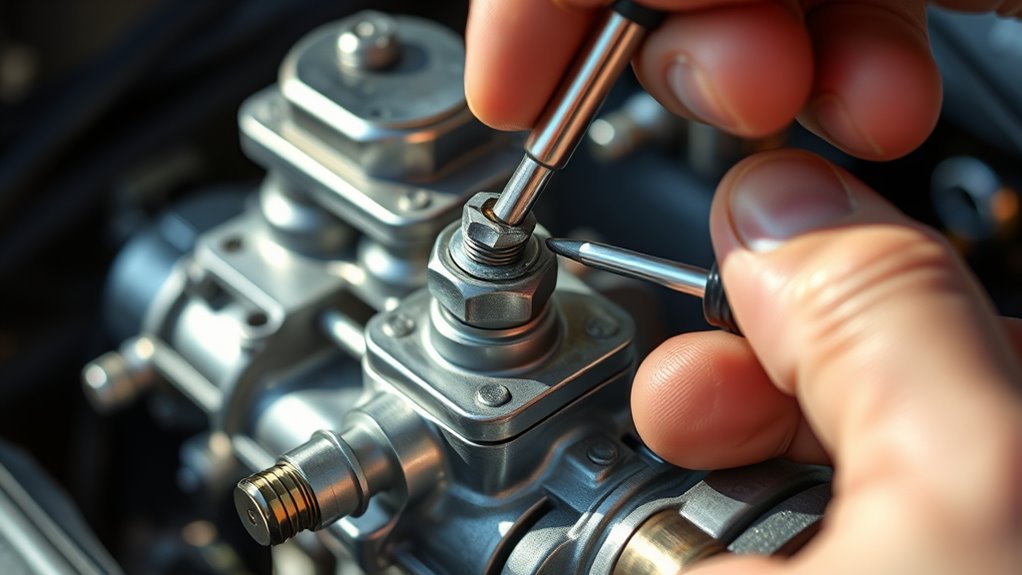
With your tools ready, the next step is to find the idle adjustment screw on your carburetor. It’s usually near the throttle body, but its exact spot can change depending on your carb model.
Look for a small screw that’s either slotted or Phillips. It’s often marked for easy identification so you can spot it quickly.
Make sure you can access this screw easily without anything blocking your way. If you’re having trouble finding it, check your carburetor’s manual for specific details.
Warm Up Your Engine Properly
Before you jump into adjusting the idle, make sure your engine is warmed up properly. A cold engine won’t give you accurate readings, and you might end up with poor idle quality.
Start your engine and let it run for about 5 to 10 minutes. This warming period helps the engine reach its ideal operating temperature so all components work correctly.
Keep an eye on the engine temperature gauge as it warms up. Once it hits the normal range, you’re ready to check the idle. A properly warmed engine will give you a stable baseline for adjustments.
Taking the time to warm up your engine ensures your adjustments will hold once it’s fully warmed. Trust me, it’s worth the extra few minutes for better performance in the long run.
Observe Initial Idle Speed and Quality
After warming up your engine, take a moment to observe the initial idle speed and quality. Listen closely to the engine’s sound; it should be smooth and steady. If you notice any irregularities like sputtering or excessive vibration, it could mean there are issues with the carburetor settings.
Pay attention to how the engine maintains its speed when idling. A well-tuned carburetor will keep the idle smooth and consistent. If it feels off or shaky, that’s a sign you might need to adjust something.
Next, check the engine’s response to the throttle. It should react quickly and smoothly. If it feels sluggish, your idle speed might be set improperly. Take notes if the idle seems too high or too low, as these details will help you fine-tune the carburetor.
Adjust Idle Speed Gradually
As you prepare to adjust the idle speed, keep in mind that small changes can make a big difference. Start by locating the idle speed screw on your carburetor. Turn it slightly, about a quarter turn, clockwise or counterclockwise, depending on whether you want to increase or decrease the speed.
After each adjustment, let the engine run for a few moments to stabilize. This way, you can see how it affects the idle mixture and throttle response. If the engine starts to stall or the idle becomes rough, you may need to readjust the idle mixture as well.
Finding the right setting often takes patience, so don’t rush. Keep adjusting until you get a smooth and consistent idle. Remember, your goal is to improve engine performance without losing stability.
Test Engine Performance After Adjustments
Once you’ve made those idle speed adjustments, it’s time to test how the engine performs. Start by taking your vehicle for a short drive. Pay attention to how smoothly the engine idles and accelerates. This is essential for effective engine tuning. Listen for any unusual noises or vibrations, which could indicate further issues.
Next, perform performance testing in various conditions. Check how the engine responds when you accelerate quickly or come to a stop. Does it stall or hesitate? Take note of any changes in throttle response. If everything feels smooth and responsive, you’re likely on the right track.
Finally, consider using a diagnostic tool to monitor engine parameters. This can provide valuable insights into fuel mixture and idle quality. If you notice any inconsistencies, you might need to revisit your adjustments. This thorough testing guarantees your engine runs efficiently after tuning.
Diagnose and Fix Common Carburetor Idle Problems
Understanding how to diagnose and fix common carburetor idle problems is key to keeping your engine running smoothly. First off, check your fuel mixture because an incorrect ratio can cause rough idling or stalling. If your engine runs too rich, you might see black smoke coming from the exhaust. A lean mixture, on the other hand, can lead to backfiring or poor throttle response.
Next, take a look at the idle speed adjustment screw. If it’s set too low, your engine might struggle to stay running. On the flip side, a setting that’s too high can make the engine race, making it hard to control.
Don’t forget to inspect the throttle linkage for any sticking or binding, as this can affect your engine’s performance. Lastly, check for vacuum leaks that could mess with your fuel delivery. Fixing these issues will improve your carburetor’s efficiency and give you a smoother idle and better throttle response.
Adjust Idle Based on Driving Conditions
Adjusting your carburetor’s idle based on driving conditions can really boost your engine’s performance. Different environments call for different settings to keep things running smoothly. Here’s how to tweak your idle for specific situations:
Adjusting your carburetor’s idle for varied driving conditions can enhance engine performance and ensure smooth operation.
Cold Weather: When it’s chilly outside, bump up your idle speed a bit. This helps your engine warm up faster and keeps it from stalling.
Heavy Traffic: In stop-and-go traffic, a higher idle can stop your engine from stalling when you’re constantly stopping and starting.
Off-Road Conditions: When you’re off-road, setting a more aggressive idle can give you better throttle response on uneven terrain.
Schedule Regular Carburetor Maintenance
Although you might be tempted to overlook it, scheduling regular carburetor maintenance is crucial for keeping your engine running smoothly. Without it, you risk poor performance and increased fuel consumption.
Start by setting reminders for carburetor cleaning, ideally every few months or after a certain mileage. This helps remove dirt and debris that can clog fuel passages.
Additionally, always pay attention to fuel quality. Using low-grade fuel can introduce contaminants that affect your carburetor’s efficiency.
If you notice any changes in engine performance, it’s time for a thorough inspection and possible cleaning. Don’t ignore signs like stalling or rough idling; these can indicate a need for maintenance.
Frequently Asked Questions
How Often Should I Check My Carburetor Idle Settings?
You should check your carburetor idle settings every few months or whenever you notice performance issues. Regular maintenance helps keep your engine running smoothly and efficiently.
If you often tune your engine or change its parts, consider adjusting the idle more frequently. Small changes can make a big difference in how your engine responds.
Keep an eye on fuel efficiency and how your engine runs. If you notice any changes, it’s probably time for a tune-up.
Staying proactive with these checks helps maintain peak performance and can even extend your engine’s lifespan.
Can a Dirty Air Filter Affect Idle Performance?
You’d think a dirty air filter wouldn’t matter much, right? But it can seriously mess with your idle performance. When you neglect air filter maintenance, it restricts airflow, causing an uneven idle speed.
Your engine struggles to breathe, leading to rough idling and reduced efficiency. So, next time you overlook that filter, remember: it’s not just about clean air; it’s about keeping your engine purring smoothly at idle.
What Symptoms Indicate a Faulty Carburetor?
If your carburetor’s faulty, you might notice rough idling, stalling, or difficulty starting. These are common signs that something’s not quite right.
You could also experience poor acceleration and reduced fuel efficiency, which can be frustrating when you’re trying to get going.
A dirty carburetor can disrupt the fuel mixture, leading to these symptoms. Regular cleaning helps keep everything running smoothly and prevents bigger issues.
If you notice these signs, it’s a good idea to check and possibly clean your carburetor. Keeping it in good shape helps your engine perform at its best.
Is It Safe to Adjust the Idle Myself?
Yes, it’s generally safe to adjust the idle yourself, as long as you’re careful. When making carburetor adjustments, make sure you understand your engine’s specifications.
Start by checking your idle speed. A too high or too low idle can cause issues. Use a tachometer to measure accurately, and make small adjustments to avoid drastic changes.
Always keep an eye on how the engine responds after your adjustments to make sure everything runs smoothly.
How Does Temperature Affect Carburetor Idle Settings?
Temperature fluctuations can really impact your carburetor tuning. When it’s colder, the fuel-air mixture can get too rich, which might cause your engine to idle roughly.
On the flip side, in warmer weather, the mixture can lean out, and that can lead to stalling. To keep things running smoothly, it’s a good idea to adjust your idle settings based on the current temperature.
Make sure to check your carburetor regularly and make tweaks as needed. This way, you can keep your engine performing well no matter what the weather’s doing.
Conclusion
By fine-tuning your carburetor idle, you’re not just adjusting a screw; you’re unlocking your engine’s true potential, like a musician tuning a guitar before a performance.
With regular maintenance and careful observation, you’ll ensure a smooth ride that feels effortless and reliable.
Making these adjustments is about more than just performance—it’s about getting the most out of your engine on every drive.
So, roll up your sleeves, make those carburetor idle adjustments, and let your engine sing its best tune on the road ahead!