5 Simple Steps to Clean Your Carburetor
Are you tired of your engine running rough or stalling unexpectedly? You’re not alone—many people struggle with carburetor issues that mess with their ride’s performance.
Luckily, cleaning your carburetor is a straightforward fix that can restore smooth operation.
To clean your carburetor, start by gathering essential tools like screwdrivers and carb cleaner.
Safely remove and disassemble the carburetor, keeping parts organized.
Thoroughly clean all components, focusing on jets and passages.
Reassemble carefully, ensuring gaskets are aligned and screws are tightened.
Finally, install the carburetor back, reconnecting everything snugly.
Start the engine and watch for smooth acceleration.
If you’re curious about more detailed tips for each step, there’s plenty more to investigate.
Key Takeaways
- Disconnect the battery and remove the air cleaner and fuel lines so you can safely get to the carburetor.
- Take apart the carburetor, keeping screws and small parts organized in labeled containers to avoid losing anything.
- Clean the components using carburetor cleaner. Let the parts soak, scrub as needed, then rinse and dry everything thoroughly.
- Reassemble the carburetor, making sure the gaskets are aligned properly and tightening screws to the right specifications.
- Install the carburetor back in place, reconnect the fuel lines, and adjust the mixture and idle screws for the best performance.
Gather Your Essential Tools for Carburetor Cleaning
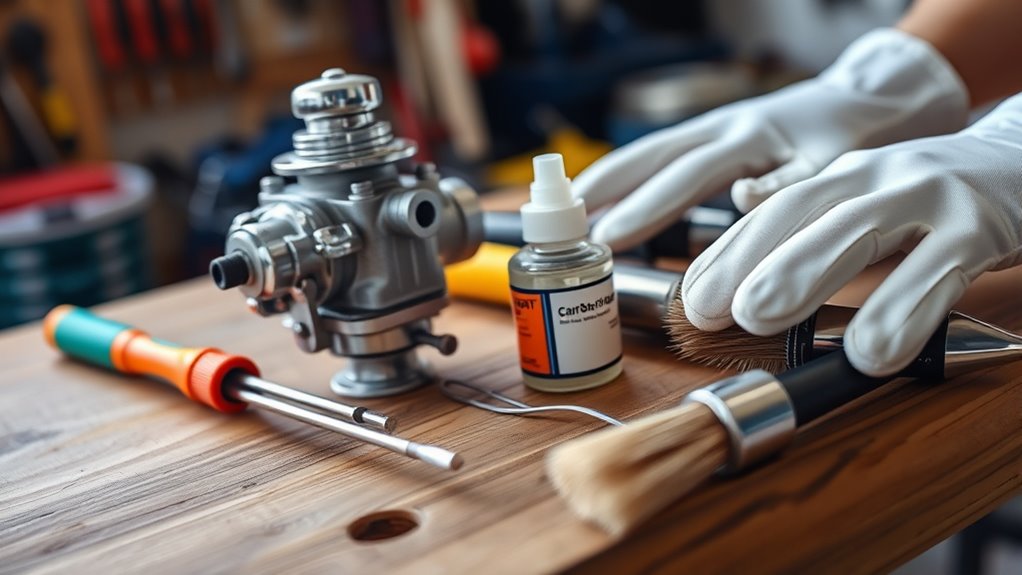
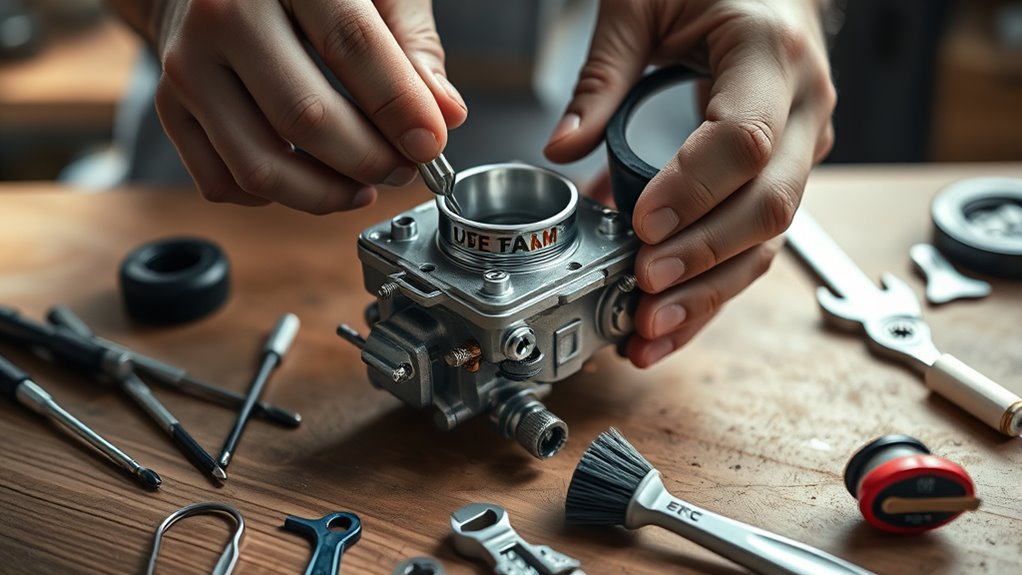
Before diving into carburetor cleaning, you’ll need a few essential tools to make the job easier. Start by gathering screwdrivers, wrenches, and pliers, as these will help you handle different carburetor types, whether it’s single-barrel or multi-barrel.
Gather essential tools like screwdrivers, wrenches, and pliers to tackle any carburetor cleaning job effectively.
A clean workspace is crucial, so grab a rag or two to keep everything tidy. Next, pick up some high-quality cleaning solutions designed specifically for carburetors. These solutions do a great job of dissolving grime and deposits, helping your carburetor run smoothly.
Don’t forget a soft brush to scrub away stubborn residue. Lastly, a compressed air canister can blow out any remaining debris. With these tools ready, you’re all set to make your carburetor look and perform like new. Get ready to improve your engine’s performance with a clean carburetor!
Safely Remove and Disassemble Your Carburetor
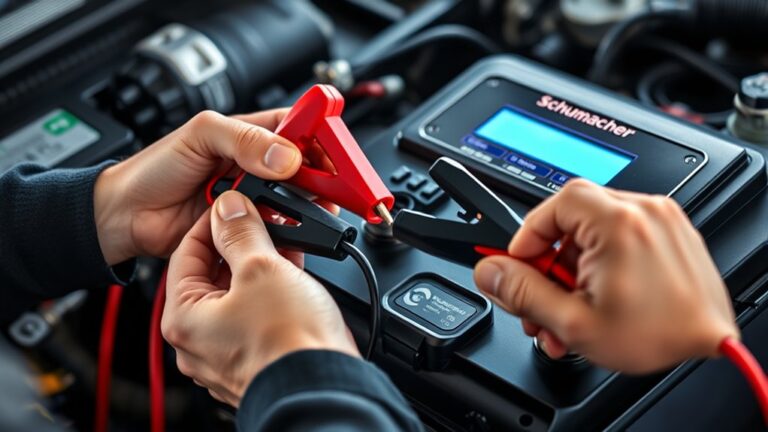
To safely remove and disassemble your carburetor, start by disconnecting the battery to prevent any electrical mishaps. Next, make sure you have a clean workspace to avoid losing small parts.
Begin by removing the air cleaner, then carefully detach the fuel lines. Use a wrench to unbolt the carburetor from the intake manifold, being cautious not to damage any gaskets.
As you disassemble, keep track of all screws and components, placing them in labeled containers. This step is essential for reassembly. Pay attention to common carburetor issues like clogged jets or stuck floats; noting these can guide your cleaning process.
Following these carburetor maintenance tips will help you avoid future problems. Remember, patience is key—rushing can lead to mistakes or damage. Once disassembled, you’ll be ready to tackle the cleaning for peak performance.
Thoroughly Clean Carburetor Components for Better Performance
Cleaning your carburetor components is crucial for improving performance. A clean carburetor guarantees efficient fuel delivery and ideal engine function. Here are some effective carburetor maintenance tips to keep in mind:
- Use a carburetor cleaner for intricate parts.
- Soak removable components in a cleaning solution.
- Rinse and dry thoroughly to prevent residue buildup.
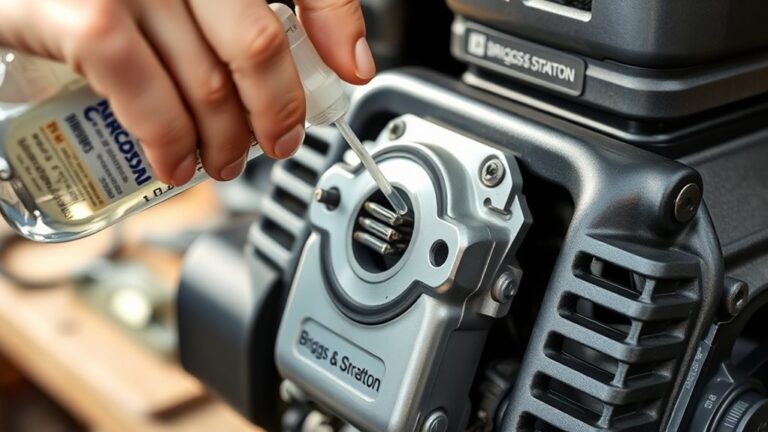
Start by removing dirt and grime from all components. Pay special attention to jets and passages, as blockages here can severely impact performance. For performance improvement, verify all gaskets and seals are intact because leaks can cause air-fuel mixture issues.
After cleaning, inspect all parts for wear or damage. This thorough cleaning process not only boosts your engine’s performance but also extends the life of your carburetor.
Carefully Reassemble Your Carburetor for Reliable Function
Reassembling your carburetor takes careful attention to detail to ensure it works reliably. Use effective techniques to make sure all parts fit perfectly. Start by organizing your parts and referring to a diagram if you have one.
Avoid common mistakes like misplacing gaskets or forgetting to tighten screws properly. Follow these simple steps to get it right:
| Step | Action | Common Mistakes |
|---|---|---|
| 1. Gasket Placement | Make sure gaskets are aligned | Misplacing or damaging gaskets |
| 2. Component Order | Follow the correct sequence | Reversing the order |
| 3. Tightening | Use a torque wrench | Over-tightening screws |
| 4. Final Check | Inspect for loose parts | Skipping the final inspection |
Taking your time with each step helps ensure your carburetor functions smoothly and reliably.
Install and Test Your Carburetor for a Smooth Ride
With your carburetor carefully reassembled, it’s time to install it back on the engine. Make sure everything’s lined up correctly and tightened securely. Getting a proper installation is key for peak engine performance.
Check all gaskets and seals for wear. Reconnect fuel lines and throttle linkage. Verify that all screws and bolts are snug.
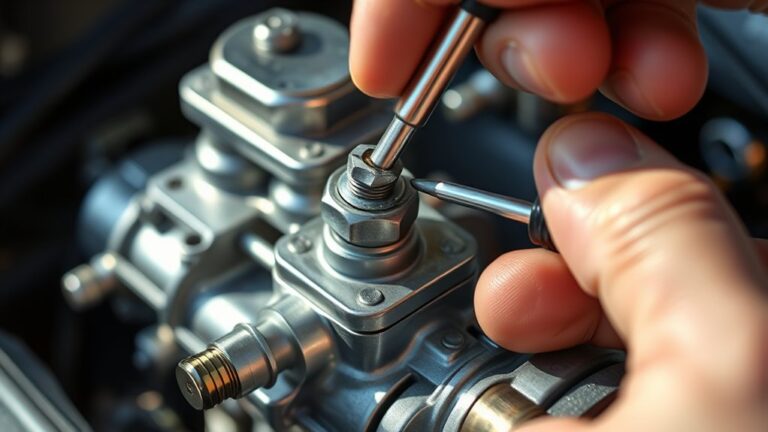
Once installed, it’s time for some carburetor tuning. Start the engine and let it warm up. Listen for any irregular sounds and watch for smooth acceleration. If it hesitates or stutters, adjust the mixture and idle screws until you get a steady response.
Don’t forget to take it for a test drive to see how it feels. A well-tuned carburetor improves engine performance, giving you a smoother ride. Regular checks will keep your engine running efficiently and prolong its life, so make this part of your routine!
Frequently Asked Questions
How Often Should I Clean My Carburetor?
You should clean your carburetor at least once a year, but if you use your vehicle often or in tough conditions, it’s a good idea to do it more frequently.
Regular maintenance helps keep your engine running smoothly and lasts longer. If you notice rough idling or your fuel efficiency drops, that’s usually a sign it’s time for a clean.
Keeping an eye on your carburetor’s condition now will save you from bigger problems later on.
Can I Clean My Carburetor Without Disassembling It?
Yes, you can clean your carburetor without disassembling it! Try spraying a cleaner directly into the intake while the engine runs. This helps remove dirt and buildup without taking everything apart.
Just make sure to follow some basic maintenance tips, like checking the air filter and fuel quality. Keeping these in good shape helps everything run smoothly.
Regular cleaning and maintenance can prevent the need for more extensive cleaning later on. It saves you time and effort and keeps your engine happy!
What Are Common Signs of a Dirty Carburetor?
A dirty carburetor’s like a clogged artery. It restricts flow and affects your engine’s performance.
You’ll notice signs like rough idling, stalling, or trouble starting your engine. If it’s hard to accelerate or your fuel use jumps, those are warning signs too.
Regular carburetor maintenance helps prevent these problems and keeps your vehicle running smoothly.
Don’t ignore these symptoms. Catch them early to avoid bigger issues later on.
Is It Safe to Use Carburetor Cleaner on Plastic Parts?
It’s not always safe to use carburetor cleaner on plastic parts. Many cleaners contain harsh chemicals that can damage plastics, which might affect their strength and safety.
Before you apply any cleaner, check if it’s compatible with the specific plastic you’re working with. If you’re unsure, it’s better to choose a plastic-safe cleaner or test it on a small, hidden area first.
Protecting your components is key, so always prioritize safety when cleaning. Being cautious helps prevent accidental damage and keeps your parts in good shape.
Will Cleaning My Carburetor Improve Fuel Efficiency?
Cleaning your carburetor can definitely improve fuel efficiency. In fact, studies show that a clean fuel system can boost efficiency by up to 15%.
When you remove dirt and deposits, fuel flows better, which helps with combustion and overall engine performance. So, by taking the time to clean your carburetor, you’re not just maintaining your engine; you’re also potentially saving money at the pump.
It’s a win-win!
Conclusion
Now that you’ve breathed new life into your carburetor, picture the engine roaring back to life, purring smoothly like a contented cat.
With each carefully cleaned component, you’ve guaranteed your ride will glide effortlessly down the road. As you turn the key and feel the power surge, you’ll know your hard work paid off.
Welcome the thrill of the open road, where every mile feels effortless and every journey becomes a joy. Proper carburetor cleaning is the key to a smoother, more reliable ride.