How to Determine if You Can Use Brake Fluid for Power Steering Fluid
Are you tired of confusing your car fluids and worrying about making the wrong choice? Many drivers struggle with knowing what fluids to use for different systems, especially when it comes to brake fluid and power steering fluid. It’s a common concern, and you’re not alone.
You can’t use brake fluid as power steering fluid. They serve different purposes and have distinct chemical compositions. Brake fluid helps your brakes function by creating hydraulic pressure, while power steering fluid eases steering and lubricates components.
Using brake fluid can damage seals and lead to system failure. If your power steering fluid is low, check the levels and top up with the appropriate fluid.
Want to know more about maintaining your power steering system?
Key Takeaways
- Check the Vehicle Manual: Always look at the vehicle manual to see what type of fluid is recommended for your power steering system.
- Understand Fluid Functions: Keep in mind that brake fluid and power steering fluid do different jobs and are chemically different.
- Avoid Mixing Fluids: Using brake fluid in your power steering can lead to contamination and damage seals and hoses.
- Monitor Symptoms: If you notice noise or difficulty steering, it’s better to check the fluid level rather than trying to use brake fluid as a substitute.
- Consult a Professional: When in doubt, ask a mechanic to avoid risking damage to your power steering system.
Can You Use Brake Fluid as Power Steering Fluid?
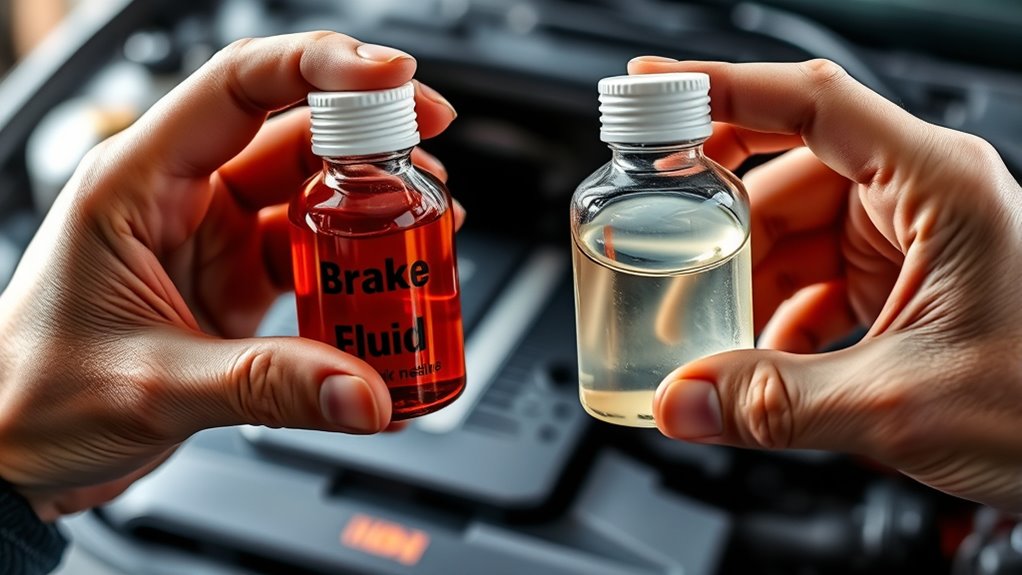
Can you really use brake fluid as power steering fluid? While it might seem tempting in a pinch, it’s not a good idea.
Brake fluid and power steering fluid serve different purposes in your vehicle. The brake system relies on hydraulic pressure to work, while power steering fluid helps you steer with ease.
Using brake fluid in your power steering system can cause serious problems. Brake fluid is corrosive and can damage the rubber seals and hoses in your system.
This can lead to leaks and eventually cause complete failure, leaving you with a costly repair bill.
If you’re stuck, it’s better to find a proper substitute or get the right fluid. Always follow the manufacturer’s recommendations to keep your power steering working smoothly.
Trust me, your vehicle will thank you for it!
What Is Power Steering Fluid and Its Role?
Power steering fluid is a pretty important part of your vehicle’s steering system. Without it, turning your steering wheel would be a lot harder and less smooth. It basically acts as a lubricant and helps transmit the power needed to turn the wheels easily.
This fluid is made up of a mix of base oil and some special additives. These additives aren’t just there for show—they actually help improve how well the fluid performs and protect the system from wear and tear over time. Knowing what’s inside the fluid can give you a better idea of how it keeps your steering responsive and working efficiently.
Composition of Power Steering Fluid
Although many people might think of power steering fluid as just another automotive liquid, it actually plays a vital role in your vehicle’s steering system. This fluid is specially designed to ensure smooth operation and quick response when you turn the wheel.
Its unique properties, like viscosity and lubricating abilities, help reduce wear and tear on the steering parts. The chemical makeup of power steering fluid is quite different from other automotive liquids, such as brake fluid.
Power steering fluid often includes additives to prevent foaming and corrosion, making it perfect for hydraulic systems. Using the wrong fluid can cause system failure, so it’s really important to choose the right one for optimal performance and safety.
Functions in Steering System
Understanding the role of power steering fluid is key to appreciating how your vehicle’s steering system operates. This fluid plays an essential part in maintaining steering precision, allowing you to navigate corners and turns smoothly.
It acts as a hydraulic medium that transfers force from the steering wheel to the wheels, enhancing hydraulic efficiency. Without the right power steering fluid, you may face increased resistance, making steering feel heavy and unresponsive.
This not only affects your driving experience but can also lead to premature wear on components. By ensuring you have the correct fluid, you promote ideal performance and longevity of your steering system.
Keeping the fluid in good shape helps keep your vehicle responsive and safe on the road.
What Does Brake Fluid Do in Your Car?
Brake fluid is a pretty important part of your car’s braking system. Without it, your brakes wouldn’t work properly, and stopping could become really dangerous. It helps transfer the force from your brake pedal to the brakes themselves, making sure your car slows down or stops when you need it to.
So, what’s in brake fluid? It’s made up of special chemicals that help keep everything working smoothly. These chemicals also help maintain the right pressure in the system and stop rust or corrosion from forming inside the brake lines. Basically, brake fluid keeps everything in your brake system running reliably and safely.
Understanding what brake fluid does can really show you how crucial it is for your car’s safety and overall performance. Regularly checking and changing it when needed is a small step that can make a big difference in how well your brakes work.
Brake Fluid Composition Explained
While many drivers focus on engine oil and coolant, brake fluid plays an essential role in your vehicle’s overall performance. Understanding brake fluid composition helps you appreciate its importance.
There are several brake fluid types, each with unique properties:
- DOT 3: A glycol-based fluid, it’s highly absorbent and is often used in older vehicles.
- DOT 4: This fluid includes borate esters, offering higher boiling points and better performance under stress.
- DOT 5: Made from silicone, it’s non-hygroscopic, making it ideal for classic cars.
These brake fluid properties ensure effective pressure transmission in the braking system, keeping you safe on the road. Choosing the right type is vital for peak performance.
Brake Fluid Functionality Overview
Fluid types not only differ in composition but also in their specific functions within your vehicle. Brake fluid, for example, plays a critical role in your braking system.
Its main job is to transfer force from your foot on the brake pedal to the brake components, making sure your car stops effectively. The properties of brake fluid are essential for maintaining hydraulic pressure and preventing vapor lock, which can weaken braking performance.
In a hydraulic fluid comparison, brake fluid stands out because it can work under high temperatures and pressures. It also resists moisture absorption, which could cause corrosion and reduce effectiveness.
Understanding these functions helps you see why you can’t just replace brake fluid with other types of fluids.
Importance Of Brake Fluid
Understanding the importance of brake fluid is crucial for your vehicle’s safety and performance. It plays a vital role in your braking system, making sure you can stop effectively when needed.
Here are three key functions of brake fluid:
- Transmits Force: It transfers the force from your foot on the brake pedal to the brake components, allowing for quick stops.
- Prevents Corrosion: Different brake fluid types contain additives that protect the system from rust and oxidation, helping it last longer.
- Maintains Temperature: Brake fluid needs to withstand high temperatures without boiling, which keeps your brakes working safely and efficiently.
Always choose the right brake fluid for your vehicle to ensure top performance and safety.
Key Differences Between Power Steering Fluid and Brake Fluid
Although both power steering fluid and brake fluid are essential for your vehicle, they have different roles and properties. Power steering fluid helps make steering easier by providing hydraulic assistance. Its viscosity is designed to perform well across a range of temperatures, ensuring smooth steering.
Brake fluid, however, is formulated to handle high temperatures during braking and needs to stay consistent under pressure. It must also be compatible with brake system materials to prevent corrosion and keep everything safe.
Using the wrong fluid can cause serious problems. If you think about substituting one for the other, remember their properties aren’t interchangeable. Knowing these differences will help you keep your vehicle running smoothly and safely. Always stick to the recommended fluids for your specific vehicle.
Risks of Using Brake Fluid in Power Steering
Using brake fluid in your power steering system can cause some serious problems. The risks include:
- Rubber Deterioration: Brake fluid can cause seals and hoses in the power steering system to break down, leading to leaks and failures.
- Fluid Contamination: Mixing brake fluid with power steering fluid can contaminate the entire system, causing poor performance and unpredictable steering.
- Increased Wear: Since brake fluid isn’t designed for power steering parts, it can cause premature wear and damage to the system.
These issues can lead to costly repairs and make driving less safe. It’s really important to use the right fluid to keep your power steering working smoothly and reliably.
Avoid the temptation to use brake fluid; it’s not worth the risk of damaging your vehicle. Always check your vehicle’s manual for the correct type of fluid.
Signs That Your Power Steering Fluid Is Low
How can you tell if your power steering fluid is low? One of the first signs is steering noise. If you hear whining or groaning sounds when you turn the wheel, it’s a strong indicator that your power steering fluid might be low.
One key sign of low power steering fluid is unusual steering noise, like whining or groaning when turning the wheel.
You should also check for fluid leaks under your vehicle. If you notice a puddle of reddish or brown fluid, it could mean your power steering system is leaking.
Another warning sign is difficulty turning the steering wheel, especially at low speeds. If it takes more effort to steer, that’s a good cue to check your fluid levels.
Don’t ignore these signs, as low power steering fluid can cause bigger problems later on. Keeping an eye on the fluid levels can save you from costly repairs and help ensure smooth steering.
What to Do If Power Steering Fluid Is Low
If you notice that your power steering fluid is running low, it’s a good idea to take action sooner rather than later. Make it a habit to check the fluid levels regularly so you can catch any drops before they turn into bigger problems. Keep an eye out for signs like difficulty turning the steering wheel or unusual noises when you’re driving—these can be clues that something’s up.
Addressing these issues early on can really save you from more costly repairs down the road. So, if you suspect your power steering fluid is low, don’t hesitate to top it up or have it checked out by a mechanic. Staying on top of it keeps your steering smooth and your drive safe and stress-free.
Check Fluid Levels Regularly
Regularly checking your power steering fluid levels is key to keeping your vehicle running smoothly. Staying on top of fluid maintenance and inspections can save you from expensive repairs later on.
To do this, open the hood and find the power steering reservoir — it’s usually labeled. Check the fluid level against the markings on the reservoir; it should be between the “min” and “max” lines.
If the level is low, add the recommended power steering fluid. Just make sure not to use substitutes like brake fluid, as that can cause damage.
Identify Symptoms of Low Fluid
If your steering feels stiff or unresponsive, it could be a sign that your power steering fluid is low. You might also notice strange noises like whining or groaning, which suggest your system is struggling.
Keep an eye out for fluid leaks under your vehicle, as these can cause fluid levels to drop. Addressing these signs early can help prevent more serious issues down the line.
Here’s a quick reference table to help you identify symptoms:
| Symptom | What to Check |
|---|---|
| Stiff Steering | Check fluid level |
| Unusual Noises | Inspect for air in the system |
| Fluid Leaks | Look for puddles under the car |
| Warning Light | Consult your owner’s manual |
Dealing with these problems promptly will keep your steering system in good shape and ensure safe driving.
Checking and Filling Power Steering Fluid
Power steering fluid is essential for smooth steering, so it’s important to check and fill it regularly for your vehicle’s performance. Here are some simple tips to help you manage your fluid types effectively.
First, locate the power steering fluid reservoir under your hood. It usually has a cap with a steering wheel icon on it.
Next, remove the cap and check the fluid level. You can use a dipstick or simply look inside. The level should be between the “min” and “max” marks.
If the fluid level is low, choose the right type of power steering fluid for your vehicle. Pour it in slowly to avoid overfilling.
Alternatives to Brake Fluid for Power Steering Issues
After confirming your power steering fluid is at the right level, you might wonder about alternatives if you’re facing issues. Using the wrong fluid can cause significant steering problems, so it’s really important to choose carefully.
Here are some common alternatives that keep your fluid compatible with your system:
| Alternative Fluid | Pros | Cons |
|---|---|---|
| ATF (Automatic Transmission Fluid) | Good lubrication and temperature stability | Not always compatible with all systems |
| Synthetic Power Steering Fluid | Better performance and longer-lasting | Usually more expensive |
| Mineral Oil | Easy to find and affordable | Might not work well in modern systems |
| Vegetable-based Fluids | Eco-friendly option | Limited availability |
| OEM Power Steering Fluid | Designed specifically for your vehicle | Usually costs more |
Always check your vehicle’s manual or ask a professional to make sure you’re using the right fluid for your car.
Best Practices for Maintaining Your Power Steering System
To keep your power steering system running smoothly, regular maintenance is key. Ignoring it can lead to costly repairs and less-than-ideal performance. Here are three simple tips for effective steering care:
Regular maintenance is essential for your power steering system to avoid costly repairs and ensure optimal performance.
- Check Fluid Levels: Make sure to inspect your power steering fluid regularly. Low levels can make steering hard and damage the pump.
- Flush the System: Every couple of years, consider doing a fluid flush. It clears out contaminants and keeps your system performing at its best.
- Inspect Hoses and Belts: Regularly look over hoses and belts for cracks or leaks. Replacing worn parts now can prevent leaks and keep your system properly pressurized.
Frequently Asked Questions
Can Using Brake Fluid Damage My Power Steering Pump?
Yes, using brake fluid can damage your power steering pump. Brake fluid has high viscosity and can cause corrosion, which aren’t compatible with power steering systems.
This mismatch can lead to pump failure and leaks, which means more costly repairs for you. If you’re unsure about which fluid to use, always check your vehicle’s manual or ask a professional.
Protect your power steering system by sticking to the recommended fluid. That way, everything will keep running smoothly.
What Happens if I Mix Brake Fluid With Power Steering Fluid?
If you mix brake fluid with power steering fluid, you’re asking for trouble. Imagine a driver, John, who thought adding brake fluid would fix his steering issues. Instead, the incompatible brake fluid properties caused his power steering pump to fail.
The two fluids don’t mix well, leading to foaming and reduced lubrication. This can damage seals and hoses, ultimately costing you more in repairs than if you’d used the correct fluid in the first place.
Is Brake Fluid Cheaper Than Power Steering Fluid?
Yes, brake fluid is generally cheaper than power steering fluid.
However, you should consider the brake fluid properties before making a switch. Using brake fluid in your power steering system can lead to issues like corrosion and damage.
If you’re looking for power steering alternatives, stick with fluids specifically designed for that purpose. It’s worth investing a bit more to keep your vehicle performing well and lasting longer.
How Often Should I Replace Power Steering Fluid?
Picture your car gliding smoothly, like a symphony of mechanical harmony. To keep that music playing, you should replace your power steering fluid every 30,000 to 60,000 miles.
Regular power steering maintenance is key to making sure your system runs effortlessly. Stick to a fluid replacement schedule, and you’ll avoid costly repairs down the road.
Trust me, a little care now will keep your ride as smooth as silk for years to come!
Can I Use Synthetic Oil Instead of Power Steering Fluid?
You can’t use synthetic oil instead of power steering fluid. While synthetic oil has benefits like better lubrication and temperature resistance, its viscosity doesn’t match what power steering systems need.
Power steering fluid is specially formulated to provide the right oil viscosity for smooth operation. Using synthetic oil might cause poor performance or even damage.
Stick to the recommended power steering fluid for the best results. This helps keep your system running smoothly and avoids potential issues.
Conclusion
In the world of car maintenance, using brake fluid in your power steering system is like putting water in a gas tank—it’s a recipe for disaster. While both fluids play essential roles, they’re not interchangeable.
To keep your steering smooth and your ride safe, always use the correct fluid. Think of your vehicle as a finely-tuned machine; every part needs the right fuel to operate harmoniously.
So, stick to power steering fluid and keep your car running smoothly. Using brake fluid for power steering can cause damage and lead to costly repairs.