What Does a Carburetor Do for Your Engine?
Are you tired of your engine stalling or running rough? Many people struggle with performance issues that can be frustrating and hard to diagnose.
If you want your engine to run smoothly and efficiently, understanding what a carburetor does is a great place to start.
A carburetor plays an essential role in your engine by mixing air and fuel for efficient combustion. It creates a vacuum using the Venturi Effect, drawing fuel into the airflow while adjustable jets fine-tune delivery.
This guarantees your engine runs smoothly and performs well.
If you notice poor performance or unusual exhaust smoke, it might be time for maintenance.
Understanding how carburetors work can help you boost your engine’s efficiency and longevity.
Key Takeaways
- Carburetors mix air and fuel in internal combustion engines, helping ensure efficient combustion and good engine performance.
- They use the Venturi Effect to create a vacuum that pulls fuel into the airflow.
- Carburetors have adjustable jets and chokes, which allow you to fine-tune the fuel delivery and enrich the mixture during cold starts.
- Regular maintenance and tuning are important for keeping things running smoothly, preventing issues like poor engine response and fuel leaks.
- While carburetors work well, many modern engines now use fuel injection for better efficiency and lower emissions.
What Is a Carburetor and How Does It Work?
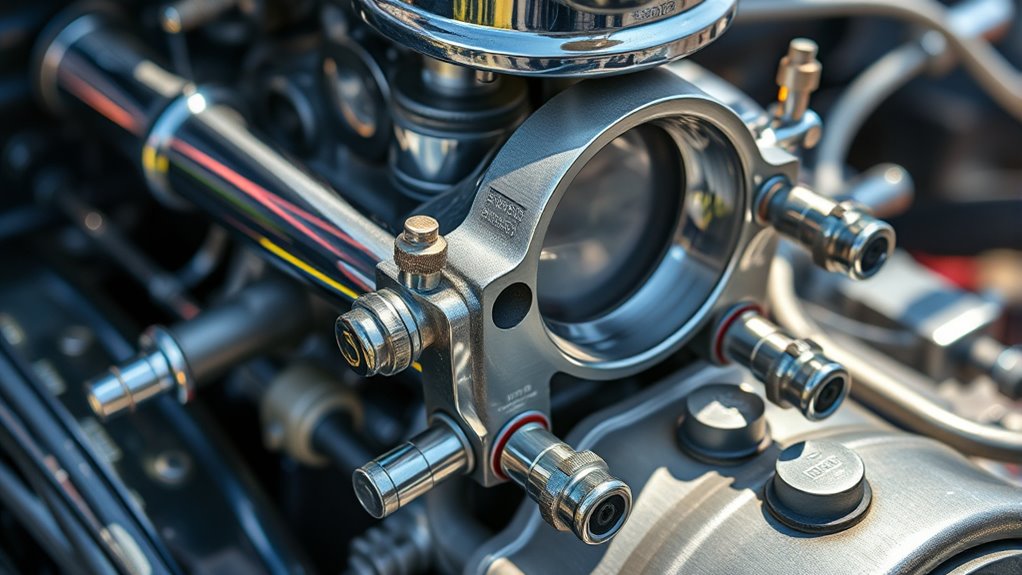
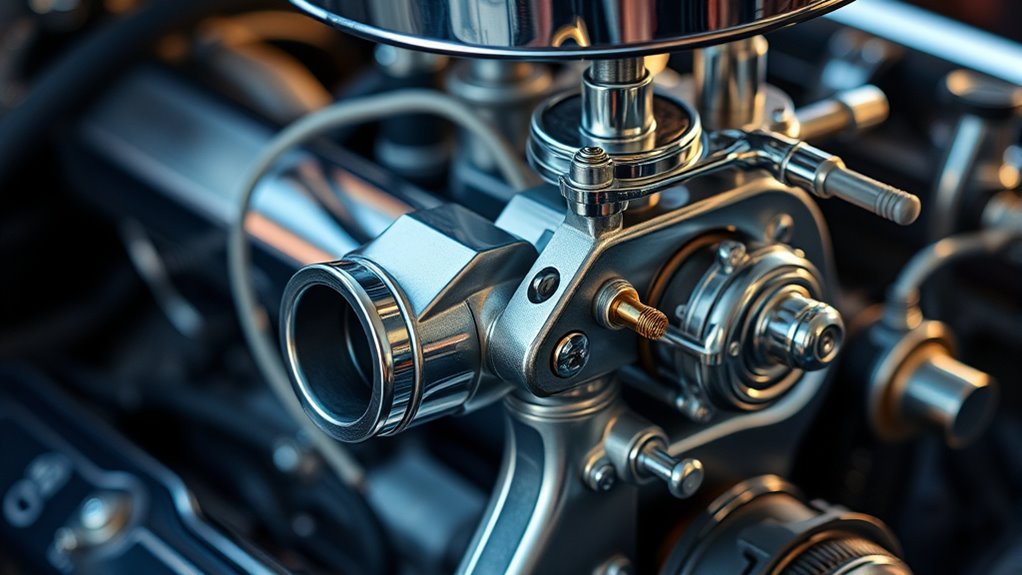
A carburetor is an essential part of many internal combustion engines, mixing air and fuel to create the perfect mixture for combustion. Understanding how it works means looking into its history, which dates back to the late 19th century. Early designs set the stage for the more advanced models we see today.
You might have heard that carburetors are outdated because of modern fuel injection systems. While fuel injection has its benefits, carburetors still work well in certain situations, like with classic cars and small engines. They use simple mechanical principles, relying on vacuum pressure to draw fuel from a bowl into the airflow, ensuring a good mix.
This simplicity is part of what makes them appealing. If you keep your carburetor in good shape, it can give you great performance. That’s why many enthusiasts still prefer them. Understanding how they work helps you appreciate the engineering behind your engine.
How Do Carburetors Create the Perfect Air-Fuel Mixture?
How do carburetors achieve the ideal air-fuel mixture for efficient combustion? They use specific design features and mechanisms to ensure mixture stability and peak performance. Here’s how they get it right:
- Venturi Effect: When air flows through the carburetor, it speeds up in the narrow section, creating a vacuum that pulls fuel into the airstream.
- Adjustable Jets: You can fine-tune the fuel delivery by adjusting the jets, giving you precise control over the air-fuel ratio for different conditions.
- Choke Mechanism: This helps enrich the mixture during cold starts, making sure your engine runs smoothly right from the beginning.
What Types of Carburetors Exist and Which One Suits You?
When it comes to carburetors, there are actually a few different types out there, each with its own set of features. Knowing what’s available can help you pick the one that’s best suited for your engine and how you plan to use it. So, let’s take a quick look at the main types of carburetors and see which one might be right for you.
Types of Carburetors Explained
Carburetors play an essential role in blending air and fuel for efficient engine performance. Understanding different carburetor designs can help you pick the right one, especially if you’re into performance tuning.
Here are three common types:
- Single-Barrel Carburetors: Perfect for smaller engines, offering simplicity and reliability.
- Two-Barrel Carburetors: Better for moderate performance, providing improved airflow and fuel delivery.
- Four-Barrel Carburetors: Built for high-performance setups, maximizing power and efficiency.
Each design has its strengths and weaknesses, tailored to different engines and driving styles. Knowing these options lets you make informed choices for peak performance and smooth operation.
Choosing the Right Type
Choosing the right carburetor can feel overwhelming, but it doesn’t have to be. Start by identifying the available types: single-barrel, two-barrel, and four-barrel.
Single-barrel carburetors are great for economy and simple applications, while two-barrel options balance performance and efficiency. If you’re aiming for maximum power, a four-barrel carburetor might be your best bet, as it greatly improves airflow and fuel delivery.
Think about your engine’s specific needs and how each carburetor type impacts performance. Consider factors like engine size, intended use, and horsepower requirements.
Ultimately, the right choice depends on your personal preferences and driving style. Don’t hesitate to consult experts or do some research to make sure you pick the best fit for your setup.
Key Carburetor Components
Understanding the key components of a carburetor is essential for grasping how it functions in an engine. Each part plays a significant role in mixing air and fuel to optimize performance.
Here are three important components you should know:
- Float Chamber: This regulates the fuel level, ensuring a consistent supply to the engine.
- Venturi: This narrow section increases airflow, creating a vacuum that draws fuel into the airstream.
- Jet: This controls the amount of fuel that mixes with the air, allowing for precise tuning techniques.
Carburetor materials also impact performance by affecting durability and heat resistance. By understanding these components, you can better appreciate how they influence engine operation.
Whether you’re tuning for efficiency or power, knowing how these parts work together is key to maximizing your engine’s potential.
How Do Carburetors Affect Your Engine’s Performance?
Your carburetor is pretty much the heart of your engine’s fuel system. It’s responsible for mixing the right amount of air and fuel, which is crucial for your engine to run smoothly. If your carburetor isn’t working properly or is out of tune, you might notice your engine feeling sluggish or not responding as quickly as it should.
When your carburetor is dialed in just right, it can really boost your engine’s performance. You’ll notice better throttle response, meaning your vehicle reacts more promptly when you press the gas pedal. Overall, understanding how your carburetor affects things can help you keep your engine running at its best.
Fuel-Air Mixture Regulation
Carburetors are crucial for controlling the fuel-air mixture that powers your engine, and this has a big impact on how well it runs. When the mixture is just right, your engine burns fuel efficiently, giving you better fuel economy and more power.
If the mixture is off, you might notice some issues. For example, your car could have poor acceleration, feeling sluggish when you press the gas pedal. You might also see increased fuel consumption because a rich mixture tends to use more gas.
Another sign to watch for is rough idling. If your engine stutters while idling, it could mean there’s a problem with the mixture. Using simple troubleshooting techniques can help you figure out what’s wrong.
Proper adjustment of your carburetor is key to keeping your engine running smoothly and efficiently. Ensuring the mixture is balanced will help your vehicle perform at its best.
Engine Throttle Response
When you press the throttle, the carburetor plays a key role in how quickly and smoothly your engine responds. A properly tuned carburetor ensures the right fuel-air mixture, making acceleration feel smoother.
If your carburetor isn’t calibrated right, you might notice lag or stuttering, which can be pretty frustrating. Tuning the throttle helps your engine react faster and more accurately.
Adjusting airflow and fuel delivery through throttle tuning is crucial for top performance. It not only improves how your vehicle feels but also boosts fuel efficiency and power.
Identifying a Failing Carburetor?
How can you tell if your carburetor is on the verge of failure? Recognizing the signs early can save you both time and money. Keep an eye out for these common indicators:
Poor Engine Performance: If your engine stalls or has trouble accelerating, it might be a carburetor issue.
Fuel Leaks: Noticing gas pooling around the carburetor? That could be a sign of a failing gasket or seal.
Black Smoke from Exhaust: Excess fuel getting into the engine can cause black smoke, indicating a too-rich mixture.
Using simple troubleshooting techniques can help you figure out if your carburetor needs fixing or replacing. Pay attention to how your engine sounds and watch for these red flags. Catching problems early can prevent bigger damage and keep your vehicle running smoothly.
Stay proactive, and you’ll avoid costly repairs down the road!
Essential Carburetor Maintenance Tips
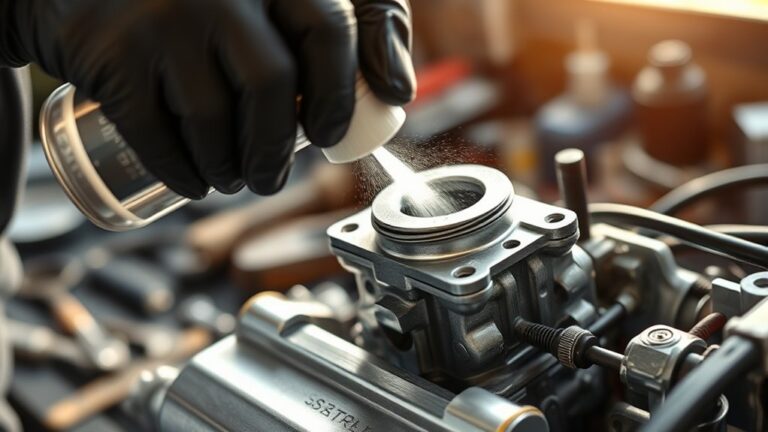
Catching carburetor issues early is just the first step; regular maintenance keeps your engine running at its best. Start with routine carburetor cleaning to remove dirt and buildup that can affect performance. You can use a carburetor cleaner spray and a soft brush to reach those hard-to-clean areas.
Next, pay attention to float adjustment. The float controls the fuel level, so if it’s misaligned, you might experience stalling or flooding. Check the manufacturer’s specifications to make sure it’s set correctly.
Additionally, inspect gaskets for wear and replace them as needed. Keeping your fuel system clean helps prevent future problems, so consider adding a fuel additive regularly. Finally, always verify that your air filter is clean, as a clogged filter can impact carburetor efficiency.
Tuning Your Carburetor for Maximum Efficiency
Tuning your carburetor is pretty important if you want your engine to run its best. Basically, you’ll want to play around with the air-fuel mixture, set the idle speed just right, and make sure your jets are the right size. All these little tweaks can make a big difference in how your engine performs and how efficiently it runs.
Air-Fuel Mixture Adjustment
While you might think that simply installing a carburetor is enough, fine-tuning the air-fuel mixture is essential for maximum engine efficiency. Getting the right air-fuel ratio helps your engine run smoothly and perform at its best.
Here are a few key things to keep in mind during mixture tuning:
- Adjust the jets: Change the size of the jets to tweak how much fuel is delivered.
- Monitor throttle response: Pay attention to how the engine reacts at different speeds.
- Check for leaks: Make sure all connections are tight so air leaks don’t mess with your ratio.
Idle Speed Calibration
Fine-tuning your carburetor isn’t just about adjusting the air-fuel mixture; idle speed calibration is just as important for optimal engine performance. Getting the idle speed right helps your engine run smoothly when idling, which means less stalling and better responsiveness.
Here’s a simple chart to guide you:
| Idle Speed (RPM) | Idle Mixture Ratio | Effect on Performance |
|---|---|---|
| 600 | 14:1 | Smooth idle |
| 700 | 14.5:1 | Responsive throttle |
| 800 | 15:1 | Slightly rough idle |
| 900 | 15.5:1 | Uses more fuel |
| 1000 | 16:1 | Risk of stalling |
Adjusting both the idle mixture and speed together can improve efficiency. Take your time to calibrate both for the best results.
Jet Sizing Optimization
To get the most out of your carburetor, optimizing jet sizing is key. Picking the right jets can really boost your engine’s performance.
Start by understanding your engine’s airflow. If the jets are too big, they can flood the engine; too small, and it might not get enough fuel.
Try out different jet sizes while tuning. This way, you can find the perfect balance for power and fuel efficiency.
Pay close attention to how your engine reacts. Adjust the jets based on throttle response, acceleration, and overall performance to get the best results.
The Shift From Carburetors to Fuel Injection
As automotive technology evolved, the shift from carburetors to fuel injection transformed engine performance and efficiency. Carburetor history shows that these devices dominated for decades, mixing air and fuel in a relatively simple manner. However, as vehicles became more sophisticated, the limitations of carburetors became clear, especially regarding fuel efficiency and emissions.
Fuel injection offers precise fuel delivery, which optimizes combustion and boosts overall performance. This system adjusts the fuel-air mixture based on various parameters, ensuring your engine runs smoothly in different conditions. You’ll notice better acceleration and improved mileage, making fuel injection a real game-changer.
While carburetors still have their charm and are often found in classic cars, fuel injection has become the industry standard. This evolution not only improves your driving experience but also helps meet environmental standards, making your vehicle more efficient and eco-friendly.
Why Understanding Carburetors Benefits Every Driver
Understanding carburetors can improve your driving experience, even if you drive a modern fuel-injected vehicle. Knowing a bit about carburetor history helps you appreciate why certain performance myths persist. This knowledge can empower you as a driver, enhancing your vehicle maintenance and driving skills.
Here are a few reasons why understanding carburetors is beneficial:
- Enhanced Maintenance: Recognizing how carburetors work can help you diagnose engine issues, making you less dependent on mechanics.
- Fuel Efficiency Insights: Understanding carburetor functions can guide you to optimize your driving habits for better fuel economy.
- Myth-Busting: You can separate fact from fiction about performance myths, helping you make informed choices about upgrades and modifications.
Frequently Asked Questions
Can a Carburetor Be Rebuilt Instead of Replaced?
Yes, you can rebuild a carburetor instead of replacing it. Many people choose this because it’s usually cheaper than buying a new one.
By focusing on proper carburetor maintenance, you can extend its life and make sure your engine runs smoothly. Just make sure you have the right tools and know-how, or consider getting help from a professional.
A rebuild can save you money and keep your engine performing well.
How Can Weather Affect Carburetor Performance?
You might think weather doesn’t impact your carburetor, but it really does. Temperature effects can change fuel vaporization, making it harder for the engine to start or run smoothly.
On hot days, fuel may vapor lock, which can cause issues. Cold weather can lead to a richer mixture, affecting performance. Humidity also plays a role; high humidity can make the air-fuel mix too rich.
Keeping an eye on weather conditions helps you maintain peak engine performance. Small adjustments based on the weather can make a big difference in how well your carburetor works.
What Are Common Carburetor Myths?
You might believe carburetors need constant tuning or that they’re outdated in modern engines. However, many myths still stick around.
For example, some think you can’t clean a carburetor, but regular maintenance can actually boost performance.
Others assume troubleshooting isn’t necessary, but ignoring warning signs can cause bigger problems later.
Knowing these myths helps you keep your engine running smoothly and efficiently. So, stay informed and don’t fall for misconceptions!
Can a Carburetor Work With Alternative Fuels?
Yes, a carburetor can work with alternative fuels, but you might need some modifications.
Depending on the fuel type, making sure your carburetor is compatible is really important. You may need to adjust jet sizes or swap out certain parts to handle the different combustion properties.
It’s a good idea to do some research or talk to an expert to get the best performance from your carburetor with the new fuel. That way, you’ll ensure your engine runs smoothly and efficiently.
How Do Carburetors Impact Fuel Economy?
You might think carburetors are outdated, but they still play an essential role in fuel economy. A well-tuned carburetor optimizes the fuel mixture, making sure your engine runs smoothly.
When you adjust the carburetor for better performance, you can actually improve your miles per gallon by cutting down on excess fuel use. It’s all about getting that perfect air-fuel balance.
Proper engine tuning with the carburetor helps boost fuel efficiency and also extends your engine’s life. So, don’t overlook the power of a good carburetor!
Conclusion
Understanding your carburetor’s vital components can boost your engine’s performance. Knowing how it works helps you get the most out of your vehicle.
By mastering the mechanics, you’ll improve mileage, reduce maintenance, and stay in control of your machine. A little knowledge can go a long way.
Whether you’re tuning for maximum efficiency or just keeping it clean, understanding your carburetor makes a difference. It’s all about keeping your engine running smoothly.
Explore the details and see how this essential device powers your ride. When you understand your carburetor, you’ll enjoy a smoother, stronger journey ahead.