Where Is a Lawn Mower’s Carburetor Located?
Many lawn owners know the frustration of a mower that just won’t start or runs poorly. You’re not alone—carburetor issues are a common headache.
Understanding where the carburetor is located can make troubleshooting and maintenance much easier.
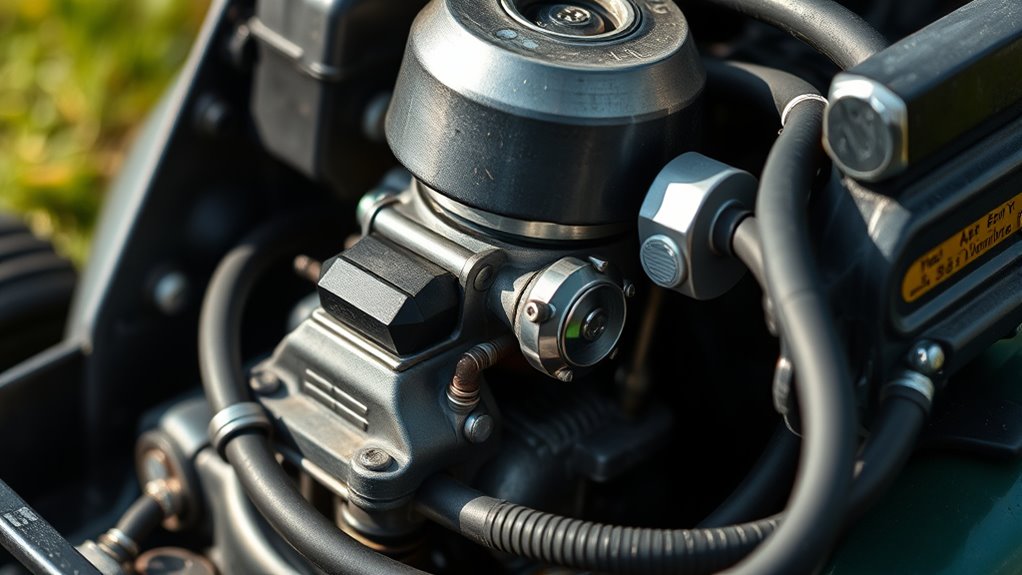
Your lawn mower’s carburetor is usually located near the engine. In push mowers, it’s often under the air filter at the back.
For riding mowers, you’ll find it mounted on the engine, sometimes hidden by a shroud. Zero-turn mowers typically have it on the side of the engine.
Knowing where to look makes maintenance easier. If you’d like tips on accessing and maintaining your carburetor, there’s more to investigate!
Key Takeaways
- Push Mowers: The carburetor is located beneath the air filter at the back of the engine.
- Riding Mowers: It’s mounted on the engine and often hidden under a plastic shroud or air filter cover.
- Zero-Turn Mowers: Usually found mounted on the side of the engine for easier access.
- Access Variability: The carburetor’s location varies depending on the mower type, which can affect how easy it is to maintain or repair.
- Familiarity Aids Troubleshooting: Knowing where the carburetor is helps you quickly diagnose and fix any issues.
Understanding the Carburetor’s Role in Lawn Mowers
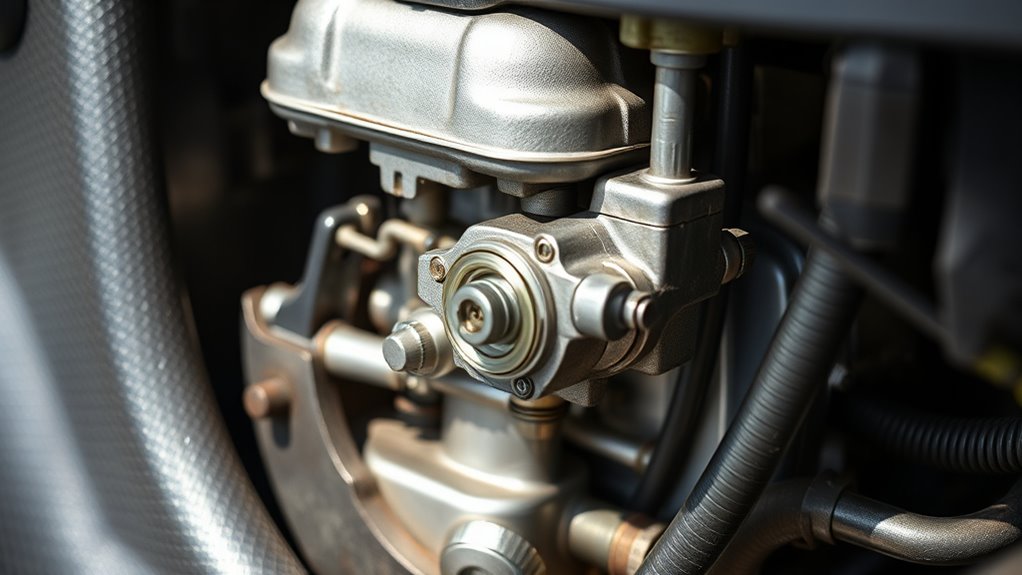
The carburetor acts as the heart of your lawn mower’s engine, mixing air and fuel to create the combustion needed for power. Understanding how it works is key to keeping your mower running smoothly.
When you pull the starter cord, the engine draws in air through the carburetor, where it combines with fuel. This precise mixture ensures efficient combustion, giving your mower the power to cut grass effectively.
If the mixture is off, you might notice poor performance or trouble starting the engine. Regular maintenance like cleaning or adjusting the carburetor can help prevent these issues.
A well-functioning carburetor not only boosts your mower’s efficiency but also helps it last longer. So, take some time to understand how it works, and you’ll enjoy a smoother, more powerful mowing experience.
Common Lawn Mower Types and Carburetor Locations
When you’re working on lawn mowers, figuring out where the carburetor is can really save you some headaches. Different types of mowers—like push, riding, and zero-turn—have their carburetors in different spots, which can make maintenance and repairs a lot easier or trickier depending on where you look. So, let’s take a quick look at where you can find the carburetor in these common mower types.
Push Mower Carburetor Location
Finding the carburetor on a push mower is key for maintenance and repairs. Usually, you’ll find it beneath the air filter, toward the back of the engine.
Knowing its location helps you make adjustments and troubleshoot more effectively. The carburetor is hidden behind the air filter, so check there first.
It’s important to inspect it for blockages or leaks. Also, make sure the throttle cable connected to it is properly attached.
Having a good idea of where everything is makes fixing your mower much easier and quicker.
Riding Mower Carburetor Placement
Locating the carburetor on a riding mower can be a bit more tricky than on a push mower, but it’s really important for maintenance. Usually, you’ll find the carburetor mounted on the engine, often hidden under a plastic shroud or air filter cover.
To get to it, you might need to remove these parts, which can require some basic tools. Knowing where it is makes troubleshooting easier because issues like poor performance or starting problems often come from a dirty or faulty carburetor.
Regular maintenance, like cleaning or replacing the carburetor, helps keep your mower running smoothly. Getting familiar with its location will save you time and keep your mower in good shape.
Zero-Turn Mower Carburetor Access
Accessing the carburetor on a zero-turn mower can be straightforward once you know where to look. Thanks to the zero-turn design, you’ll typically find the carburetor near the engine, often mounted on the side.
To reach it, you’ll usually need to remove a few panels or covers, which is often simple with basic tools. Make sure to disconnect the battery first for safety.
During carburetor troubleshooting, check for clogs or leaks, as these can affect performance. If you’re unfamiliar with the process, consult your owner’s manual for specific instructions related to your model.
With a little patience, you’ll have the carburetor accessible and ready for maintenance in no time.
How to Locate Your Carburetor in Push Lawn Mowers
Identifying the carburetor in your push lawn mower is important for maintenance and troubleshooting. Knowing the basics makes it easier to locate.
Usually, you’ll find the carburetor mounted on the engine, just behind the air filter. It’s a small, cylindrical part connected to the fuel line and linkage.
To keep your mower running well, check that the carburetor isn’t clogged with debris. Regularly inspect for fuel leaks and clean the air filter, as these can impact how the carburetor works.
If you’re having trouble starting the mower or it runs unevenly, inspecting the carburetor first is a smart move.
Familiarizing yourself with this part can save you time and effort. Knowing where it is and how to access it helps keep your mower in good shape.
Accessing the Carburetor in Riding Lawn Mowers
Riding lawn mowers often have more complex designs than push mowers, so knowing how to access the carburetor is important. Start by locating the engine compartment, usually at the back of the mower.
You’ll likely need to remove the engine cover, which might involve unscrewing a few bolts or clips. Once you have access, find the carburetor attached to the engine.
Check the fuel mixture by inspecting the adjustment screws on the carburetor. These screws help fine-tune the air-to-fuel ratio to keep your mower running smoothly.
Inspect the carburetor’s adjustment screws to fine-tune the air-to-fuel ratio for optimal mower performance.
If you notice any issues, you might need to make some carburetor adjustments to get the best performance. Remember to clean away debris around the carburetor to prevent clogs.
With these steps, you’ll be able to access and maintain your riding mower’s carburetor effectively.
Spotting the Carburetor on a Zero-Turn Mower
In zero-turn mowers, spotting the carburetor can look a bit different because of their unique design. Usually, you’ll find it mounted on the engine, near the air filter and throttle control.
Start by lifting the hood or opening the engine compartment—that gives you a clear view of the parts. Look for the fuel line leading straight to the carburetor to help identify it.
It’s also helpful to follow maintenance tips like cleaning the carburetor regularly and checking for clogs or fuel leaks. If you can’t find it right away, check your owner’s manual; it usually has diagrams that can guide you.
Getting familiar with your mower’s layout will make future maintenance tasks much easier.
Signs Your Carburetor Needs Attention?
When your mower struggles to start or runs unevenly, it might be time to check the carburetor. Ignoring these signs can lead to bigger performance problems later on.
Here are some common indicators your carburetor needs attention:
- Difficulty Starting: If your mower won’t start or takes multiple tries, the carburetor might be clogged.
- Rough Idling: An uneven or sputtering idle often points to fuel delivery issues.
- Poor Acceleration: If your mower hesitates or lacks power when you accelerate, the carburetor may not be mixing fuel and air correctly.
- Excessive Smoke: Any unusual smoke coming from the exhaust can be a sign of a problem with the carburetor’s fuel mixture.
Essential Tools for Carburetor Access and Maintenance
To access and maintain your lawn mower’s carburetor effectively, you’ll need a few essential tools. First, grab a socket set or a wrench; these carburetor tools will help you remove any bolts securing the carburetor in place.
To maintain your lawn mower’s carburetor, gather a socket set or wrench to remove securing bolts effectively.
Next, a screwdriver, preferably flathead and Phillips, is vital for loosening screws and adjusting parts. Don’t forget a pair of needle-nose pliers; they’re perfect for reaching tight spots and handling small components.
For cleaning, have carburetor cleaner and a soft brush on hand, as these maintenance essentials will keep your carburetor functioning smoothly. A clean cloth or rag will also help wipe down surfaces and remove debris.
Finally, wearing safety goggles will protect your eyes during the process. With these tools ready, you’ll be well-equipped to tackle your lawn mower’s carburetor maintenance effectively.
Step-by-Step Access to Your Carburetor
With your tools ready, you can start accessing your lawn mower’s carburetor. Follow these steps to reach it easily, especially if you’re troubleshooting fuel mixture issues.
- Disconnect the Battery: Safety first! Just remove the battery cable to prevent accidental starts.
- Remove the Air Filter Cover: Unscrew the cover to expose the air filter. Carefully take it out so you don’t damage anything.
- Detach the Carburetor: Find the carburetor and unscrew it from the engine. Be ready with a rag to catch any fuel spills if you need to disconnect fuel lines.
- Inspect and Clean: Once it’s out, check the carburetor for clogs or damage. This step is key when troubleshooting carburetor problems.
Cleaning and Maintenance Techniques for Your Carburetor
Keeping your carburetor clean is key to making your lawn mower run at its best. Regular cleaning helps prevent dirt buildup that can mess with fuel flow and engine performance.
Start by turning off the mower and disconnecting the spark plug for safety. Remove the air filter, clean it with soap and water, and let it dry completely before reinstalling.
Next, get to the carburetor and spray it with a carburetor cleaner to break down grime. Pay close attention to the jets and passages, and use a soft brush to loosen stubborn debris.
Once everything’s clean, reassemble the parts and double-check that everything’s tight and in place.
To keep your carburetor in top shape, follow a regular maintenance routine. Check the fuel quality, inspect the air filter, and clean the carburetor every few months or before mowing season.
Sticking to these simple tasks will help extend your mower’s life and keep it running smoothly.
When to Call a Pro for Carburetor Issues
Despite your best cleaning efforts, there are times when carburetor issues might be beyond your DIY skills. If you notice persistent carburetor symptoms that don’t improve with basic maintenance, it’s time to contemplate professional services. Here are four signs that indicate you should call a pro:
- Constant Stalling: Your mower stalls frequently, regardless of cleaning.
- Poor Performance: It struggles to start or runs rough, even after adjustments.
- Fuel Leaks: You spot fuel leaking from the carburetor or its connections.
- Excessive Smoke: The mower emits a lot of smoke, indicating a serious problem.
Ignoring these issues can lead to bigger repairs down the line. A skilled technician can diagnose and fix complex problems, ensuring your mower runs smoothly again. Don’t hesitate to get expert help when needed!
Frequently Asked Questions
Can a Dirty Carburetor Affect My Lawn Mower’s Performance?
Yes, a dirty carburetor can definitely affect your lawn mower’s performance. When you neglect carburetor maintenance, you might notice issues like stalling, poor fuel efficiency, or difficulty starting.
A buildup of dirt and debris can disrupt the fuel-air mixture, leading to these problems. Regularly cleaning and maintaining the carburetor helps keep your mower running smoothly and efficiently.
This way, you can keep your lawn looking great without unnecessary hassle.
What Are Common Symptoms of a Failing Carburetor?
If your carburetor’s failing, you’ll notice issues like poor engine performance, difficulty starting, or stalling. You might also experience uneven acceleration or a rough idle.
Regular carburetor maintenance can help prevent these problems and ensure smooth operation. If you’re seeing these symptoms, it’s important to check the carburetor and clean it.
Neglecting this can lead to more serious engine issues down the line. Don’t wait until it’s too late!
How Often Should I Clean My Lawn Mower’s Carburetor?
Think of your lawn mower’s carburetor like the heart of your engine. Keep it clean, and it’ll keep your mower running smoothly.
You should clean it at least once a season, or more often if you notice issues like rough idling or poor performance.
Follow these carburetor maintenance tips: use high-quality fuel and check for dirt buildup.
Regular cleaning guarantees your mower stays in top shape and ready for action when you need it.
Can I Repair a Carburetor, or Should I Replace It?
You can often repair a carburetor, depending on the damage and your DIY skills. If you’re comfortable with basic tools, a thorough cleaning or replacing gaskets might do the trick.
However, consider the repair costs versus the price of a new carburetor. If fixing it costs almost as much as buying a new one, replacing it might be the better choice.
Regular carburetor maintenance can also extend its life, so don’t overlook that!
Are There Specific Brands Known for Better Carburetor Performance?
In terms of carburetor brands, you’ll want to separate the wheat from the chaff. Brands like Briggs & Stratton and Honda are known for their reliable performance.
In a performance comparison, you’ll find that these brands often outshine others. If you’re looking for efficiency and longevity, sticking with reputable names can save you headaches down the road.
Always read reviews to guarantee you’re making a sound choice.
Conclusion
Just like a gardener tending to their plants, caring for your lawn mower’s carburetor keeps your mower running smoothly.
The carburetor is typically located near the engine, often on the side or top, connected to the air filter and fuel line.
Knowing where it is makes maintenance much easier, so you can keep your mower in tip-top shape.
If you ever feel overwhelmed, remember that even the strongest trees need a little help to grow.
Don’t hesitate to call in the experts if the task seems too intimidating.
Taking care of your lawn mower’s carburetor will help ensure a healthy, green lawn season after season.