10 Steps to Adjust Your Husqvarna Chainsaw Carburetor
Many chainsaw owners know the frustration of a chainsaw that just doesn’t run smoothly or starts to bog down when you need it most. If your Husqvarna chainsaw isn’t performing like it used to, you’re not alone.
Adjusting the carburetor can make a huge difference in getting that power back.
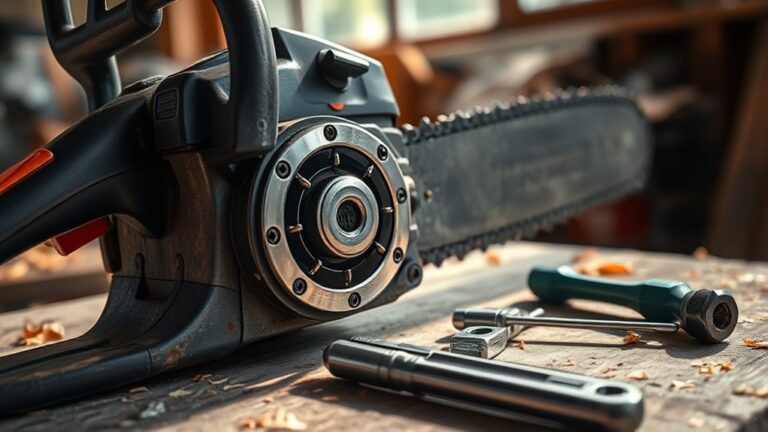
To adjust your Husqvarna chainsaw carburetor, start by gathering your tools, including a screwdriver and carburetor cleaner.
Locate the carburetor behind the air filter and verify the air filter is clean.
Adjust the idle speed and high-speed mixture screws carefully, testing performance after each tweak.
Listen for smooth idling and check acceleration.
Keep an eye out for common issues, and stay proactive about maintenance.
There’s a lot more to optimize your chainsaw’s efficiency, so keep going!
Key Takeaways
- Locate the carburetor behind the air filter and remove the cover to access the adjustment screws.
- Clean the air filter and gather all necessary tools, including a screwdriver and torque wrench.
- Turn the idle speed screw clockwise to increase the speed or counterclockwise to decrease it, then test for stability.
- Make small adjustments to the high-speed mixture, testing the saw at full throttle after each change for better performance.
- Keep the carburetor in good shape by cleaning it regularly and inspecting the fuel lines to keep everything running smoothly.
Understanding Your Chainsaw’s Carburetor
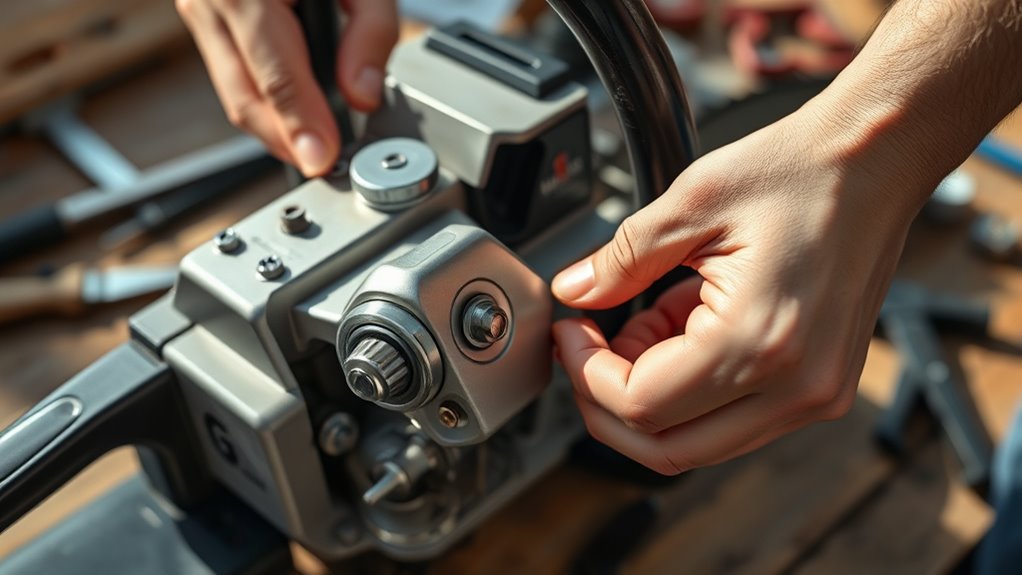
A chainsaw’s carburetor plays an important role in mixing air and fuel for ideal engine performance. Understanding its key components can make a big difference in how your chainsaw runs. The main parts include the float chamber, throttle plate, and jets, which all work together to create the right fuel mixture.
When the engine runs, air enters through the intake and passes over the jets, drawing fuel into the airstream. This process ensures the engine gets the perfect blend of air and fuel, which is essential for efficient combustion.
If your chainsaw is having trouble starting or running smoothly, it might be time to check these parts. Proper adjustments can help keep the right fuel mixture, improving both performance and the life of your chainsaw. Getting familiar with these basics will help you keep your chainsaw in top shape.
Gather the Tools You’ll Need for Carburetor Adjustment
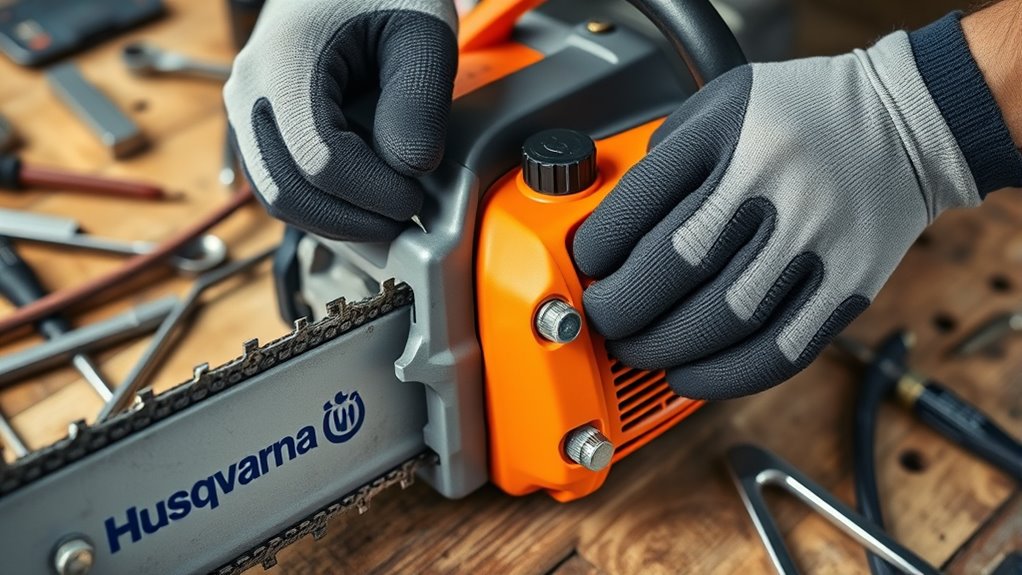
Before you dive into adjusting your Husqvarna chainsaw’s carburetor, it’s a good idea to gather all the tools you’ll need first. Oh, and don’t forget your safety gear! Protecting yourself is super important, especially when working with small engine parts. Having everything ready beforehand will make the whole process go a lot more smoothly and safely.
Essential Tools Needed
When you’re ready to adjust your Husqvarna chainsaw’s carburetor, having the right tools is key for a smooth process. Here’s a quick list of essential tools you’ll need, along with some handy tips for maintenance and troubleshooting.
| Tool | Purpose |
|---|---|
| Screwdriver | Adjust carburetor screws |
| Torque Wrench | Ensure proper screw tightness |
| Carburetor Cleaner | Clean components effectively |
| Fuel Line Pliers | Remove and replace fuel lines |
Gather these tools before you start. Having everything ready will save you time and help you avoid frustration during the adjustment. Equip yourself for success!
Safety Gear Importance
Adjusting your Husqvarna chainsaw’s carburetor isn’t just about having the right tools—safety gear is a must too. Before you start, make sure you’re dressed appropriately.
Wear sturdy chainsaw boots to protect your feet from accidental cuts. Safety gloves are also important—they’ll keep your hands safe while you work.
Eye protection is essential because debris can fly up during the adjustment. And don’t forget hearing protection, especially if you’ll be running the chainsaw for a while.
Locating the Carburetor on Your Chainsaw
Finding the carburetor on your Husqvarna chainsaw is key for any maintenance or adjustments you want to do. Knowing where it is can save you time and hassle.
Usually, you’ll find the carburetor near the back of the chainsaw, just behind the air filter. To get to it, you’ll need to remove the cover and maybe some screws, depending on your model.
You’ll typically locate the carburetor at the back of the chainsaw, just behind the air filter, requiring cover removal.
Getting familiar with your chainsaw’s parts helps a lot. Knowing where the carburetor sits makes troubleshooting much easier.
Once you’ve found it, you can check for adjustments or issues that might be causing performance problems. Make sure you have good lighting and the right tools nearby.
Checking the Air Filter for Blockages
| Step | Action |
|---|---|
| 1. Remove Cover | Take off the air filter cover. |
| 2. Inspect Filter | Check for dirt and debris. |
| 3. Clean or Replace | Use compressed air or replace it. |
| 4. Reassemble | Put the cover back securely. |
Regular air filter maintenance helps your chainsaw last longer and works better. If you see lots of blockages, clean or swap out the filter to keep things running smoothly.
Don’t skip this simple step — it really makes a difference in how well your chainsaw performs.
Adjusting the Idle Speed Screw
Sure! Here’s the revised version with a more conversational tone:
—
To adjust the idle speed screw on your Husqvarna chainsaw, start by finding the screw on the carburetor. Once you’ve got it, you can turn it clockwise or counterclockwise to set the right idle speed. It’s pretty straightforward — just turn it gently and see how the saw responds.
After making your adjustments, give the chainsaw a little test run to check how it’s idling. You want it to run smoothly without stalling or revving too high. If needed, tweak the screw a bit more until everything feels just right.
Locate Idle Speed Screw
As you prepare to adjust the idle speed screw on your Husqvarna chainsaw, knowing where it is located is crucial for getting the best performance. Usually, you’ll find the idle speed screw on the side of the carburetor, often close to the throttle linkage.
This small screw is important because it controls how fast your saw idles, helping it run smoothly when you’re not cutting. To reach it, you might need to remove the air filter cover or other parts, depending on your model.
Once you’ve found the idle speed screw, you’ll be ready to fine-tune your carburetor settings for optimal performance. Proper adjustments can help prevent stalling and make your chainsaw run more efficiently.
Adjust Clockwise or Counterclockwise
Adjusting the idle speed screw can make a big difference in your Husqvarna chainsaw’s performance. For better carburetor tuning, you’ll want to be precise with your adjustments.
Turn the screw clockwise to increase the idle speed, which can help if your saw stalls too easily. Turning it counterclockwise will decrease the idle speed, useful if it’s revving too high.
Be careful with these adjustments, as even small turns can make a noticeable difference. Start with quarter-turn turns and test the saw after each one.
This approach helps you find the perfect setting without going too far. Remember, setting the right idle speed is key for smooth operation and your chainsaw’s longevity.
Test Idle Performance Adjustments
Testing idle performance adjustments is key to making sure your Husqvarna chainsaw runs smoothly. To get the idle speed just right, follow these simple steps for effective testing:
- Start the Chainsaw: Let it warm up for a few minutes so it’s stable before making any adjustments.
- Observe the Idle: Keep an eye out for stalling or rough idling, as these signs mean you might need to fine-tune it.
- Adjust the Idle Speed Screw: Turn the screw slowly until the chainsaw idles steadily without stalling.
- Re-check Performance: After making adjustments, test the chainsaw at different speeds to ensure everything runs consistently.
Fine-Tuning the Low-Speed Mixture
Achieving peak performance from your Husqvarna chainsaw depends on fine-tuning the low-speed mixture. This step is key for smooth idling and smooth cutting, so let’s focus on low-speed tuning.
First, find the low-speed adjustment screw on your carburetor. With the chainsaw warmed up, slowly turn the screw clockwise to enrich the mixture or counterclockwise to lean it out. Your goal is to find a mixture that allows the engine to idle smoothly without stalling.
As you make adjustments, pay attention to how the engine sounds. A steady, consistent idle usually means you’re on the right track. If the chainsaw hesitates or sputters, you might need to tweak the mixture a bit more. Take your time and don’t rush—getting it just right makes a big difference.
Once you’re happy with the idle, test the chainsaw under load to make sure it performs well. Proper low-speed tuning not only boosts performance but also helps extend the life of your equipment.
Tuning the High-Speed Mixture
- Start with a Clean Filter: Make sure your air filter is clean so the engine gets proper airflow.
- Locate the High-Speed Screw: Find the high-speed adjustment screw, usually marked with an “H.”
- Adjust in Small Increments: Turn the screw clockwise to make the mixture richer or counterclockwise to lean it out. Do this in small steps, about 1/8 turn each time.
- Test the Chainsaw: After each adjustment, run the chainsaw at full throttle. Listen for a smooth, high-revving sound without sputtering.
Evaluate Your Chainsaw’s Performance
Once you’ve fine-tuned the high-speed mixture, it’s time to check your chainsaw’s performance. Start by looking at key indicators like idle speed, acceleration, and cutting efficiency. These can show if you need to make more adjustments.
| Performance Indicator | Observation Method |
|---|---|
| Idle Speed | Listen for smooth idling without stalling. |
| Acceleration | Test how quickly it responds when you pull the throttle. |
| Cutting Efficiency | See how easily it cuts through wood. |
If anything seems off, use troubleshooting to find the problem. For example, if the chainsaw stalls, it might be too rich or lean. Keep an eye on smoke; too much smoke can mean an imbalance in the fuel mixture.
Regular checks help keep your chainsaw running smoothly and efficiently. This makes your cutting tasks easier and more effective.
Identifying and Fixing Common Carburetor Problems
While adjusting your carburetor can improve performance, you might still face common issues that affect how your chainsaw runs. Recognizing these symptoms can help you troubleshoot more effectively.
Here are some common problems and how to fix them:
Engine Won’t Start: Make sure the fuel is fresh and the spark plug is working properly. Also, check for clogs in the fuel lines.
Poor Acceleration: This could be due to a dirty air filter or carburetor. Clean or replace them to improve airflow.
Rough Idle: Try adjusting the idle speed screw. If that doesn’t help, look for vacuum leaks.
Excessive Smoke: This might mean the mixture is too rich. Adjust the fuel screw to lean out the mixture.
Keep Your Carburetor Running Smoothly
To keep your Husqvarna chainsaw performing at its best, regular maintenance of the carburetor is key. Start by checking your fuel mixture; using the right 50:1 ratio of gasoline to oil guarantees peak performance. If you notice any changes in how your chainsaw runs, it’s time to troubleshoot.
Inspect the air filter for dirt and clogs, as a clean filter promotes better airflow. Also, check the fuel lines for cracks or leaks, which can disrupt the fuel supply. When adjusting the carburetor, make small changes and test the saw after each adjustment to find the right balance.
Finally, remember to clean the carburetor periodically. A clean carburetor not only improves efficiency but also extends the life of your chainsaw. By following these steps, you’ll keep your carburetor running smoothly for many cutting jobs to come.
Frequently Asked Questions
How Often Should I Adjust My Chainsaw’s Carburetor?
You should adjust your chainsaw’s carburetor every 10 to 20 hours of use, depending on your cutting conditions. Regular carburetor maintenance helps ensure peak performance and fuel efficiency.
If you notice changes in power or difficulty starting, it might be time to make an adjustment. Keeping an eye on how often you need to tweak it can save you from bigger issues later on.
Don’t overlook this essential part of chainsaw care. Regular adjustments keep your tool running smoothly and help avoid unnecessary repairs.
What Are Signs of a Poorly Adjusted Carburetor?
If your chainsaw’s carburetor isn’t tuned properly, you’ll notice a few signs. The engine might run rough or stall, which means it’s not getting the right fuel mixture.
You might also see lots of smoke or smell fuel strongly. That usually indicates it’s running too rich. If it’s hard to start or acceleration is poor, it’s time to check the carburetor tuning.
Don’t ignore these signs—they’re your warning that adjustments are needed for the best performance.
Can I Use Any Tools for Adjustment?
You can’t just use any tools for carburetor tuning; it’s important to have the right adjustment tools. Did you know that around 60% of chainsaw problems come from improper carburetor settings?
Using specialized tools ensures precision, which helps your saw run smoothly. Make sure to find a screwdriver that fits the adjustment screws perfectly.
Investing in the right gear not only saves you time but also helps extend your chainsaw’s lifespan and performance.
Is It Safe to Adjust the Carburetor Myself?
Yes, it’s generally safe to adjust the carburetor yourself if you understand the basics and follow proper techniques. Just make sure you have the right tools and know the specifications for your model.
Take your time and don’t rush through it. If you’re feeling unsure, check your manual or watch some instructional videos to help guide you.
Always prioritize safety and wear protective gear while working on your chainsaw.
What if the Chainsaw Still Doesn’T Run After Adjustment?
If your chainsaw still doesn’t run after adjustment, start by checking the fuel mixture. An incorrect mix can really mess with how the engine runs. Make sure you’re using the right ratio of gas to oil.
Next, look at the spark plug. Check for any damage, and clean or replace it if needed. Also, inspect the air filter and fuel lines for blockages or dirt that could be causing trouble.
If it still won’t start, it might be best to get a professional to take a look. Sometimes, the issue needs a more detailed diagnosis.
Conclusion
To sum up, adjusting your Husqvarna chainsaw’s carburetor isn’t just about boosting performance; it can also help extend your saw’s lifespan.
Many people believe that a well-tuned carburetor makes the chainsaw safer to use, which is true.
By following these steps, you can improve efficiency and reduce the chances of engine damage.
So, next time you fire up your chainsaw, remember that a few simple carburetor adjustments can make a big difference in how well it runs and how long it lasts.