What Happens If You Use Carburetor Cleaner as Starter Fluid?
Starting your engine can sometimes be a real challenge, especially if it’s stubborn or hasn’t been used in a while. Many people struggle with quick fixes like using carburetor cleaner as starter fluid, hoping it’ll do the trick.
But is that really safe or effective? Let’s take a closer look.
Using carburetor cleaner as starter fluid isn’t a good idea. It can harm your engine due to its harsh chemicals, leading to damage over time.
These chemicals can create improper burning and may affect fuel efficiency, causing dangerous carbon buildup. Plus, carburetor cleaner is highly flammable, increasing fire risks.
In short, sticking to products designed for starting engines is safer. Interested in learning how to troubleshoot stubborn engines instead?
Key Takeaways
- Using carburetor cleaner as starter fluid can damage engine components because of its harsh chemicals and how it burns.
- It’s not meant for ignition, which can lead to poor fuel delivery and engine performance problems.
- Since carburetor cleaner is highly flammable, using it as a starter fluid increases the risk of fire.
- Misusing it can cause carbon buildup over time, hurting the engine and undoing any supposed benefits.
- To keep your engine safe, always use products made specifically for starting engines.
Understanding Starter Fluid and Its Purpose
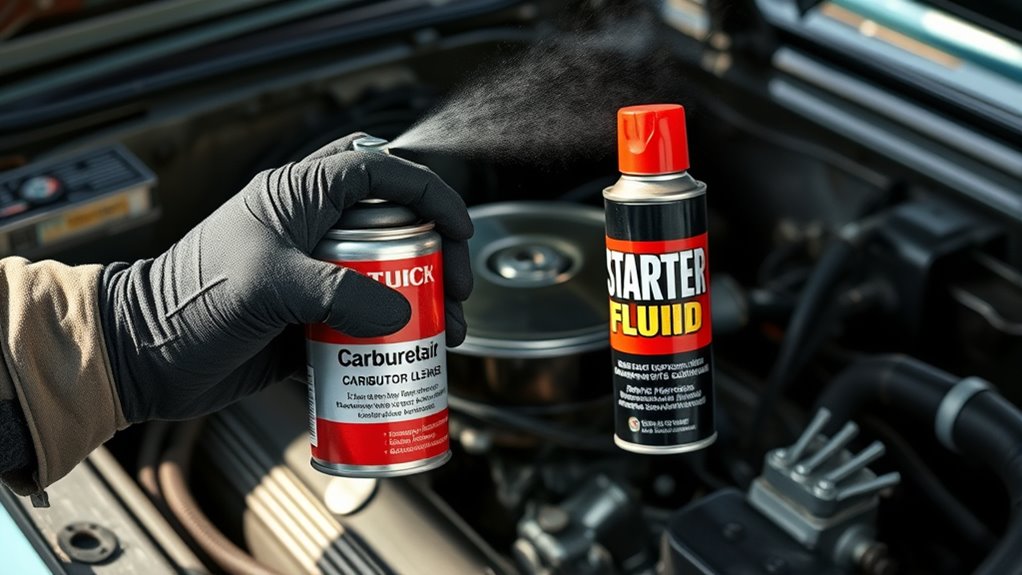
Starter fluid is a handy tool for getting stubborn engines to start. When your vehicle won’t turn over, using starter fluid can give you the ignition boost you need. It’s an aerosol that contains highly volatile compounds that ignite quickly, making it useful for fuel or cold weather issues.
One of the main benefits of starter fluid is that it can bypass common ignition problems, like a weak battery or clogged fuel lines. It works by delivering a quick burst of fuel into the engine’s intake, giving it a much-needed jumpstart. But be careful—overusing it can damage your engine. Always follow the manufacturer’s instructions to keep your engine safe. With the right use, starter fluid can be a real lifesaver when your engine just won’t cooperate.
What Is Carburetor Cleaner and How It Works
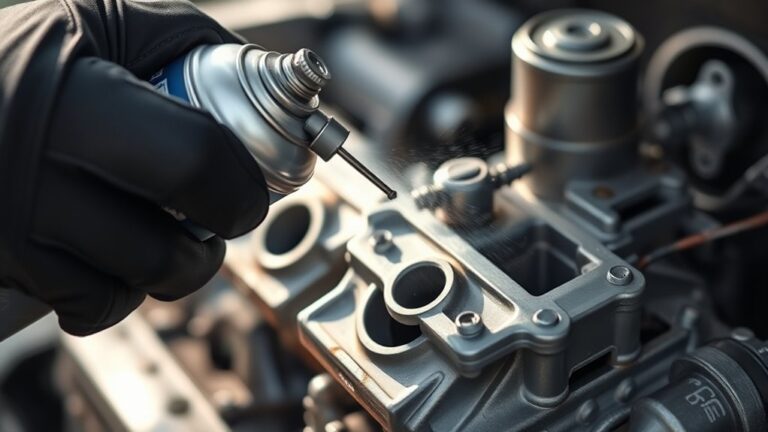
Carburetor cleaner is a powerful solvent made to remove carbon buildup and varnish from your engine’s carburetor. This buildup can block fuel flow, causing your engine to perform poorly. Using carburetor cleaner helps restore your engine’s efficiency so it runs smoothly again.
Here’s how it works:
| Function | Effect |
|---|---|
| Dissolves deposits | Clears away carbon and varnish |
| Improves fuel flow | Boosts fuel delivery |
| Cleans internal parts | Enhances overall engine performance |
| Prevents future buildup | Keeps your engine running well |
| Easy to apply | Saves you time and effort |
When you spray the cleaner into the carburetor, it penetrates and dissolves harmful deposits. This not only improves fuel delivery but also boosts your engine’s performance, helping your vehicle run at its best.
Can You Use Carburetor Cleaner as Starter Fluid?
Ever wondered whether carburetor cleaner can double as starter fluid? While both products are meant to help your engine run better, they actually do different jobs. Carburetor cleaner is all about cleaning deposits out of the carburetor, while starter fluid is designed to help your engine start quickly in cold weather.
Using carburetor cleaner as starter fluid might seem like a quick fix, but it’s not a good idea. Carb cleaners often have strong solvents that can damage engine parts or cause too much combustion. They aren’t made to ignite easily like starter fluid, which can lead to poor starting or even engine damage.
If you’re in a pinch, it might work temporarily, but it’s risky. It’s always better to use dedicated starter fluid if you’re having trouble starting your engine. That way, you can be sure your engine runs smoothly and safely.
Comparing Starter Fluid and Carburetor Cleaner Effectiveness
When you’re looking at starter fluid versus carburetor cleaner, you’ll see they’re made up of different chemicals. These differences really matter because they influence how well each one works, especially when you’re trying to start your engine in cold weather. Knowing what sets them apart can help you pick the right product for what you need.
Chemical Composition Differences
While both starter fluid and carburetor cleaner are used in automotive maintenance, their chemical compositions are quite different, which affects how they work. Starter fluid mainly contains ether and other volatile compounds designed to ignite quickly.
Carburetor cleaner, on the other hand, has a mix of solvents that help dissolve deposits and grime. These chemical differences lead to different reactions inside your engine.
Here’s a quick comparison of their properties:
| Property | Starter Fluid |
|---|---|
| Main Components | Ether, Volatile Solvents |
| Primary Use | Engine Starting |
| Chemical Reactions | Rapid Ignition |
| Solvent Properties | Quick Evaporation |
| Risk Factors | Flammable |
Knowing these differences helps you pick the right product. Using them interchangeably can cause unexpected problems.
Performance in Cold Starts
If you’re struggling to start your engine on a cold morning, you might wonder how starter fluid and carburetor cleaner compare in effectiveness. Starter fluid’s main advantage in cold weather is its quick ignition properties, giving your engine the boost it needs to fire up when temperatures drop.
It’s designed specifically to improve engine performance during those tough starts. On the other hand, carburetor cleaner is helpful for cleaning but doesn’t have the same rapid ignition qualities.
It might help clear fuel paths, but it won’t ignite as easily, making it less effective in cold conditions. For reliable cold starts, stick with starter fluid to ensure your engine roars back to life when you need it most.
What Are the Risks of Using Carburetor Cleaner to Start Your Engine?
Using carburetor cleaner to start your engine can be pretty risky, and there are a few reasons why you should think twice about it. For one, its chemical makeup is quite different from that of starter fluid, which means it could actually cause damage to your engine if used improperly.
And then there’s the safety aspect—carburetor cleaner is flammable, so using it to start your engine could be a real fire hazard. It’s generally not a good idea to rely on it in emergency situations either, because of these potential dangers.
Chemical Composition Differences
Though carburetor cleaner and starter fluid might seem similar, their chemical makeups are quite different. Using one instead of the other can be risky for your engine’s safety.
Carburetor cleaner contains solvents that can damage engine parts if used improperly. Starter fluid is designed to ignite quickly, but carburetor cleaner may not light as reliably.
Mixing these chemicals can cause unwanted reactions that might harm your fuel system. So, it’s important to understand their differences before using them.
Risk of Engine Damage
While it might seem convenient to reach for carburetor cleaner as a quick fix for starting your engine, doing so poses significant risks. Carburetor cleaners often contain harsh chemicals that can damage engine components, leading to costly repairs.
Using them as starter fluid can create an imbalance in fuel delivery, potentially causing incomplete combustion. This not only hinders engine performance but can also shorten engine longevity.
Moreover, relying on carburetor cleaner can undermine effective maintenance practices, as it masks underlying issues instead of fixing them. It’s crucial to use the right starter fluid designed for your engine, ensuring you protect your investment and keep your vehicle running smoothly.
Prioritize proper solutions to avoid unnecessary damage.
Flammability Concerns
Reaching for carburetor cleaner as a starting aid not only risks engine damage but also raises serious flammability concerns. These cleaners often have high flammability ratings, making them unsafe for use in starting engines. Here’s what you need to take into account:
- Increased Fire Risk: Carburetor cleaner can ignite easily, leading to potential burns or vehicle fires.
- Toxic Fumes: Burning chemicals can release harmful fumes, posing health risks.
- Improper Application: Spray misdirection can result in unintended ignition sources.
Always follow safety precautions when working with flammable substances. If you need a starting fluid, use products specifically designed for that purpose to minimize risks and guarantee your safety while working on your engine.
How Does Carburetor Cleaner Affect Your Engine?
Using carburetor cleaner as starter fluid may seem like a quick fix, but it can have unintended consequences for your engine. While it might ignite easily, the chemicals in carburetor cleaner aren’t designed for combustion like fuel is.
This can lead to improper burning, which hurts your fuel efficiency. Over time, using carburetor cleaner can cause carbon buildup and damage important engine parts, reducing how long your engine lasts.
Plus, the harsh solvents in carburetor cleaner can break down rubber seals and gaskets. That can lead to leaks and other mechanical problems. You might think you’re helping your engine start, but the long-term damage isn’t worth it.
Instead of risking harm, stick with products made specifically for starting fluid. Protect your engine’s health and performance by avoiding carburetor cleaner in this way.
Debunking Myths About Carburetor Cleaner Usage
Many people believe that carburetor cleaner is a universal solution for engine issues, but this misconception can lead to serious problems. You might think it’s a quick fix, but relying on carburetor cleaner can actually harm your engine. Here are a few common carburetor myths and starter fluid misconceptions to clear up:
- It’s safe for all engines: Not true! Carburetor cleaner can damage sensitive components in modern engines.
- It improves fuel efficiency: While it may seem to clean, it doesn’t boost efficiency like some claim.
- It replaces proper maintenance: Using it isn’t a substitute for regular cleaning and upkeep.
Understanding these myths helps you make informed choices. Stick to using products designed for specific purposes to guarantee your engine runs smoothly and efficiently.
Safe Alternatives to Carburetor Cleaner and Starter Fluid
While it’s tempting to grab a can of carburetor cleaner or starter fluid for quick fixes, there are safer alternatives that can better support your engine’s health. Consider using eco-friendly options, like non-toxic starting fluids specifically designed for engines. These products often contain natural ingredients that help you avoid harsh chemicals found in traditional cleaners.
Another great choice is a quality fuel additive. Many fuel additives improve combustion and boost engine performance without the risks associated with carburetor cleaner. Just be sure to choose a reputable brand that clearly states it’s safe for your engine type.
Tips for Troubleshooting a Stubborn Engine
When your engine refuses to start, a systematic approach can save you time and frustration. Start with these essential tips for effective engine troubleshooting:
Check the Battery
Make sure your battery is charged and the connections are tight. A weak or dead battery can prevent your engine from starting.
A charged battery with secure connections is crucial; a weak or dead battery can halt your engine’s start.
Inspect Fuel Supply
Ensure you have fuel in the tank and that it’s reaching the engine. Clogged fuel lines or a faulty pump can cause starting problems.
Examine Spark Plugs
Look for worn or dirty spark plugs, as they can lead to poor ignition. Replacing them might improve your starter troubleshooting.
When Should You Call a Mechanic for Your Engine Troubles?
Sometimes, despite your best troubleshooting efforts, your engine still won’t start. If you notice any of these mechanic signs, it’s time to call in a professional for engine diagnostics.
| Mechanic Signs | Description | Action Needed |
|---|---|---|
| Unusual Noises | Grinding, knocking, or clicking | Schedule diagnostics |
| Warning Lights | Check engine or oil pressure lights | Get a mechanic’s insight |
| Smoke or Smell | Burning oil or fuel odors | Stop driving immediately |
| Fluid Leaks | Oil, coolant, or fuel on the ground | Contact a mechanic |
| Performance Issues | Loss of power or stalling | Do a thorough check-up |
Ignoring these signs can lead to more serious problems later on. If you’re unsure, it’s always better to be safe and consult a mechanic. Your engine will thank you!
Frequently Asked Questions
Can Carburetor Cleaner Damage Engine Components Long-Term?
Yes, carburetor cleaner can damage engine components long-term. The strong chemicals in it can cause unwanted reactions that might lead to corrosion or wear on important parts.
Over time, this can result in increased engine wear, which can hurt performance and reduce the lifespan of your engine. If you’re thinking about using it, it’s a good idea to consider other options.
It’s usually better to stick with products that are specifically designed for starting engines. That way, you can avoid potential issues down the road.
What Are the Signs of Using the Wrong Starting Fluid?
You might notice your engine sputtering or struggling to start if you’ve used the wrong starting fluid.
Watch for unusual noises or a rough idle; these can be signs of poor engine performance.
If your engine backfires or stalls unexpectedly, it could be due to fluid compatibility issues.
Keep an eye out for increased exhaust smoke, too.
Trust your instincts—if something feels off, it probably is!
Is It Safe to Mix Starter Fluid and Carburetor Cleaner?
It’s not safe to mix starter fluid and carburetor cleaner. Combining them can cause unpredictable effects and may damage your engine.
Instead, consider using starter fluid alternatives that are specifically designed for ignition. These products are formulated to work effectively without risking harm to your engine.
Always read product labels and double-check compatibility to keep your engine running smoothly.
Trusting the right products saves you time and helps protect your vehicle’s performance.
How Do Weather Conditions Affect Starter Fluid Performance?
Weather’s like a fickle friend, isn’t it? When it comes to starter fluid, temperature really matters. In the winter cold, the fluid can struggle to ignite.
Meanwhile, the summer heat might make it too volatile, which isn’t ideal either. Humidity also plays a role; high moisture levels can dampen performance.
All these factors make it harder for your engine to start. So, it’s a good idea to keep an eye on the forecast if you want reliable ignition!
Can Using Carburetor Cleaner Void My Vehicle Warranty?
Using carburetor cleaner can potentially void your vehicle’s warranty. If the cleaner causes damage to the engine or related parts, you might be on the hook for repairs.
Manufacturers usually specify which products are acceptable. If you use something different, your warranty claims could be denied.
Instead, think about using cleaner options that are designed specifically for starting engines. It’s always a good idea to check your warranty terms and talk to your dealer.
That way, you avoid surprises and make sure your vehicle stays covered.
Conclusion
In the smoky haze of a stubborn engine, reaching for carburetor cleaner might seem tempting, but it’s a risky gamble. Picture the flames flickering dangerously close as you spray, risking damage instead of igniting your ride.
Instead, stick with proper starter fluid or investigate safer alternatives. With patience and the right tools, you can coax that engine to life without unnecessary hazards.
Remember, safety first. Don’t let desperation cloud your judgment. Using carburetor cleaner as starter fluid can be dangerous and may cause more harm than good.