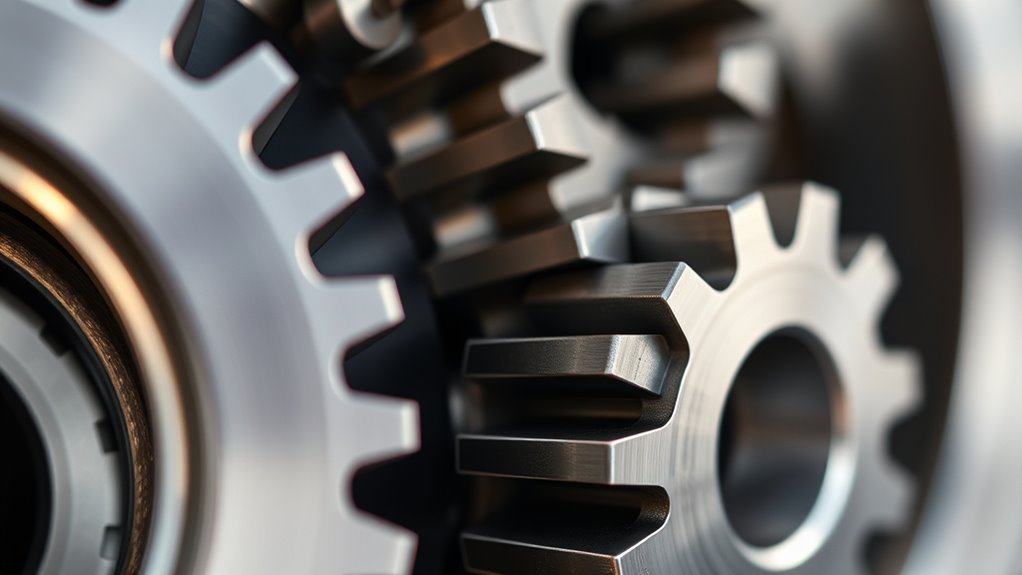
Understanding Metal Gears – A Comprehensive Guide
Are you tired of gear failures disrupting your machines or projects? You’re not alone—many people struggle with choosing the right metal gears that can handle wear and tear over time. Finding the perfect fit can feel overwhelming with so many options out there.
Metal gears are vital for transferring motion and torque in many machines, from vehicles to appliances. You’ll find types like spur, helical, and bevel gears, each serving different purposes.
Essential properties like strength and durability guarantee they last, while proper material selection can optimize performance.
Regular maintenance helps avoid common issues like misalignment and overheating.
If you’re curious about applications and future advances in metal gear technology, there’s much more to uncover!
Key Takeaways
- Metal gears are essential for transmitting motion and torque in machines, making sure everything runs smoothly in things like vehicles and appliances.
- There are different types, like spur, helical, and bevel gears, each designed for specific mechanical needs and performance goals.
- Choosing the right material is key; strong options like stainless steel and carbon steel help gears last longer and stay durable.
- Knowing gear ratios is important for balancing speed and torque, which can really boost a machine’s overall efficiency and performance.
- Regular maintenance, such as lubrication and checking alignment, helps prevent common problems like wear and overheating, keeping gears reliable.
What Are Metal Gears and Why Are They Important?
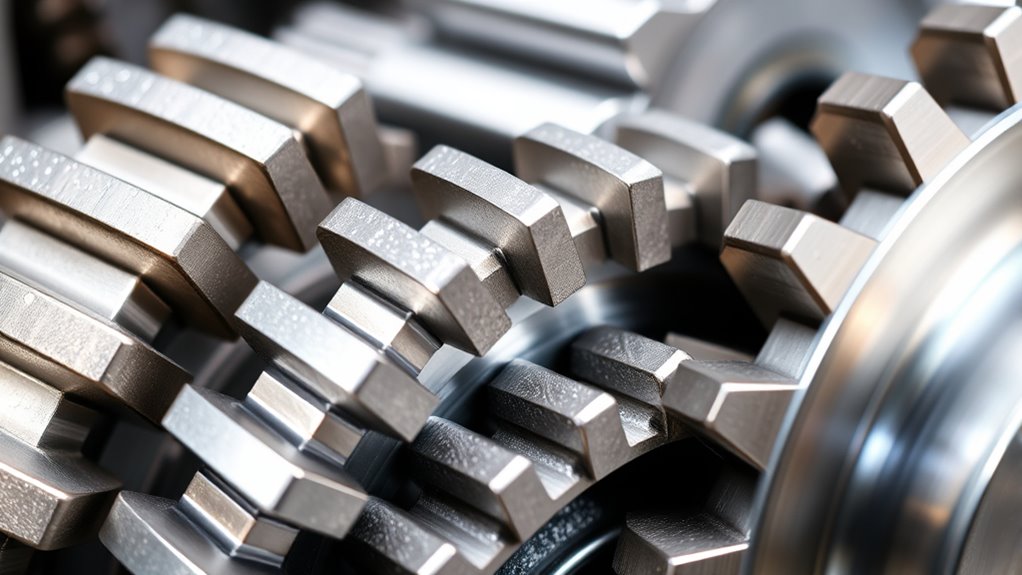
Metal gears are essential parts in countless machines, from simple toys to complex industrial equipment. They help transmit motion and torque, making sure everything runs smoothly and efficiently.
Their importance isn’t just about functionality but also about reliability. Metal gears can handle a lot of wear and tear over time without failing.
In gear manufacturing, precision is super important. Modern techniques and design innovations have made gears that are stronger, lighter, and more efficient than ever before.
Using advanced materials and manufacturing methods allows for tighter tolerances and better performance. That’s why metal gears are so crucial for high-performance applications.
Types of Metal Gears: An Overview of Common Variants
Understanding the various types of gears helps you appreciate their unique roles in machinery. Metal gears come in several common variants, each tailored for specific applications.
Spur gears have straight teeth and are great for transmitting power between parallel shafts because of their simple design. Helical gears, with their angled teeth, operate more smoothly and quietly, making them ideal for high-speed uses.
Bevel gears, on the other hand, are used to change the axis of rotation, which is essential in many machinery setups.
When it comes to manufacturing, processes like hobbing and shaping ensure these gears are made with precision. Worm gears are another type that provide high torque and significant speed reduction, often found in conveyor systems.
Understanding these types helps you choose the right gear for your needs, improving efficiency and performance in your machinery.
Essential Properties of Metal Gears: Strength and Durability
Gears are crucial parts of machinery, and their strength and durability are key for reliable operation. When choosing metal gears, it’s important to check how well they resist gear fatigue and how effectively they distribute loads. This helps keep things running smoothly under different conditions.
Here’s a quick overview of the main properties:
| Property | Importance | Impact on Performance |
|---|---|---|
| Strength | Resists deformation and breakage | Extends gear lifespan |
| Durability | Handles wear and tear over time | Cuts down on maintenance needs |
| Load Distribution | Spreads forces evenly across the gear | Reduces stress points and damage |
Choosing the Right Metal Gear for Your Project
Selecting the right gear can make or break your project. Start by evaluating gear compatibility considerations to guarantee your chosen gear meshes well with existing components. Think about the size, pitch, and tooth design; small mismatches can lead to significant performance issues.
Next, conduct a load capacity analysis. Determine the forces your gear will encounter and select one that can handle those loads without failure. Consider factors like torque, speed, and environmental conditions, as these can heavily influence your gear’s performance.
Don’t overlook the importance of application-specific requirements, like resistance to wear or corrosion. By carefully reviewing these aspects, you’ll improve your chances of a successful project outcome. Ultimately, the right metal gear not only meets your immediate needs but also boosts the longevity and reliability of the whole system. Make informed choices, and your project will benefit in the long run.
Material Selection for Optimal Metal Gear Performance
When you’re choosing materials for metal gears, it’s really important to understand the key properties that will affect their performance. Think about things like strength, wear resistance, and how well the material handles stress. Getting a good grasp on these factors can help you pick the best options for your project.
You should also consider the different types of materials available, like steel, bronze, or composites. Each has its own advantages and drawbacks, so picking the right one depends on what your gear needs to do. Plus, applying coatings can make a big difference—they can boost durability, reduce friction, and extend the lifespan of your gears.
Ultimately, making informed choices about materials and coatings can really make or break the success of your gear system. It’s worth taking the time to weigh your options carefully!
Key Material Properties
The performance of metal gears depends heavily on choosing the right materials, which directly influences their durability and efficiency. You want to consider gear hardness because it affects wear resistance and how well the gear can handle heavy loads.
High tensile strength is also important since it ensures your gears can withstand stress without deforming. Corrosion resistance is key for longevity, especially if the gears will be used in tough environments.
Don’t forget about fatigue limits. Picking materials that can endure repeated stress cycles is crucial for long-lasting gears. Thermal conductivity matters too because it helps with heat dissipation during operation.
Understanding machining processes and achieving a good surface finish can improve performance by reducing friction and wear. By focusing on these key properties, you’ll be able to optimize your metal gear performance effectively.
Common Material Types
Metals are crucial for gear performance, and picking the right material really makes a difference. When choosing materials for metal gears, here are some common options:
- Aluminum Alloys: These are lightweight and resistant to corrosion, making them great when weight savings are important.
- Stainless Steel: Known for its durability and resistance to wear, it’s perfect for high-stress environments.
- Carbon Steel: Offers excellent strength and toughness but needs protective coatings to prevent rust.
- Bronze: Provides good wear resistance and self-lubricating qualities, ideal for low-speed applications.
Impact of Coatings
Coatings play an essential role in improving the performance and longevity of metal gears. By selecting the right coating types, you can greatly boost wear resistance and reduce friction.
Common surface treatments like nitriding or PVD (Physical Vapor Deposition) offer excellent durability, making gears more resilient under stress. These coatings not only enhance performance but also extend the lifespan of your gears, saving you time and money on replacements.
When you choose the appropriate coating, you’re investing in a more efficient and reliable system. Remember, the right surface treatment can make all the difference, ensuring your metal gears operate smoothly even in demanding conditions.
Prioritize coatings to optimize your gear performance effectively.
Gear Ratios and Their Impact?
Understanding gear ratios is essential because they directly influence a machine’s performance and efficiency. By adjusting gear ratios, you can optimize gear efficiency and make accurate torque calculations.
Grasping gear ratios is crucial for enhancing machine performance and efficiency through optimized torque calculations.
Here are four key impacts of gear ratios:
- Speed Control: Higher gear ratios increase speed, while lower ratios boost torque.
- Power Output: Gear ratios affect how power is transmitted, impacting overall performance.
- Energy Efficiency: The right ratio minimizes energy loss and enhances gear efficiency.
- Load Handling: Different ratios allow machines to handle various loads effectively.
Common Applications of Metal Gears in Everyday Life
While you might not realize it, metal gears play an essential role in many devices you encounter daily. From the clocks you rely on to the vehicles you drive, these components are critical for smooth operation.
In automotive applications, metal gears help transmit power, making sure everything runs efficiently. Appliances like washing machines and food processors also depend on them, using advanced manufacturing techniques for durability and precision.
Gear design innovations have led to lighter, stronger gears that boost performance and reduce wear. You’ll find metal gears in industrial machinery, where they enable heavy lifting and movement to improve productivity.
Even in electronics like cameras and printers, metal gears assist in achieving precise movements. Understanding these uses helps you appreciate how metal gears make everyday life easier and more efficient.
Troubleshooting Common Issues With Metal Gears
Metal gears can encounter several common issues that affect their performance and longevity. Identifying these problems early can save you time and resources. Here are four key areas to troubleshoot:
- Gear Misalignment Causes: Make sure gears are installed correctly to prevent unnecessary wear and tear.
- Lubrication Failure Signs: Keep an eye out for unusual noises or overheating, which can indicate insufficient lubrication.
- Wear Patterns Analysis: Regularly inspect gear teeth for abnormal wear, as this could lead to failure over time.
- Overheating Solutions: Watch load distribution and use noise reduction techniques to help keep operating temperatures in check.
Maintenance Tips for Longer-Lasting Metal Gears
Want your metal gears to last longer and work smoothly? The key is regular lubrication and making sure you store them properly. These simple steps can really make a difference in how well they perform and how long they stay in good shape. Let’s take a closer look at how you can do this effectively.
Regular Lubrication Practices
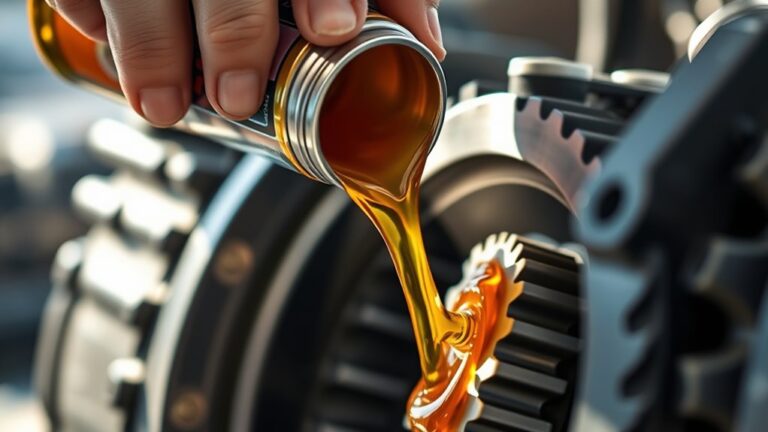
Although many overlook it, regular lubrication is key to keeping metal gears working smoothly and lasting longer. Proper techniques help reduce friction and wear, saving you time and money.
Start by applying lubricant during installation for a smooth start. Then, check and re-lubricate gears every 500 operating hours or as the manufacturer recommends.
If you’re working in tough conditions like extreme heat, cold, or dusty environments, increase how often you lubricate. This helps protect the gears from extra wear and tear.
At the beginning of each season, do a thorough lubrication. This prevents buildup and keeps everything running smoothly throughout the year.
Proper Storage Conditions
When you store metal gears properly, you can significantly extend their lifespan and performance. Focus on controlling temperature and humidity to prevent rust and wear.
Ideal storage conditions include using the right containers and protective coverings that shield gears from environmental factors. This helps keep them in good shape for longer.
Here’s a quick reference table to guide you:
| Storage Condition | Best Practice |
|---|---|
| Temperature Control | Keep between 50-70°F (10-21°C) |
| Humidity Levels | Stay below 50% |
| Contamination Prevention | Use sealed containers |
| Protective Coverings | Use dust-proof covers |
What’s Next for Metal Gear Technology?
As gaming technology keeps changing, Metal Gear is ready to embrace new innovations that could totally change stealth gameplay and storytelling. Expect upcoming updates to make use of the latest tech in exciting ways, making your experience even better.
Here’s what’s on the horizon:
- AI-Driven NPCs: Characters that use smarter AI will be more responsive and harder to predict, making encounters more realistic.
- Augmented Reality Integration: Imagine mixing real-world elements with the game for a more immersive experience.
- Dynamic Environments: The game worlds will change based on what you do, adding new layers to your strategy.
- Enhanced Graphics: Next-gen visuals will make everything look more lifelike, boosting the overall storytelling.
These advancements will change how you play the Metal Gear series, keeping each encounter fresh and exciting. Get ready for a future where your choices really matter and stealth feels like a whole new game.
Frequently Asked Questions
How Do Metal Gears Compare to Plastic Gears in Performance?
Metal gears generally outperform plastic gears in durability and load-bearing capacity. When you compare gear materials, metal offers better strength and heat resistance, making it great for high-stress applications.
However, plastic gears can be more efficient for lighter loads because they have lower friction and produce less noise. Ultimately, your choice depends on what matters most for your specific needs.
You should consider balancing performance with cost and application requirements to make the best decision.
What Is the Lifespan of a Typical Metal Gear?
You might be surprised to learn that a typical metal gear can last anywhere from 10,000 to 100,000 hours, depending on the gear material and application. But wait, what affects that lifespan? It’s all about wear resistance.
High-quality materials and proper lubrication can greatly extend a gear’s life. So, if you want maximum durability, choosing the right metal gear and maintaining it well is essential.
Don’t underestimate the power of proper care!
Are There Environmentally Friendly Options for Metal Gears?
Yes, there are environmentally friendly options for metal gears. You can look into gears made from sustainable materials like bioplastics or recycled metals.
These alternatives help reduce environmental impact and promote recycling practices. Choosing gears crafted from these materials supports a circular economy and minimizes waste.
It’s a great way to keep performance high while being eco-conscious. So, consider these options for your next project!
How Can I Customize Metal Gears for Specific Applications?
You can customize metal gears for specific applications by focusing on gear material selection and employing various customization techniques.
Start by choosing materials that suit your environment and load requirements, like steel or aluminum.
Then, consider techniques such as altering tooth profiles or adjusting gear ratios to boost performance.
Furthermore, you might incorporate surface treatments to improve durability.
Tuning these aspects ensures your gears meet the unique demands of your application effectively.
What Tools Are Needed for Metal Gear Installation?
For metal gear installation, you’ll need a few essential tools. Start with a torque wrench to guarantee proper tightness.
You’ll also want a gear puller for removing old gears and a set of sockets for various fasteners. Don’t forget a caliper for precise measurements and a lubricant for smooth operation.
Familiarize yourself with gear installation techniques to make the process easier and verify everything fits snugly. Happy installing!
Conclusion
So, there you have it! Metal gears aren’t just shiny little circles; they’re the unsung heroes of machinery, tirelessly spinning away while you binge-watch your favorite shows.
Who knew that choosing the right gear could be as thrilling as selecting your next Netflix series? Remember, the next time your gadget breaks, it’s probably not the gears’ fault. They’re just doing their best.
Now, go forth and gear up your projects with newfound knowledge about metal gears, or risk letting your machines down!