What Is a Carburetor and How Does It Work?
If you’ve ever struggled with a sluggish engine or inconsistent performance, you’re not alone. Many people find it frustrating to keep their engines running smoothly, especially when fuel efficiency drops or power dips unexpectedly.
The good news is, understanding key engine parts can help you troubleshoot and even improve performance.
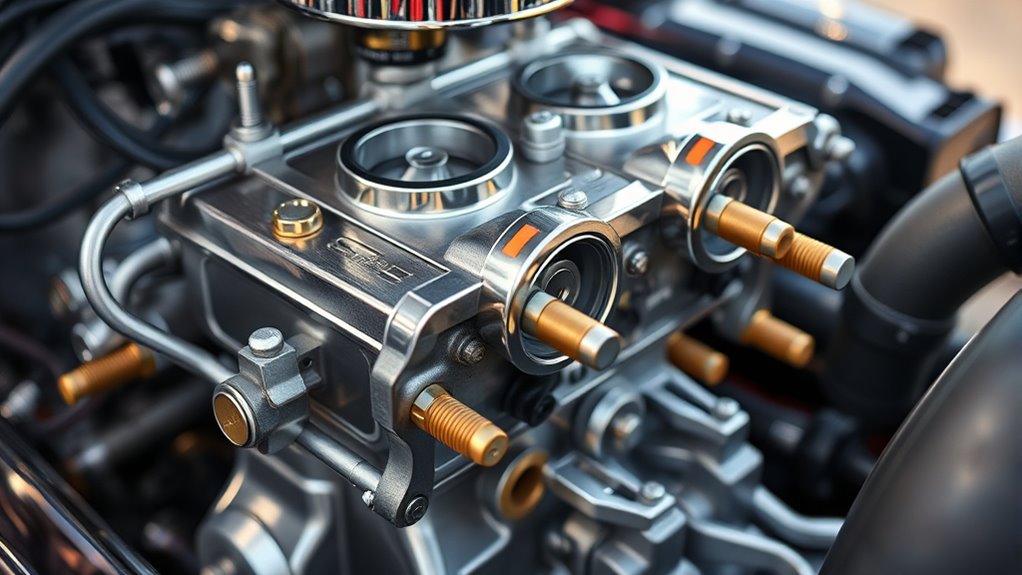
A carburetor’s an essential part of your engine, mixing air and fuel for peak performance. It uses components like the venturi to create a vacuum that draws fuel into the air stream.
The air-fuel ratio is critical for smooth operation, especially under different engine conditions. By adjusting these mixtures, you can improve power and fuel efficiency.
Keep exploring to uncover how carburetors evolved and their specific role in various engine types.
Key Takeaways
- A carburetor is a device that mixes air and fuel for internal combustion engines, which is essential for the engine to run efficiently.
- It uses a venturi to create a vacuum, drawing fuel from the float chamber into the airstream for combustion.
- Key parts include the air intake system, fuel delivery mechanism, and throttle control assembly, each playing an important role in how it performs.
- Carburetors adjust the air-to-fuel ratio depending on what the engine needs, helping it run smoothly at different speeds and loads.
- Regular maintenance and adjustments can improve engine responsiveness, boost power output, and save fuel. They also help prevent common performance problems.
What Is a Carburetor and Its Role in Engine Performance?
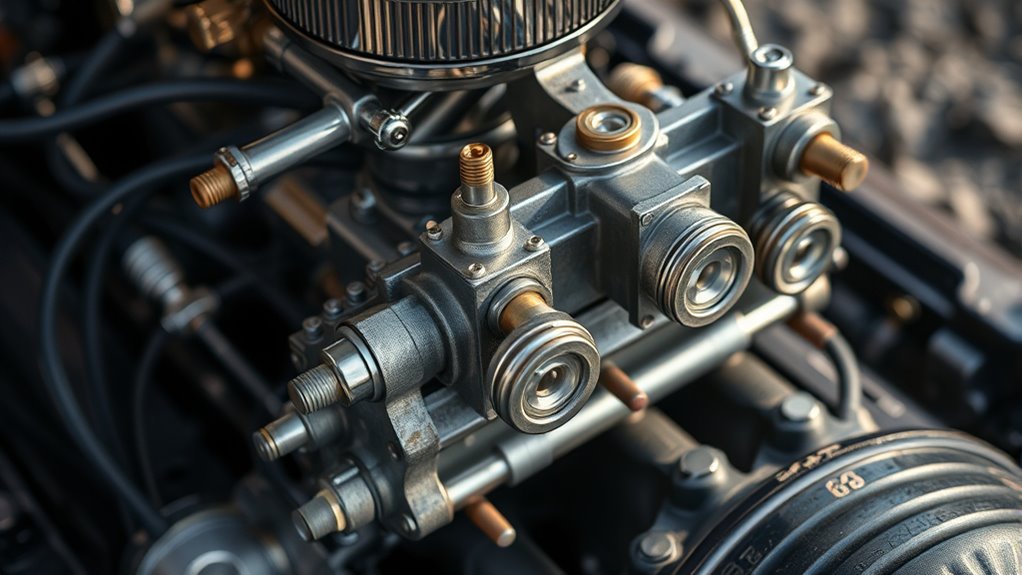
A carburetor is an essential part of many internal combustion engines, mixing air and fuel to create a combustible blend. Knowing the basics of how it works is key for anyone wanting to boost engine performance.
It controls the air-to-fuel ratio, making sure the engine runs smoothly and efficiently. When you press the throttle, the carburetor adjusts this mixture, which directly affects how well the engine responds.
If the mixture is too rich or too lean, you might notice poor acceleration or higher fuel bills. A properly tuned carburetor helps your engine deliver maximum power while using less fuel.
Keeping the carburetor in good shape not only improves responsiveness but also extends the engine’s life. Whether you’re working on a classic car or a small engine, paying attention to this component can make a big difference in overall performance.
Key Components of a Carburetor Explained
Sure! Here’s a more conversational version of the text:
—
To really get how a carburetor works, it’s helpful to know about its main parts. The air intake system, the fuel delivery mechanism, and the throttle control assembly are all crucial in mixing air and fuel just right. Let’s take a closer look at each one to see how they help keep your engine running smoothly.
Air Intake System
The air intake system is crucial for how a carburetor works, making sure the right mix of air and fuel gets to the engine. It affects airflow and intake speed, which are key for top performance. Knowing these parts helps you see why they matter.
Air Filter: It cleans the air coming in, stopping dirt and debris from getting into the engine.
Intake Manifold: This component spreads the air evenly to each cylinder, ensuring balanced combustion.
Venturi: It creates a low-pressure area that helps draw in fuel effectively.
Throttle Valve: It controls how much air enters the carburetor, which impacts the engine’s power output.
Fuel Delivery Mechanism
Understanding the fuel delivery mechanism is key to knowing how a carburetor works smoothly. It mainly mixes air and fuel to create the right combustion mixture.
The carburetor uses a float chamber to keep the fuel level steady, which helps it deliver fuel efficiently. When you accelerate, the airflow creates a vacuum that pulls fuel from the jets into the air stream, atomizing it for better burning.
Different fuel types like gasoline or ethanol blends need specific adjustments to keep everything running smoothly. By precisely controlling the fuel delivery, the carburetor ensures your engine responds well and runs efficiently.
This balance between air and fuel is crucial for good performance and fuel economy in every drive.
Throttle Control Assembly
A throttle control assembly is essential for managing your engine’s power output by controlling the airflow into the carburetor. It directly impacts how your vehicle responds when you press the gas pedal.
Proper linkage adjustment ensures the throttle opens and closes smoothly, helping your engine perform at its best. When everything’s dialed in right, you get better acceleration and more efficient engine operation.
It regulates how much air gets into the carburetor, which is key for optimal engine performance. This control affects how quickly your engine reacts to your commands, making driving smoother.
Adjusting the linkage precisely guarantees that the pedal movement matches the carburetor’s throttle, preventing lag or hesitation. Fine-tuning this connection boosts overall engine responsiveness and efficiency.
How Air and Fuel Mixing Works in a Carburetor
When you look at how air and fuel mix in a carburetor, it’s clear that the process is essential for ideal engine performance. The carburetor uses basic mixing principles to create the right air-fuel mixture.
As air flows through the carburetor, it passes through a narrow section called the venturi. This design causes the air to speed up and create a vacuum that draws fuel from the float chamber into the airstream.
This mixing process guarantees that the air and fuel blend effectively, forming a fine mist that ignites easily in the engine’s combustion chamber. The ratio of air to fuel is critical; too much air can lead to a lean mixture, while too much fuel can cause a rich mixture.
Both conditions can affect engine performance and efficiency, making the carburetor’s role in mixing air and fuel fundamental for smooth operation.
How Carburetors Function in Various Engine Conditions
Although the engine’s demands change based on speed and load, carburetors adapt to guarantee peak performance. This adaptation is key to keeping the engine running efficiently in different conditions.
When you accelerate, the carburetor adjusts the air-fuel mixture to meet the higher power demand. During idling or low-speed runs, it enriches the mixture to keep things running smoothly.
Several factors influence this adjustment, including throttle position, engine temperature, altitude, and load conditions. Each of these helps the carburetor fine-tune the mixture for optimal performance.
Identifying Common Carburetor Problems
Another issue is fuel evaporation, especially in warmer weather. If your engine has trouble starting after sitting for a while, the fuel might be evaporating in the carburetor. This can lead to hard starts and rough idling.
You should also watch out for engine sputtering or stalling. These signs often mean there’s an improper fuel-air mixture, usually caused by blocked jets. Staying alert to these symptoms helps you catch carburetor problems early, keeping your engine running smoothly and efficiently.
Fixing Common Carburetor Problems: Cleaning and Maintenance Tips
Keeping your carburetor in top shape is essential for smooth engine performance, and regular cleaning can make a big difference. By following a simple maintenance checklist, you can effectively tackle common carburetor problems.
- Inspect for dirt and debris: A clogged carburetor can cause poor engine performance.
- Clean fuel lines: Make sure fuel flows freely to avoid stalling or misfiring.
- Check gaskets and seals: Worn gaskets can lead to air leaks, which affect the fuel mixture.
- Adjust the float level: Proper float adjustment ensures the right fuel level in the bowl.
These troubleshooting steps will help you maintain peak performance and extend your engine’s life. Regular attention to these areas can prevent bigger issues later on. Stay proactive with your carburetor care to keep your vehicle running smoothly.
Tips for Troubleshooting Carburetor Issues
When you’re trying to troubleshoot carburetor issues, it’s good to start by noticing some common signs. Things like rough idling or the engine stalling can often point to a problem. Don’t forget, adjusting the fuel mixture can really help improve performance, so it’s worth giving that a try.
Also, keeping your carburetor clean and well-maintained is super important. Regular checks and cleaning can prevent a lot of issues before they even start, making sure everything runs smoothly when you need it most.
Common Carburetor Symptoms
If your engine is having trouble starting or running unevenly, it’s a sign to check for carburetor problems. These issues can affect your fuel efficiency and how well your vehicle runs.
Watch out for hard starting, which might mean your carburetor is clogged. Rough idling, where the engine shakes or stutters, can also point to an imbalance in the air-fuel mix.
If you notice hesitation or lag when pressing the gas pedal, it could be a carburetor malfunction. And if you’re filling up more often, your carburetor might not be delivering fuel properly.
Dealing with these signs early can save you time and money later on!
Adjusting Fuel Mixture
Adjusting the fuel mixture in your carburetor can really improve engine performance, especially if you notice rough idling or hesitation.
Start by locating the adjustment screws on your carburetor; these control the air and fuel flow. For best results, aim for an ideal ratio—usually around 14.7 parts air to 1 part fuel.
Begin by turning the screws slightly and listen to how the engine responds. If it smooths out, you’re heading in the right direction. If it stumbles, keep adjusting until you find the sweet spot.
Keep fine-tuning until the engine runs smoothly. Remember, a well-balanced fuel mixture not only boosts performance but also saves fuel.
Cleaning and Maintenance Tips
Keep your carburetor running smoothly by incorporating regular cleaning and maintenance into your routine. A well-maintained carburetor not only boosts performance but also lasts longer.
Follow these tips to keep it in top shape:
Establish a maintenance schedule: Check your carburetor every few months, especially before long rides.
Use quality fuel: Contaminated fuel can cause buildup and clogs.
Perform carburetor cleaning: Clean jets and passages with carburetor cleaner to remove deposits.
Inspect gaskets and seals: Replace any worn or damaged parts to prevent leaks and ensure proper function.
Choosing the Right Carburetor for Your Engine Type
When considering performance tuning, think about how your driving style affects your needs. A performance-oriented engine may benefit from a high-flow carburetor, while a daily driver might require something more standard.
Don’t forget to follow installation tips for a smooth setup. Proper alignment and securing of the carburetor are essential for peak function. Also, check the necessary adjustments for fuel-air mixtures to improve performance.
The Evolution of Carburetors in Automotive History
As you look into the history of carburetors, you’ll notice how the early designs really set the stage for all the modern improvements we see today. It’s pretty interesting to see how these initial ideas evolved over time.
Thanks to these innovations, engine performance got a serious boost, making vehicles not only more powerful but also more efficient. Understanding this progression really helps us appreciate just how important carburetors have been in shaping automotive history.
Early Carburetor Designs
- Simple mechanical parts used for mixing fuel.
- Gravity-fed systems for delivering fuel to the engine.
- Limited options for adjusting air-fuel ratios.
- Made with basic materials like brass and aluminum.
These elements not only shaped how early engines worked but also paved the way for future innovations. As you explore more, you’ll see how these basic designs influenced the development of more advanced carburetors, leading to the sophisticated systems we use today.
Technological Advancements Over Time
Though early carburetors laid the groundwork for fuel mixing, significant technological advancements transformed their design and functionality over time. Manufacturers started focusing on fuel efficiency, creating designs that better optimized air-fuel mixtures.
Historical innovations like variable venturi carburetors allowed for improved performance tuning, adapting to different driving conditions. As emission standards became stricter, carburetors evolved to reduce pollutants while still maintaining power.
This shift led to features such as automatic chokes and accelerator pumps, which enhanced responsiveness and drivability. These advancements not only boosted engine efficiency but also made carburetors more user-friendly.
Understanding these progressive changes helps you appreciate the important role carburetors still play in today’s automotive landscape.
Impact on Engine Performance
Carburetors have played a big role in how engines perform over the years, boosting both power and efficiency. Chances are you’ve felt the difference when tuning a carburetor or refining its settings. A well-tuned carburetor can really change how your vehicle responds.
Here are some key ways carburetors impact engine performance:
- Better throttle response
- Improved fuel economy
- More horsepower
- Smoother idling
As automotive technology has advanced, carburetors have been refined to allow for more precise adjustments and better performance. Focusing on proper tuning helps you unlock your engine’s full potential and keep it running at its best.
Understanding these effects helps you see just how important carburetors are in reaching peak performance in your vehicle.
Why Do Carburetors Matter in Classic Cars and Small Engines?
While many modern vehicles rely on fuel injection systems, carburetors remain fundamental in classic cars and small engines for their simplicity and reliability. If you own a vintage car, you probably appreciate the unique charm and character that come with its mechanical design.
Carburetors play a big role in maintaining that vintage performance, letting you experience the raw power and responsiveness that modern systems just can’t replicate.
Carburetors preserve vintage performance, delivering a raw power and responsiveness that modern systems can’t match.
Plus, carburetor efficiency is crucial for small engines, like those in lawn mowers, chainsaws, and generators. These engines need a simple fuel delivery system to work well and efficiently.
With fewer parts than fuel injection systems, carburetors are easier to maintain and repair. That means your classic ride or small engine can keep running smoothly for years.
Embracing carburetors isn’t just about preserving history; it’s also about enjoying a more hands-on and engaging driving experience.
Frequently Asked Questions
Can a Carburetor Be Repaired or Does It Need Replacement?
Yes, a carburetor can often be repaired instead of replaced. If you notice issues like poor engine performance or leaks, those are common signs it might need attention.
You can try repair techniques such as cleaning the jets, replacing gaskets, or adjusting the float. These steps often fix minor problems and save you money.
However, if the damage is extensive or the carburetor is quite old, replacing it might be the better choice. Always consider the costs and benefits before making a decision.
What Tools Are Necessary for Carburetor Maintenance?
To maintain your carburetor, you’ll need a few essential tools. Grab a screwdriver set for adjusting the fuel mixture, pliers for tightening connections, and a wrench for removing it if necessary.
A cleaning brush and carburetor cleaner will help you keep it in top shape. Don’t forget safety glasses! Following these maintenance tips will guarantee your carburetor runs smoothly and efficiently, keeping your engine performing at its best.
How Often Should a Carburetor Be Serviced?
Think of your carburetor like a delicate musical instrument; if it’s out of tune, your engine won’t perform.
You should service your carburetor every 3,000 miles or during routine maintenance checks.
Regular carburetor cleaning keeps the fuel mixture balanced, which helps prevent issues like rough idling or stalling.
Keeping it in top shape not only boosts performance but also extends the life of your engine.
Don’t let neglect hit a sour note!
Are There Aftermarket Carburetor Options Available?
Yes, there are plenty of aftermarket carburetor options available. You’ll find various brands offering performance upgrades tailored to your vehicle’s needs.
These upgrades can improve power, boost fuel efficiency, and give you better throttle response.
It’s important to research and pick a reputable brand that matches your engine’s specs.
Upgrading to an aftermarket carburetor can really boost your ride’s performance and make driving more enjoyable.
What Impacts Carburetor Performance in Extreme Weather Conditions?
Extreme weather can feel like a tempest for your carburetor. Temperature changes can mess with the fuel mixture, making it either too rich or too lean.
At higher altitudes, you need to adjust for thinner air, which helps your engine run smoothly. Humidity also impacts fuel vaporization, affecting overall performance.
When you fine-tune these factors, you ensure smoother operation—like a well-orchestrated symphony—even in harsh conditions. Your ride deserves that kind of harmony!
Conclusion
In a world where technology races ahead, carburetors remind us of simpler times when engines roared with character. You might find it surprising how these classic components still play a vital role in many small engines and vintage cars today.
Understanding carburetors not only improves your engine performance but also connects you to the rich history of automotive innovation. So next time you fire up your engine, you’ll appreciate the blend of air and fuel working seamlessly beneath the hood.
Knowing what a carburetor is and how it works helps you better appreciate this essential part of your engine’s functioning.