How to Use Carburetor Cleaner Effectively
If you’ve ever struggled with rough engine performance or inconsistent idling, you’re not alone. Many people find that dirt and grime in the carburetor are behind these frustrating issues.
Luckily, using carburetor cleaner effectively can help restore your engine’s smooth operation.
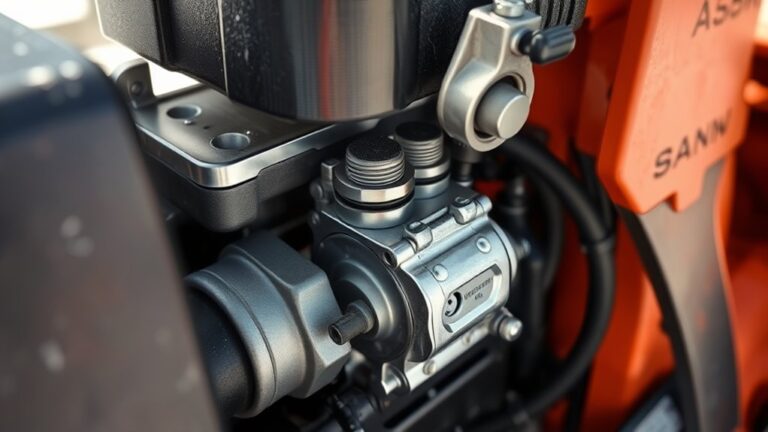
To use carburetor cleaner effectively, start by disconnecting the battery and removing the air filter. Identify your carburetor type, then take it off the engine for thorough cleaning.
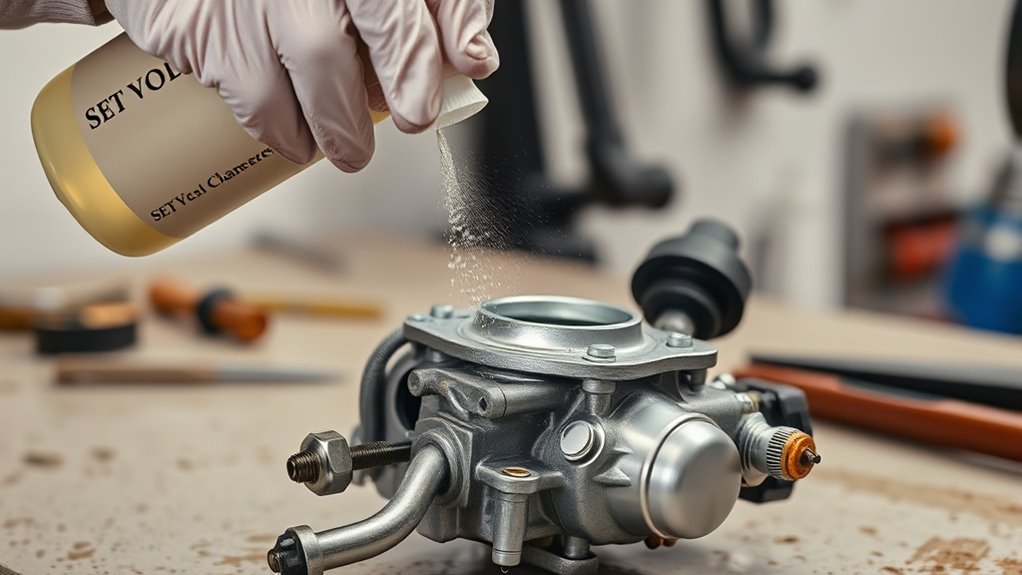
Spray the cleaner into the fuel inlet and jets, letting it soak to break down dirt and buildup. Reassemble and reinstall the carburetor once it’s clean.
Regular inspection and maintenance can improve performance, and there’s more to investigate about the right tools and safety tips to elevate your cleaning process.
Key Takeaways
- Make sure the area is well-ventilated, and wear safety goggles, gloves, and a mask before you start cleaning.
- Disconnect the battery and take off the air filter to get easy access to the carburetor.
- Spray carburetor cleaner directly into the fuel inlet and jets, letting it soak to loosen dirt and grime.
- Use a brush to scrub those tricky spots, making sure all the buildup gets thoroughly cleaned.
- Carefully reassemble the carburetor, then double-check for any leaks or loose connections before putting it back in place.
What Is Carburetor Cleaner and Why Use It?
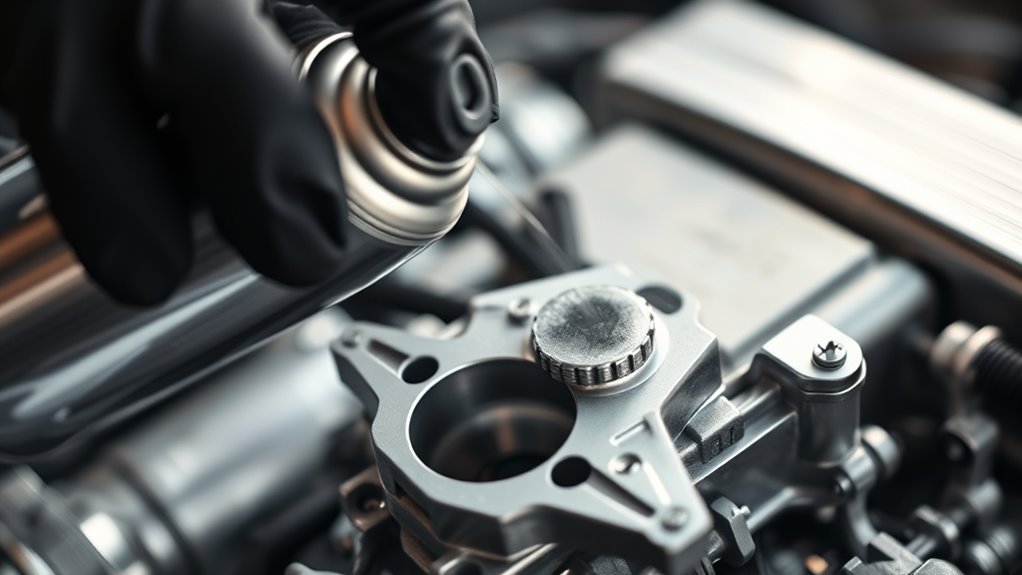
Carburetor cleaner is a powerful solvent designed to remove dirt, varnish, and carbon buildup from your engine’s carburetor. It helps keep your carburetor working properly, so your engine runs smoothly and uses fuel efficiently.
Carburetor cleaner effectively removes dirt and carbon buildup, ensuring your engine runs smoothly and efficiently.
When your carburetor gets clogged, it can cause stalling or rough idling. Using this cleaner regularly can help prevent those issues and keep your engine running like new.
To stay on top of maintenance, think about how often you use your vehicle. If you drive daily, a good cleaning every few months is ideal. For occasional drivers, once or twice a year should do the trick.
Always check the manufacturer’s recommendations for your specific engine. Remember, a clean carburetor boosts performance and can extend your engine’s lifespan.
Signs Your Carburetor Needs Cleaning
If your vehicle is having trouble starting or idling roughly, it’s a clear sign that your carburetor might need cleaning.
Other signs include poor acceleration, backfiring, and lower fuel efficiency. These problems usually happen because dirt and debris clog the carburetor, messing up the air-fuel mix your engine needs to run well.
If you notice any of these issues, it’s a good idea to check how often you’re cleaning your carburetor. Regular maintenance can stop buildup before it causes bigger problems.
A good rule of thumb is to clean your carburetor at least once a year or whenever you see these symptoms. Ignoring them can lead to more serious engine issues later on.
Essential Tools for Using Carburetor Cleaner
Noticing signs that your carburetor needs cleaning is just the first step. Having the right tools on hand makes the process smoother and more effective. Here’s a quick guide to essential cleaning tools and how to use them.
| Tool | Purpose |
|---|---|
| Carburetor cleaner | Gets rid of dirt and gunk |
| Screwdriver | Disassembles carburetor parts |
| Brush | Scrubs those hard-to-reach spots |
| Shop towels | Wipes down surfaces easily |
| Safety goggles | Keeps your eyes protected during cleaning |
With these tools, you can tackle your carburetor cleaning effectively. Make sure to use the right methods for your situation so you reach all the nooks and crannies. Being prepared will save you time and give you better results!
Safety Precautions for Using Carburetor Cleaner
Before diving into the cleaning process, it’s important to prioritize safety. Start by making sure you’re in a well-ventilated area. Good airflow is crucial because the fumes from carburetor cleaner can be harmful if inhaled. Open windows or use fans to keep the air moving.
Next, don’t forget your protective gear. Wear safety goggles to shield your eyes from splashes and a mask to prevent inhaling any dangerous vapors. Gloves are also essential—they protect your skin from irritation caused by the cleaner.
Be mindful of your surroundings. Keep flammable materials away and work on a non-slip surface to stay safe. If you’re unsure about how to use the product, always read the label for specific safety instructions. Taking these precautions helps ensure a safer and more effective cleaning experience.
Step-By-Step Guide to Cleaning Your Carburetor
With safety precautions in place, you’re ready to clean your carburetor effectively. Start by disconnecting the battery and removing the air filter.
Identify your carburetor type, whether it’s a single-barrel or multi-barrel, as this will guide your cleaning approach. Next, remove the carburetor from the engine.
Identifying your carburetor type—single-barrel or multi-barrel—is crucial for an effective cleaning process.
Spray a generous amount of carburetor cleaner into the fuel inlet and jets, allowing it to soak for a few minutes. Use a soft brush to scrub away any deposits.
Pay special attention to the throttle plates and any gaskets, which might need replacing if damaged. After thorough cleaning, reassemble the carburetor and reinstall it.
It’s a good practice to clean your carburetor every six months or whenever you notice performance issues. Regular maintenance can help prolong the life of your engine and guarantee peak performance.
Top Mistakes to Avoid When Cleaning Your Carburetor
When you’re cleaning your carburetor, it’s pretty common to overlook some important steps. So, first things first—make sure you’re wearing the right safety gear. Gloves and eye protection are a must to keep yourself safe from any nasty fumes or splashes.
And don’t skip the detailed disassembly process either. Taking your time to carefully remove all the parts will make sure you don’t miss anything. Plus, rushing through it can lead to accidents or end up with a cleaning job that just isn’t as effective as it should be.
Not Using Proper Safety Gear
Failing to wear proper safety gear can lead to serious health risks while cleaning your carburetor. Don’t underestimate the importance of personal protective equipment (PPE).
Always wear gloves, goggles, and a mask to shield yourself from harmful chemical exposure. Carburetor cleaners often contain volatile substances that can irritate your skin, eyes, or respiratory system.
Skipping this step might seem trivial, but it can result in long-term health issues. Verify your workspace is well-ventilated to further minimize risks.
Skipping Detailed Disassembly Steps
Many enthusiasts make the mistake of skipping detailed disassembly steps, which can lead to incomplete cleaning and costly repairs down the line. When you’re doing carburetor maintenance, it’s really important to fully disassemble the unit so you can reach all the hidden spots.
Ignoring this can leave dirt and deposits behind that affect how well your engine runs. It’s a good idea to set a cleaning schedule based on how often you use your engine; usually, a thorough cleaning once a season does the trick.
Be sure to label parts as you go so reassembling is smooth and straightforward. Taking the time to disassemble properly not only makes cleaning easier but also helps extend the life of your carburetor. Don’t underestimate how important a thorough approach really is!
When Should You Reach for Carburetor Cleaner?
You’ll want to grab some carburetor cleaner when you start noticing things like rough idling or sluggish acceleration. Those are pretty good signs that your carburetor might be clogged up or dirty.
It’s actually a smart move to use it as part of your regular maintenance routine too. Doing a little cleaning now and then can help keep everything running smoothly and prevent bigger problems later on.
Addressing these issues early can save you a lot of time and hassle down the road, so don’t wait until things get really bad!
Signs of Clogged Carburetor
If your engine is sputtering or struggling to start, it might be time to consider whether the carburetor is clogged. You’ll notice several signs that could point to trouble.
For example, if your vehicle hesitates during acceleration or stalls unexpectedly, those are clear indications of performance issues. A rough idle or decreased fuel efficiency can also be signs of a clog.
Pay attention to any unusual sounds like backfiring or popping, as these can mean the air-fuel mixture isn’t balanced. If you notice any of these symptoms, don’t ignore them.
It’s important to address clogged carburetor problems quickly to prevent further damage. Reaching for carburetor cleaner might be your next step.
Routine Maintenance Schedule
Regular maintenance is key to keeping your engine running smoothly, and using carburetor cleaner should be part of that routine.
To establish a solid checklist, aim to inspect and clean your carburetor at least every 3,000 miles or during seasonal tune-ups.
If you notice any signs of performance issues like rough idling or reduced power, don’t wait—grab the cleaner.
Depending on your vehicle’s maintenance schedule, you might need to do this more often.
For older engines or those exposed to harsh conditions, more frequent cleaning could be needed.
Adding carburetor cleaner into your routine helps ensure your engine performs well and lasts longer.
Alternative Ways to Maintain Your Carburetor
While carburetor cleaner is a great tool for maintenance, several alternative methods can keep your carburetor running smoothly. First, consider using fuel additives designed for carburetor upkeep. These additives help clean and prevent buildup, guaranteeing better fuel flow.
Regularly inspect and replace your air filter, as a clogged filter can affect performance and lead to more significant issues. Another effective method is to perform preventive maintenance by checking for leaks or cracks in the carburetor gaskets.
Tightening screws and connections can also prevent air leaks that compromise efficiency. Don’t forget to adjust the idle speed periodically, as this can improve engine performance.
Lastly, consider running your engine periodically. This helps keep the fuel system well-circulated and prevents stagnation. By implementing these strategies, you’ll guarantee your carburetor remains in prime condition for longer.
Key Features of Effective Carburetor Cleaners
Regarding maintaining your engine, effective carburetor cleaners share key features that assure peak performance. First, look for a cleaner with strong degreasing properties; this ensures it can tackle stubborn buildup.
Next, consider the ease of application. Spray cans with precision nozzles let you reach tight spots effortlessly. You should also check for compatibility with various materials in your carburetor, as some cleaners can be harsh on certain plastics or rubber components.
When making product comparisons, prioritize those that offer quick drying times. This way, you can get back on the road faster. Additionally, effective cleaners often contain additives that help prevent future deposits, boosting longevity.
Finally, read reviews to gauge user experiences and confirm the effectiveness of different cleaning techniques. By focusing on these features, you’ll choose a cleaner that meets your engine’s needs and keeps it running smoothly.
Maximizing the Effectiveness of Carburetor Cleaner
If you really want to get the most out of your carburetor cleaner, there are a few important things to keep in mind. First off, make sure you pick the right product for your specific needs—that way, you’re targeting the right kind of buildup and grime. When you’re ready to apply it, do so carefully and follow the instructions, so the cleaner can do its job effectively.
And don’t forget about safety! Always wear gloves and eye protection, and work in a well-ventilated area. Taking these precautions helps keep you safe and ensures you’re working in the best environment to get your carburetor clean and running smoothly.
Proper Application Techniques
When you’re ready to tackle carburetor cleaning, proper application techniques can make all the difference in effectiveness. Start by ensuring the carburetor is cool and in a well-ventilated area.
Use a spray nozzle for precision, directing the cleaner straight into the jets and passages. This targeted approach helps improve cleaning efficiency.
Utilize specific cleaning techniques, like letting the cleaner sit for a few minutes to break down grime before scrubbing with a soft brush. Avoid over-saturating; a little goes a long way.
If you’re removing the carburetor, consider soaking smaller components in the cleaner for thorough results. Always follow safety guidelines and wear gloves and goggles to protect yourself.
Choosing The Right Product
Choosing the right carburetor cleaner is key to getting the best results, especially if you need to remove stubborn deposits. Start by comparing different products to find ones that match your needs.
Look for cleaners specifically made for carburetors, as they tend to work better than general-purpose options. Brand recommendations are helpful too. Popular choices like Berryman, Sea Foam, and Gumout are known for their cleaning power.
Check online reviews and user feedback to see what others have experienced. Ultimately, pick a cleaner that fits your budget and meets the performance standards for your specific application.
This way, you’ll get the most effective cleaning and keep your carburetor in top shape.
Safety Precautions To Consider
Using carburetor cleaner effectively means prioritizing safety. First, work in a well-ventilated area because fumes can be harmful. Open windows and doors, or use fans to keep the air flowing.
Next, don’t forget your protective gear. Wear gloves to shield your skin and safety goggles to protect your eyes from splashes. A mask can also help prevent inhaling harmful vapors.
Also, avoid any open flames or sparks nearby since carburetor cleaners are flammable. Taking these precautions will make your cleaning safer and more effective.
Frequently Asked Questions
Can I Use Carburetor Cleaner on Other Engine Parts?
Yes, you can use carburetor cleaner on other engine parts, but be careful. It works well for cleaning fuel injectors, throttle bodies, and some metal surfaces.
Just make sure to avoid sensitive components like rubber or plastic, as it can damage them. Incorporating it into your engine maintenance routine can help boost performance.
Always follow proper cleaning techniques to avoid accidentally harming any parts while trying to improve your engine’s efficiency.
How Often Should I Clean My Carburetor?
Think of your carburetor like a heart—keep it clean, and it’ll pump like a dream! You should clean your carburetor every 3,000 to 5,000 miles or if you notice performance issues.
Regular carburetor maintenance helps prevent buildup that can choke the engine. If you’re using your vehicle for short trips or in dusty conditions, consider cleaning it more often.
A little upkeep goes a long way in keeping your ride smooth!
Is Carburetor Cleaner Safe for Plastic Components?
Carburetor cleaner isn’t always safe for plastic components; it can damage some plastics because of its strong chemicals. To avoid issues, check the label for plastic compatibility. If you’re worried, consider using cleaner alternatives made specifically for plastic.
These options can clean effectively without risking damage. Always test a small area first if you’re unsure. That way, you can protect your parts while keeping everything running smoothly.
Your equipment deserves the best care!
What Happens if I Use Too Much Cleaner?
Using too much cleaner can cause some serious issues, like damaging engine parts or clogging fuel lines.
When you use too much, leftover residues can end up causing more problems than they fix.
Imagine starting your engine and hearing strange noises—that’s often a sign that too much cleaner is messing with how it runs.
To avoid these problems, use carburetor cleaner carefully and stick to the manufacturer’s instructions for the best results.
Can I Use Carburetor Cleaner in a Fuel Tank?
You shouldn’t use carburetor cleaner in your fuel tank. While it’s great for cleaning carburetors, it can actually damage your fuel system.
Instead, focus on proper fuel system maintenance by using products made specifically for the tank. These help remove deposits and keep everything running smoothly.
Always check the labels and pick the right cleaner for your needs. That way, you can keep your engine in top shape without risking any damage.
Conclusion
To summarize, regularly cleaning your carburetor can improve your engine’s performance and fuel efficiency by up to 10%.
By following the steps outlined and using the right tools, you’ll keep your vehicle running smoothly.
Remember to prioritize safety and choose a quality carburetor cleaner for the best results.
With just a little effort, you can prevent costly repairs down the road and enjoy a well-maintained engine for years to come.