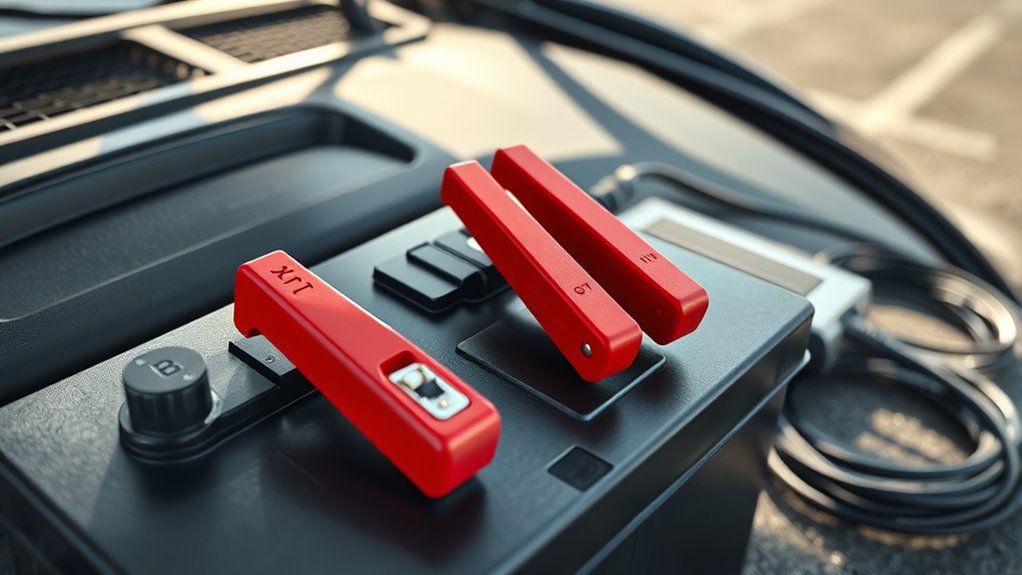
7 Simple Steps to Effectively Charge Your Car Battery
Many drivers have faced the frustration of a dead or weak car battery, and you’re not alone. Luckily, charging your car battery can be straightforward if you know the right steps to follow. Here’s a simple guide to help you get back on the road quickly and safely.
To charge your car battery effectively, start by gathering your charging equipment, including a reliable charger.
Next, observe essential safety precautions, like wearing gloves and goggles. Connect your charger correctly: red to positive, black to negative.
Monitor the charging progress and duration, ensuring the right mode is selected. After charging, disconnect properly and store your charger.
Finally, test your battery to confirm it’s functioning. There’s more valuable info to help you along the way!
Key Takeaways
- Gather your essential equipment: a reliable charger, jumper cables, gloves, and safety goggles to keep things safe during the process.
- Connect the charger properly by attaching the positive cable first, then the negative cable to the battery and a grounded metal part.
- Keep an eye on the charger’s indicators and the battery temperature. Check them regularly to make sure the battery doesn’t overheat.
- When it’s time to disconnect, unplug the charger from the outlet first. Then remove the negative clip, followed by the positive clip.
- Finally, test the battery with a multimeter. Ensure it shows a voltage of 12.6 volts or higher before starting your vehicle.
Step 1: Gather Your Charging Equipment

To get started with charging your car battery, you’ll need a few essential pieces of equipment. First, grab a reliable battery charger suited for your vehicle’s needs. Make sure it has safety features like overcharge protection.
Next, you’ll want a set of jumper cables if you plan on jump-starting instead. Furthermore, having a pair of gloves and safety goggles is a smart move for protection.
For effective battery maintenance, remember to check the battery terminals for corrosion and clean them if necessary. Following battery maintenance tips can prolong your battery life considerably.
As for charging frequency, it’s wise to charge your battery every few months if you don’t drive often. If you use your vehicle regularly, a top-up charge once a season should suffice.
Keeping these tools and tips in mind will set you up for successful battery charging.
Step 2: Essential Safety Precautions When Charging
While charging your car battery can be straightforward, it’s important to follow safety precautions to avoid accidents. Here are some key tips to ensure a safe charging environment:
- Choose the Right Location: Charge your battery in a well-ventilated area away from flammable materials. This helps prevent gas buildup and reduces fire risk.
- Wear Protective Gear: Always wear gloves and safety goggles. They protect you from acid splashes or sparks that might happen during charging.
- Inspect Cables and Connectors: Before you start, check your cables for any fraying or damage. Damaged cables can cause short circuits and pose safety hazards.
- Avoid Metal Objects: Keep metal tools away from the battery terminals. Sparks can ignite flammable gases released during the process.
Step 3: How to Connect Your Charger to Charge Your Car Battery
Now that you’ve handled all the safety precautions, it’s time to connect your charger to the car battery. First, double-check that you’ve chosen the right charger for your specific battery type—this is really important. Once you’re sure about that, you can move on to making the connections.
When connecting the cables, make sure to attach the positive (usually red) cable to the positive terminal on the battery. Then, connect the other end of that cable to the positive terminal on the charger. After that, do the same with the negative (black) cable—attach it to the negative terminal on the battery and then to the negative terminal on the charger. Following these steps carefully helps ensure a safe and effective charging process.
Charger Type Selection
How do you choose the right charger for your car battery? Picking the right charger is key to avoiding compatibility issues and ensuring efficient charging. Here are some important features to consider:
- Voltage Compatibility: Make sure it matches your battery’s voltage, like 12V or 6V.
- Amperage Rating: Higher amps mean faster charging, but don’t overload your battery.
- Smart Charging: Look for chargers with automatic shutoff or maintenance modes to prevent overcharging.
- Portability: If you’re always on the go, a lightweight, compact charger can be a real lifesaver.
Proper Cable Connections
Once you’ve chosen the right charger, connecting it properly is key for safe and effective charging. First, make sure your charger is turned off.
Connect the positive (red) cable to the positive terminal of your battery, then attach the other end to the charger’s positive clamp. Next, connect the black negative cable to the charger’s negative clamp.
Finally, clip the negative cable to a grounded metal part of your car, not the battery itself. This helps reduce the risk of sparks.
Always check your cables for damage—frayed or damaged cables can cause poor connections and unsafe situations. These tips will help you avoid issues and ensure your battery charges efficiently.
Proper connections are essential for effective charging and can help extend your battery’s life.
Step 4: Monitor Charging Progress and Duration
Monitoring the charging progress is key to making sure your car battery charges safely and efficiently. Keeping an eye on a few things can help prevent problems like overcharging or overheating.
First, check the charging indicators. Most chargers have lights that change color or blink to show the status. Get familiar with what these signals mean so you know when your battery is fully charged.
Next, keep an eye on the battery temperature. Feel it occasionally to make sure it isn’t getting too hot. A warm battery is normal, but if it’s hot to the touch, that could be a sign of trouble.
Keep an eye on your battery’s temperature; a warm battery is fine, but excessive heat could signal a problem.
It’s also a good idea to set a timer. Knowing how long you’ve been charging helps you avoid overdoing it. Since most batteries take several hours, a timer keeps you on track.
Finally, listen for any unusual sounds from your charger. Strange noises might indicate a malfunction, so it’s worth checking out.
Stay vigilant to keep your battery in great shape!
Step 5: Select the Right Charging Mode for Your Battery
Now that you’ve been keeping an eye on your charging progress, it’s a good idea to choose the right charging mode for your battery. Knowing what type of battery you have and picking the right charging speed can really make a difference in how well it performs and lasts.
And don’t forget to consider any safety features your charger or device has — they’re there to help keep everything running smoothly and prevent any mishaps.
Understanding Battery Types
Choosing the right charging mode for your car battery is key to keeping it running smoothly and lasting longer. Different battery types, like lead acid and lithium ion, need specific approaches to get the best results.
For lead acid batteries, a slower charge is best to avoid damage and extend their lifespan. Lithium ion batteries, on the other hand, can handle faster charging modes, which makes charging quicker without hurting the battery.
Regular maintenance checks are important to prevent common charging myths and ensure your battery performs at its best. Keeping an eye on your battery helps you catch issues early and prolongs its life.
Finally, picking the right charging method can also help reduce waste and support better battery technology. It’s a simple way to benefit both your wallet and the environment.
Choosing Optimal Charging Speed
When choosing the right charging mode for your battery, it’s important to consider its specific needs. Every battery type has different requirements for charging efficiency and maximum voltage.
If you’re using a lead-acid battery, a slower charge is usually better. It helps improve the battery’s lifespan and prevents overheating.
Lithium-ion batteries, on the other hand, can handle faster charging speeds without damaging their longevity.
Before you start, check your battery’s specifications to find out the ideal charging mode.
Using a smart charger can automatically adjust the voltage and current, making sure your battery gets exactly what it needs.
Choosing the right charging speed not only boosts performance but also helps extend your battery’s overall life.
Safety Features to Consider
While choosing the right charging mode for your battery, it’s important to focus on safety features that protect both you and the battery. Including these safety tips will make your charging experience better and help your battery last longer.
Here are some key features to keep in mind:
- Overcharge Protection: Stops charging once the battery is full to prevent damage.
- Short-Circuit Prevention: Helps reduce the risk of electrical faults.
- Temperature Monitoring: Adjusts charging speed based on the battery’s temperature.
- Automatic Shut-Off: Turns off the charger when it’s not in use.
Remember to follow these maintenance tips and use reliable safety gear during charging. Prioritizing these features can make a big difference in safety and performance.
Step 6: Properly Disconnect and Store Your Charger
Once your car battery is fully charged, it’s important to disconnect and store your charger properly to ensure safety and keep it in good shape. Start by unplugging the charger from the wall outlet before removing the clips from the battery terminals.
Always remove the negative clip first, then the positive. This helps prevent any accidental sparks or sparks that could cause injury or damage. After disconnecting, give the clips and cables a quick wipe with a dry cloth to remove any dirt or corrosion.
Store your charger in a cool, dry place away from direct sunlight and moisture. If you have a protective case, use it for extra safety and better organization. Keep the charger out of reach of children and pets to avoid accidents.
Step 7: Test Your Battery After Charging to Ensure Functionality
To make sure your battery is working properly, it’s important to test it after charging. This quick check helps confirm that your investment is reliable and ready to go.
First, use a multimeter set to measure DC voltage. Connect the probes to the battery terminals. A healthy battery should read around 12.6 volts or higher.
If you can, perform a load test for a more thorough check. Apply a load for 10-15 seconds and see if the voltage stays above 9.6 volts.
Inspect the terminals for any corrosion or buildup. Cleaning them if necessary is a good idea, as corrosion can affect performance.
Finally, try starting your vehicle. If it starts smoothly, your battery is in good shape!
Frequently Asked Questions
How Long Does It Take to Fully Charge a Car Battery?
It typically takes about 4 to 24 hours to fully charge a car battery, depending on the charging methods you use.
For example, a trickle charger might take longer than a fast charger.
To ensure efficient charging, keep up with battery maintenance like cleaning terminals and checking fluid levels.
Regular upkeep can extend your battery’s life and make charging more effective, so you won’t have to worry about being stranded with a dead battery.
Can I Charge a Battery in Extreme Temperatures?
You can charge a battery in extreme temperatures, but it’s tricky. In the heat, the battery might overheat, while cold can slow down the charging process.
Both conditions impact battery maintenance. If you’re charging in extreme cold, expect it to take longer, and in high heat, keep an eye out for overheating.
Always check the manufacturer guidelines to make sure you’re keeping your battery healthy, no matter the temperature. Taking care of your battery really pays off!
What Should I Do if My Battery Is Swollen?
If your battery’s swollen, prioritize battery safety. First, don’t try to charge it; disconnect it from your vehicle to prevent further damage.
Swelling can happen from overheating, overcharging, or simply age. Carefully place the battery in a well-ventilated area away from anything flammable.
Contact a professional for safe disposal and replacement. Never puncture or try to open the battery, as it could leak dangerous substances or even explode.
Stay safe!
Is It Safe to Charge a Battery While Still in the Car?
Charging a battery in your car can be like tending a campfire; you’ve got to make sure it’s safe before you spark the flames. If your battery’s in good shape, it’s usually safe to charge it while still in the car.
Just be sure there’s proper ventilation and avoid any flammable materials nearby. Keep an eye on battery maintenance to prevent swelling or leaks.
Always follow safety guidelines to keep both you and your vehicle secure.
How Often Should I Charge My Car Battery?
You should charge your car battery every few months, especially if you don’t drive regularly.
For battery maintenance, check the charge level periodically, and if it drops below 12.4 volts, it’s time to charge.
In colder climates, consider charging more often during winter months, as cold can drain batteries faster.
Keeping an eye on how often you charge can help prolong your battery’s life and ensure your car starts reliably when you need it.
Conclusion
Once you’ve charged your car battery, it’s important to test it to make sure it’s ready for the road.
Imagine driving home after a long day at work, feeling confident that your battery is good to go. You turn the key, and the engine roars to life without any hesitation.
By following these simple steps, you can avoid getting stranded and enjoy peace of mind knowing your vehicle’s battery is in top shape.
Keeping your battery healthy means you’ll never miss a beat when you need your car the most.