What Replaced Carburetors in Modern Engines?
Are you tired of dealing with outdated carburetors that make your engine run rough or waste fuel? You’re not alone—many car enthusiasts and everyday drivers struggle with these old systems.
Luckily, modern technology has come a long way to fix these issues. Fuel injection systems have replaced carburetors in modern engines, enhancing performance and efficiency. They deliver fuel with precise timing, improving combustion and reducing emissions.
With advanced technologies like direct injection and turbocharging, you’ll experience better throttle response and fuel economy. These systems adapt to various driving conditions, making your ride smoother and more responsive.
If you’re curious about how these innovations shape today’s vehicles, there’s plenty more to explore about fuel systems and their benefits.
Key Takeaways
- Fuel injection systems became the main replacement for carburetors, making engines perform better and run more efficiently.
- Advanced electronic management in fuel injection allows real-time tuning adjustments for optimal engine performance.
- Direct injection technology improves fuel atomization and combustion, giving you more power and better fuel economy.
- Turbocharging works with fuel injection to boost engine performance without making the engine bigger, which means more torque and quicker acceleration.
- Overall, fuel injection systems result in lower emissions and reduced maintenance costs compared to traditional carburetors.
The Rise of Fuel Injection Systems
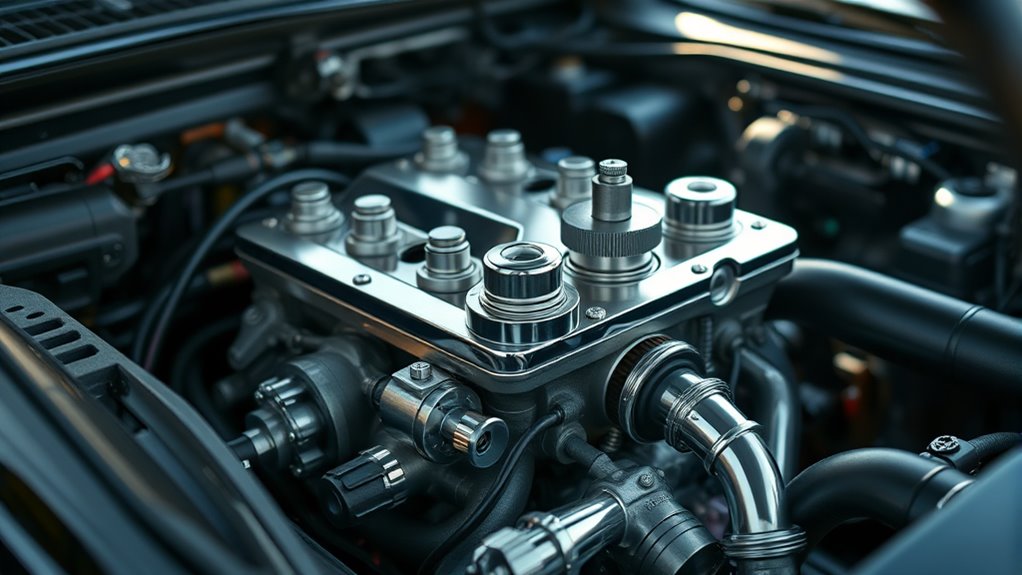
As modern engines evolved, fuel injection systems emerged as a game-changer, replacing carburetors to improve performance and efficiency. These systems offer precise fuel delivery, allowing for better combustion and lower emissions.
The shift from carburetors to fuel injection highlights significant design innovations, paving the way for advanced electronic management in vehicles. You’ll notice that tuning is more effective with fuel injection because it allows for real-time adjustments based on driving conditions.
As more manufacturers adopt these systems, they’re valued for their benefits like improved fuel economy and reliability. However, troubleshooting can be tricky, especially with electronic components.
Understanding these aspects helps explain why fuel injection has become the standard in modern engines. It ensures you get the most out of your vehicle’s performance.
Understanding Fuel Injection Systems: How They Work?
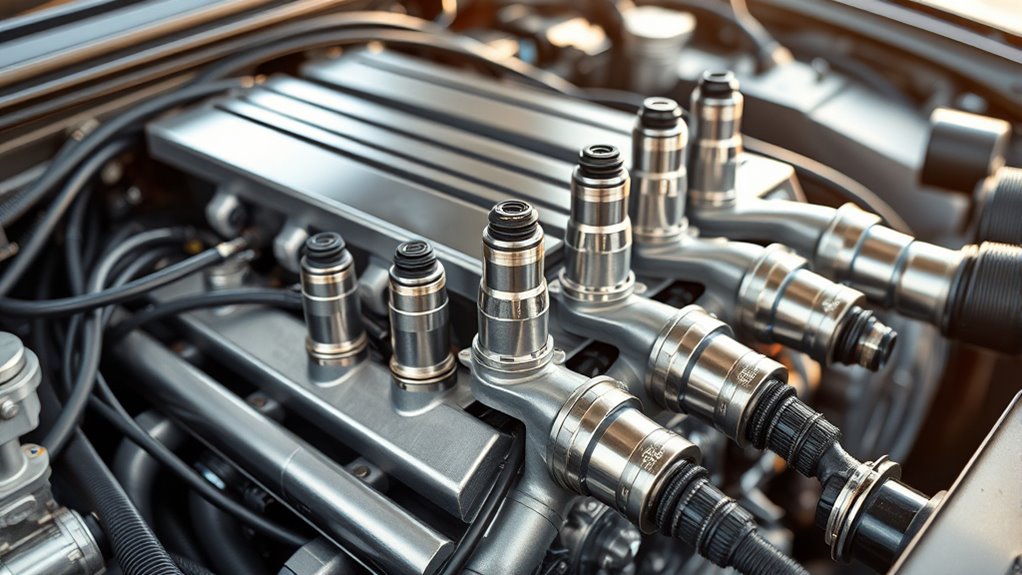
Fuel injection systems are the heartbeat of modern engines, delivering fuel directly into the combustion chamber with precision. They improve performance through optimized fuel delivery, aided by electronic controls and sophisticated fuel mapping.
Here’s a quick overview of key system components:
| Component | Function |
|---|---|
| Fuel Injectors | Atomize fuel for combustion |
| Engine Control Unit (ECU) | Manages injection timing and throttle response |
| Fuel Pump | Supplies fuel to injectors |
| Sensors | Monitor conditions for cold start and performance tuning |
With different injector types, each system can adapt to various driving conditions. Proper maintenance practices guarantee longevity, while tuning adjustments can boost throttle response. Understanding these elements helps you see how fuel injection systems enhance engine efficiency and performance.
Carburetors vs. Fuel Injection: A Direct Comparison
When you’re looking at carburetors versus fuel injection, you’ll see there are some pretty big differences in how they perform and how efficient they are. Fuel injection systems tend to give you better fuel economy and more power overall. But, on the flip side, they’re a bit more complicated to set up and maintain. So, it’s really about figuring out what kind of performance and maintenance level suits your engine best.
Efficiency and Performance Metrics
Efficiency and performance in modern engines depend on whether you choose a carburetor or a fuel injection system.
When you go with fuel injection, you’re using advanced tech that delivers fuel more precisely, leading to better engine performance. This system adjusts to different conditions, making your engine more responsive than carburetors can manage.
With fuel injection, you’ll notice quicker throttle response and better fuel economy, making your drive smoother and more efficient. Carburetors, on the other hand, are simpler but can’t match that level of precision.
This often results in inconsistent performance. Overall, if you want to get the most out of your engine, fuel injection is the way to go. It offers the efficiency and responsiveness modern drivers need.
Maintenance and Complexity Factors
Maintenance routines for carburetors and fuel injection systems are quite different, which can really impact your ownership experience. Carburetors need frequent adjustments and cleaning, leading to higher maintenance costs and more time spent on upkeep.
If you enjoy tinkering, this might be appealing, but it can also reduce engine longevity if not managed properly. Fuel injection systems are generally more reliable and need less maintenance, helping your engine last longer.
While repairs for fuel injection systems might cost more upfront, their overall maintenance costs are usually lower over time. Choosing between these systems affects not just how your vehicle performs but also your satisfaction as a long-term owner.
How Turbocharging Enhances Engine Performance
Turbocharging is a game-changer when it comes to boosting your engine’s performance. Basically, it helps your engine breathe better by pushing more air into the cylinders. When there’s more air, your engine can burn more fuel efficiently, which means you get more power out of it.
What’s pretty neat is that it also helps improve fuel efficiency. So, you’re not just getting more horsepower; you’re also saving on gas. It’s like getting the best of both worlds—more power and better economy. All in all, turbocharging makes your driving experience smoother and more exciting!
Improved Air-Fuel Mixture
While many may think of turbocharging as just a performance boost, it fundamentally improves the air-fuel mixture in modern engines. By enhancing airflow dynamics, turbocharging allows more air to enter the combustion chamber, leading to better mixture optimization.
This means you’re getting a more precise balance of air and fuel, resulting in more efficient combustion. With the right air-fuel ratio, you can maximize the engine’s efficiency, reduce emissions, and improve fuel economy.
The turbocharger compresses air, enabling your engine to inhale more of it. This means you’re not just relying on atmospheric pressure. Overall, this technology refines how your engine breathes, making it run more smoothly and efficiently.
Increased Power Output
Modern engines are capable of impressive power output, thanks in large part to turbocharging. This technology boosts power delivery by increasing engine responsiveness, so you can feel the difference in horsepower.
Turbocharging also optimizes torque, making your vehicle feel more powerful across various RPM ranges. With the right performance tuning, like adjusting fuel mapping and ignition timing, you can get the most out of your engine’s efficiency and responsiveness.
This is especially useful in racing, where quick throttle response gives you a competitive edge. Plus, turbocharging can help engines last longer by allowing smaller engines to produce more power without excessive strain.
Enhanced Fuel Efficiency
As you explore turbocharged engines, you’ll notice that better fuel efficiency is a major perk. Turbocharging helps you get more power from smaller engines, which means less fuel used without losing performance. When combined with hybrid systems, these engines work even more efficiently.
Here’s a quick comparison of turbocharged engines and traditional setups:
| Feature | Turbocharged Engines | Traditional Engines |
|---|---|---|
| Fuel Efficiency | High | Moderate |
| Power Output | Increased | Standard |
| Use of Fuel Additives | Common | Less Frequent |
| Emissions | Lower | Higher |
Adding fuel additives can help improve performance further, making sure your turbocharged engine runs smoothly and efficiently.
Performance Boosts and Fuel Efficiency Gains From Fuel Injection
Fuel injection systems have totally changed how engines perform and save fuel, giving you a smoother ride and better mileage. By precisely controlling how fuel is delivered, these systems improve fuel atomization for more complete combustion.
This means more power and quicker response, giving your vehicle that extra boost when you press the gas. With fuel injection, you also get the chance to tune your performance.
Whether you want more horsepower or better fuel economy, these systems let you easily adjust settings. That way, you can fine-tune your engine’s performance to match your driving style or needs.
The Role of Direct Injection in Today’s Engines
While many drivers appreciate the advances in engine technology, direct injection stands out as a game-changer in performance and efficiency. This innovative system injects fuel directly into the combustion chamber, giving you better control over the air-fuel mixture.
One of the main benefits of direct injection is improved fuel atomization, which leads to more complete combustion. This not only boosts power but also helps your engine use fuel more efficiently, making your drives more enjoyable and cost-effective.
Improved fuel atomization in direct injection enhances combustion, boosting power and fuel efficiency for a more enjoyable drive.
Plus, direct injection reduces emissions by ensuring fuel burns cleaner. You’ll also notice smoother acceleration and better throttle response thanks to the precise control over fuel delivery.
As automakers keep adopting this technology, you can expect even more performance gains and efficiency improvements in modern engines. Overall, embracing direct injection means you’re taking advantage of some of the latest advancements in automotive tech.
Fuel Injection Technologies in Hybrid and Electric Vehicles
Hybrid and electric vehicles use advanced fuel injection tech to boost efficiency and performance. These systems combine hybrid tech with electric motors, making batteries more efficient and managing power better.
They use sensors to monitor various parameters constantly, ensuring the perfect fuel-air mix. This helps maximize energy recovery from regenerative braking.
Charging infrastructure is crucial for these vehicles, enabling quick and easy battery recharging—key for sustainable fuels. The combo of fuel injection and vehicle automation makes sure every drop of fuel counts, cutting emissions and improving performance.
When you drive a hybrid or electric car, you benefit from innovative tech that enhances your experience and helps protect the planet. Embracing these advancements is a step toward more sustainable transportation.
Why Turbocharging Is Essential in Fuel Injection Systems
Turbocharging really is a game-changer for modern fuel injection systems. It amps up engine performance in ways that you can definitely feel. With a turbo, your car gets more power without needing a bigger engine, which is pretty awesome.
Not only does it give you extra oomph, but it also helps improve fuel efficiency and cut down on emissions. So, your ride isn’t just faster — it’s also a lot greener. Let’s take a closer look at how turbocharging pulls off these benefits and why it’s become such a must-have for today’s engines.
Enhanced Engine Performance
As fuel injection systems evolve, turbocharging has become essential for boosting engine performance. By compressing the air entering the engine, turbochargers allow for more fuel to be burned, leading to significant power gains.
This increase in horsepower can totally transform your driving experience, giving you quicker acceleration and better responsiveness. When you combine turbocharging with engine tuning and performance chips, you unlock even more potential.
These mods fine-tune the air-fuel mixture and ignition timing, maximizing efficiency and power. You’ll notice smoother performance and a more exciting ride. With turbocharging, you get the best of both worlds: increased output and the ability to customize your engine’s feel.
Harness the power of turbocharging to take your vehicle’s performance to the next level!
Improved Fuel Efficiency
While you might think performance and fuel efficiency are at odds, modern turbocharging proves otherwise. This technology improves engine optimization, delivering impressive fuel economy without sacrificing power. With efficiency innovations, you can enjoy significant performance upgrades while using alternative fuels and achieving combustion improvements.
Here’s a quick look at the benefits of turbocharging:
| Aspect | Benefits |
|---|---|
| Fuel Economy | Higher miles per gallon |
| Energy Conservation | Reduced fuel consumption |
| Performance Upgrades | Increased horsepower |
| Emissions Reductions | Lower CO2 output |
Turbocharging shows how automotive advancements can drive sustainable technologies, giving you the best of both worlds—better performance and improved fuel efficiency.
Reduced Emissions Output
By harnessing the power of turbocharging, modern fuel injection systems greatly reduce emissions output, making them an essential component in today’s automotive landscape. Turbochargers force more air into the engine, allowing for more efficient combustion.
This efficiency helps vehicles meet stringent emission standards, minimizing harmful pollutants released into the atmosphere. You’ll find that cleaner exhaust not only improves air quality but also reduces the overall environmental impact of driving.
With regulations tightening globally, manufacturers are turning to turbocharging as a practical solution to boost performance while staying compliant. As a driver, embracing this technology means enjoying a more powerful engine without sacrificing your commitment to a cleaner planet.
Turbocharging isn’t just about speed; it’s about sustainability too.
Where Carburetors Still Fit in Today’s Automotive Landscape
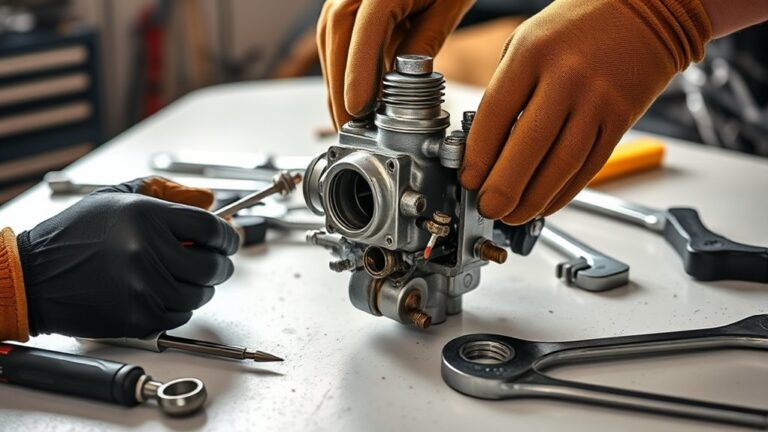
Although modern engines mainly use fuel injection systems, carburetors still fit in today’s automotive landscape. Many enthusiasts cherish the nostalgia of carburetors, enjoying the hands-on experience of tuning and maintaining these classic parts.
Carburetors hold a special place in automotive culture, offering nostalgia and hands-on tuning that many enthusiasts cherish.
If you’re restoring a vintage car or taking part in classic car shows, carburetors become essential for that authentic vintage performance.
You’ll find carburetors in various custom builds, where they add character and a touch of retro flair. They’re also popular in specific racing categories, where simplicity and weight savings can give a competitive edge.
Plus, the straightforward mechanics of a carburetor make it easier for DIYers to make adjustments and repairs.
In a world dominated by advanced technology, carburetors remind you of a simpler time. So whether you’re a collector or a performance enthusiast, there’s still a place for carburetors in your automotive journey.
Future Trends in Automotive Fuel Systems
As the automotive industry evolves, you’re likely to see a shift towards more advanced fuel systems that prioritize efficiency and sustainability. Here are some key trends shaping the future:
- Alternative fuels will gain traction, reducing reliance on traditional gasoline.
- Electric power will dominate, providing cleaner energy solutions.
- Hybrid technologies will improve fuel efficiency while retaining performance.
- Smart fueling systems will optimize refueling processes and will integrate with autonomous vehicles.
- Lightweight materials will be used to support engine downsizing and improve overall efficiency.
With these innovations, expect better performance tuning and advanced diagnostics that monitor fuel systems in real-time. These changes will not only benefit your vehicle’s performance but also contribute to sustainable practices in the automotive world.
Embracing these trends means you’re not just driving; you’re participating in a larger movement towards a greener future.
Frequently Asked Questions
How Do Fuel Injection Systems Affect Engine Maintenance Costs?
Fuel injection systems generally reduce engine maintenance costs by improving fuel efficiency and decreasing how often you need repairs. With precise fuel delivery, these systems help cut down on carbon buildup and engine wear, meaning fewer trips to the mechanic.
Your engine runs cleaner too, so you won’t need to do tune-ups or replace parts as often. Over time, the savings on fuel and maintenance can really add up.
All this makes fuel injection a smart, cost-effective choice for modern vehicles. Enjoy the benefits of a well-maintained engine with less hassle!
Can Carburetors Be Retrofitted Into Modern Engines?
You might think retrofitting a carburetor into a modern engine could be a fun project, but it comes with some big challenges. While carburetors have their perks like simplicity and easier tuning, they often don’t meet modern fuel efficiency and emissions standards.
You’ll also run into compatibility issues with sensors and fuel delivery systems. So, even though it might sound cool, you’ll want to carefully consider the pros and cons before jumping into it.
What Are the Environmental Impacts of Fuel Injection Systems?
Fuel injection systems reduce emissions and boost fuel efficiency, making them a greener choice. With technology advancements, these systems optimize the air-fuel mixture, ensuring better combustion and lower pollutants.
You’ll find that modern engines produce fewer harmful gases compared to older carbureted models. They also improve performance and mileage, which can lead to less fuel consumption overall.
How Do Fuel Injection Systems Influence Vehicle Emissions?
Think of your vehicle as a chef, crafting the perfect dish. Fuel injection systems fine-tune this recipe, making sure the right amount of fuel mixes with air to boost efficiency.
This precision helps you meet strict emission standards by reducing harmful pollutants. By optimizing combustion, the engine runs cleaner and more smoothly.
The result is a smoother ride that’s better for the planet. So, you can enjoy driving without feeling guilty about the environmental impact.
Are There Performance Differences Between Direct and Port Fuel Injection?
Yes, there are performance differences between direct and port fuel injection.
Direct injection offers advantages like better fuel atomization and improved combustion efficiency, which can result in more power and better fuel economy.
On the other hand, port injection has some downsides; it can lead to carbon buildup on intake valves, which may reduce engine efficiency over time.
Conclusion
In the dynamic world of automotive technology, fuel injection systems have taken the spotlight, leaving carburetors in the dust. With their precision and efficiency, these modern marvels not only boost performance but also improve fuel economy.
As we look to the future, it’s clear that turbocharging and innovative fuel technologies will continue to shape our driving experience. So, isn’t it exciting to think about what the next leap in automotive fuel systems will bring?
In summary, fuel injection systems have replaced carburetors in modern engines, marking a significant step forward in automotive engineering.