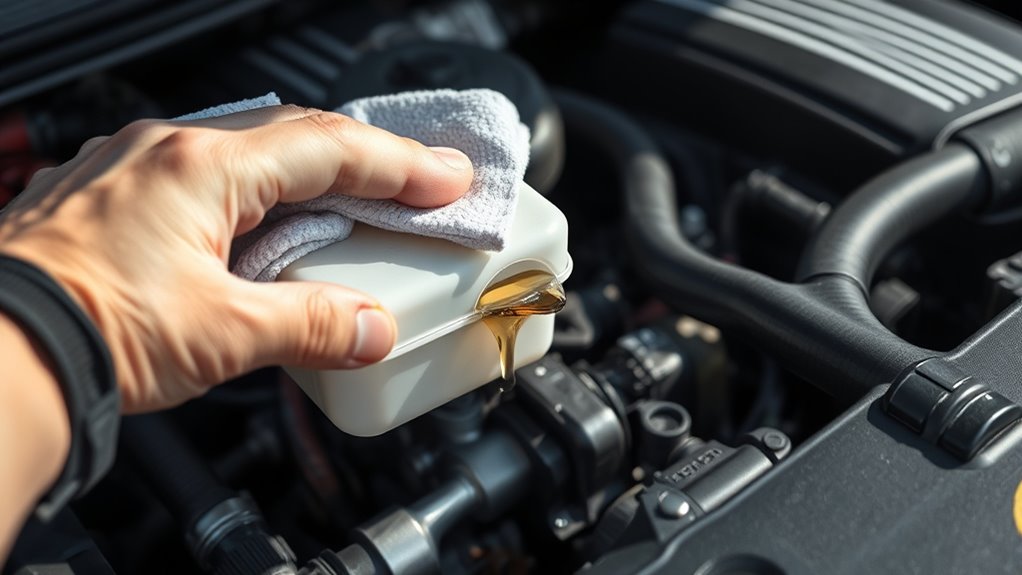
How to Stop My Power Steering Fluid From Leaking: Essential Tips
Dealing with power steering fluid leaks can be frustrating and nerve-wracking, especially when smooth steering suddenly turns into a struggle. If you’re tired of constantly topping off fluid or worried about potential damage, you’re not alone.
Many people struggle with keeping their power steering system in check, but the good news is, it’s manageable with some basic knowledge.
To stop your power steering fluid from leaking, first, check for visible leaks under your vehicle and inspect hoses, seals, and the power steering pump for wear or damage.
Tightening loose connections and replacing worn parts can help. Always top off with fresh fluid after repairs and flush the system as needed.
Maintaining your system with regular checks can prevent future issues. Want to guarantee your steering stays smooth? There’s more you should know.
Key Takeaways
- Regularly check hoses and connections for wear, cracks, or loose fittings to help prevent leaks. Catching small issues early can save you from bigger problems later.
- If you notice worn seals or damaged hoses, replace them quickly to keep your system tight and leak-free. Staying on top of repairs keeps everything running smoothly.
- Keep an eye on your power steering fluid levels and top them off as needed. It’s also a good idea to change the fluid every 50,000 miles to maintain optimal performance.
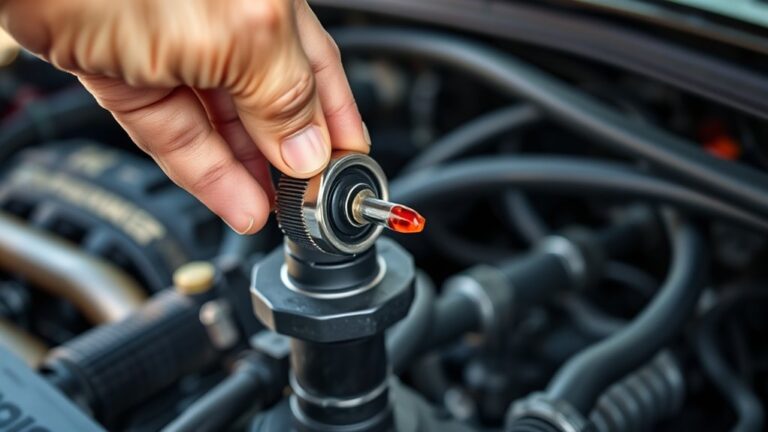
- Use a leak detection dye to find hidden leaks that aren’t visible to the naked eye. This can help you address issues before they become serious.
- Schedule regular professional inspections to catch potential problems early. Regular check-ups can ensure your power steering system stays in good shape.
Recognizing the Signs of Power Steering Fluid Leaks
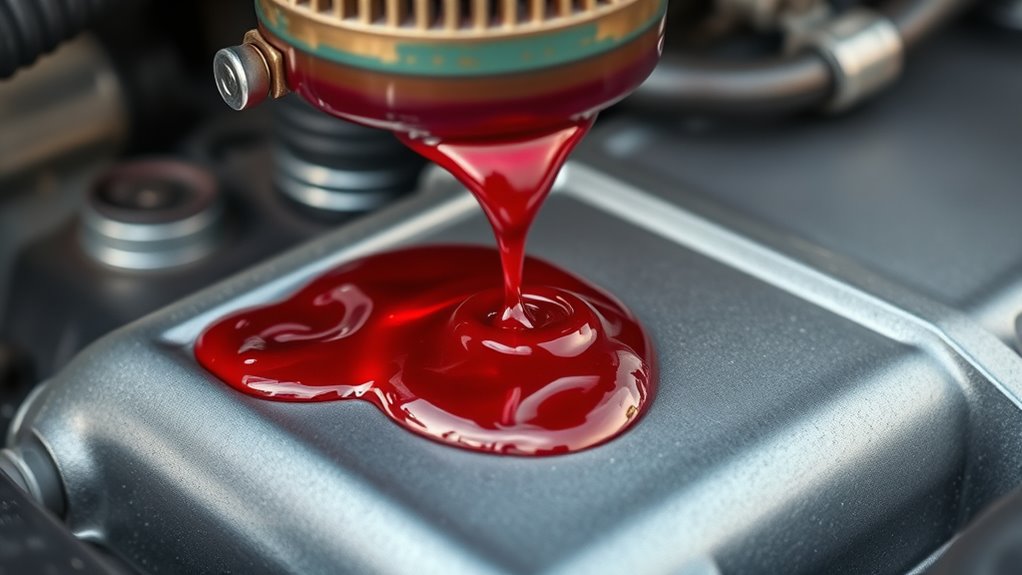
Recognizing power steering fluid leaks is essential; inspect for puddles under your car to identify potential issues early.
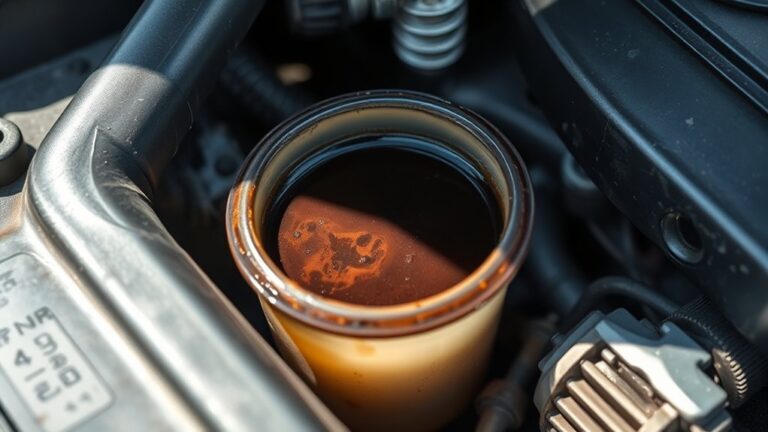
If you notice fluid discoloration, it might mean contamination or that the fluid has degraded. Pay attention to any noise increase when turning the wheel, as this can suggest a pump problem.
You might also feel steering stiffness, which clearly indicates low fluid levels. Check the reservoir and watch out for hose wear or seal deterioration.
Make sure all connections are tight because loose fittings can cause leaks. By staying alert to these signs, you can catch issues early and avoid more serious damage to your steering system.
Finding the Source of the Leak in Your Vehicle
Once you’ve noticed signs of a power steering fluid leak, it’s time to find where it’s coming from. Start by carefully inspecting the power steering pump, hoses, and connections for any visible damage or wear. Don’t forget to check the steering rack, as leaks can happen there too.
If you don’t see anything obvious, try a fluid analysis. Look at the color and consistency of the fluid. If it’s dark or contaminated, that’s a sign there might be an underlying issue that needs fixing.
Using a flashlight can help you spot leaks in those tricky spots. A good trick is to clean the suspected areas and watch them for fresh fluid. Pinpointing the leak source is key before you can start fixing it properly.
Essential Tools for Diagnosing Power Steering Issues
When you’re trying to figure out what’s wrong with your power steering, it’s important to keep an eye out for common signs like strange noises or steering that feels tougher than it should. These little hints can really point you in the right direction.
Having the right diagnostic tools can make the whole process a lot easier and quicker. Plus, don’t forget to regularly check your fluid levels because they’re pretty crucial for your power steering to work smoothly. Keeping everything in check helps keep your steering system in top shape!
Common Symptoms to Observe
As you drive, you might notice a few telltale signs that your power steering system is struggling. If you hear whining or groaning sounds while turning, that’s often an early clue.
Pay attention if the steering wheel feels stiff or requires more effort to maneuver; this could indicate low fluid levels.
Regular fluid inspection is important, so keep an eye out for any visible leaks under your vehicle.
Puddles or spots of fluid on the ground can help you spot leaks and identify where the problem might be.
A warning light on your dashboard may also come on, so don’t ignore it.
Addressing these symptoms early can save you from bigger issues later on.
Essential Diagnostic Tools
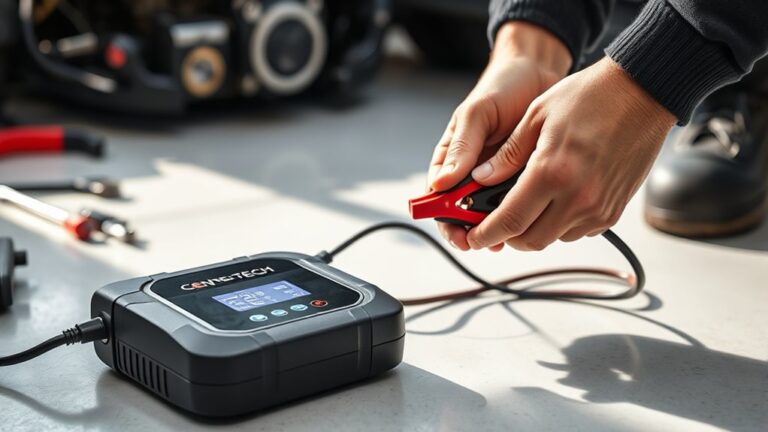
Diagnosing power steering issues requires a few essential tools to pinpoint the problem effectively. Start with a diagnostic scanner, which helps you read error codes and can point to issues tied to the power steering system.
Next, a fluid pressure gauge allows you to measure the steering system’s fluid pressure, making sure it’s within the manufacturer’s specifications.
Here’s a quick reference table for these tools:
| Tool | Purpose |
|---|---|
| Diagnostic Scanner | Reads error codes related to power steering |
| Fluid Pressure Gauge | Measures the fluid pressure in the system |
| Leak Detection Dye | Highlights leaks in the system |
| Wrench Set | Helps tighten or loosen components |
With these tools, you’ll be better prepared to handle any power steering problems that come up.
Checking Fluid Levels
After gathering the right diagnostic tools, the next step is checking the power steering fluid levels. Start by locating the power steering reservoir, usually marked with a steering wheel icon. Remove the cap and check the dipstick, if available, or visually inspect the fluid level.
Confirm it falls within the recommended range indicated on the reservoir. If it’s low, top it off with the appropriate fluid type—check your owner’s manual for specifics. Regular fluid maintenance is essential; check levels often to prevent leaks and keep everything running smoothly.
If you notice a significant drop in fluid level over time, it might mean there’s a leak that needs further investigation.
Repairing Common Power Steering Leaks: A Step-By-Step Guide
When you notice power steering fluid leaking, it’s important to act quickly to avoid more damage to your vehicle. Start by locating the leak source. Check the seals for wear and do a seal inspection; if they’re damaged, you’ll probably need to replace them.
Next, look at the hoses. Cracks or signs of wear can cause leaks, so make sure they’re in good shape. If you find any compromised hoses, replace them to stop the leak.
Inspect the hoses for cracks or wear, and replace any damaged ones to prevent leaks.
After fixing the leaks, it’s a good idea to replace the fluid to keep your system running smoothly. Make sure you use the right type of fluid because the wrong kind can cause problems. You should also flush the system to remove any dirt or contaminants.
Finally, do a pressure test to make sure everything’s working properly. Remember to set up a maintenance routine to check for leaks regularly, so your power steering stays in top condition.
When to Replace Power Steering Hoses and Seals?
How can you tell when it’s time to replace your power steering hoses and seals? A few signs can help you figure it out. First, if you notice any fluid leaks under your vehicle, that’s a clear sign.
Check the hose material for cracks, bulges, or wear. These issues can seriously shorten your power steering system’s lifespan. If the steering feels stiff or unresponsive, it might mean your hoses or seals are failing.
Listening for whining or groaning noises when turning can also indicate problems with the system. Don’t ignore these signs; replacing worn hoses and seals quickly can prevent bigger damage.
Regular inspections help catch issues early. Keeping an eye on your power steering system ensures it stays in good shape for years to come. Staying proactive means better performance and a longer-lasting vehicle.
Essential Maintenance Tips for Your Power Steering System
Maintaining your power steering system is key for smooth and responsive handling. It’s important to stay on top of a few simple practices.
First, regularly check your power steering fluid level and top it off if needed. This easy step can prevent leaks and keep your system running smoothly.
Next, follow your manufacturer’s recommendations and replace the fluid every 50,000 miles or so. Old fluid can get contaminated and cause wear on your system.
Also, inspect hoses and connections for any signs of wear or leaks. If you notice any issues, fix them right away to avoid costly repairs later.
Finally, consider having a professional check your power steering system during routine maintenance. Catching problems early will help your vehicle handle smoothly and efficiently for years to come.
Why Power Steering Fluid Quality Matters?
While you might not think about it often, the quality of your power steering fluid plays a big role in your vehicle’s performance. Fluid degradation can happen over time, which reduces its effectiveness.
Maintaining the right viscosity is crucial. If the fluid gets too thin or thick, steering responsiveness can suffer. Dirt and debris contamination can also weaken the fluid’s integrity, so regular checks are a good idea.
Using the correct fluid types for your vehicle is important too, since different systems may need specific formulations. Skipping maintenance can lead to bigger problems like leaks or steering failure.
Signs You Need Professional Help With Power Steering
Regularly checking your power steering fluid quality can help you spot issues early, but sometimes you might notice symptoms that signal it’s time to seek professional help. If your steering feels stiff or unresponsive, that’s a major red flag.
You might also hear whining or grinding noises when you turn the wheel, which aren’t normal. Another sign is visible fluid leaks under your vehicle; if you see a puddle, don’t ignore it.
Additionally, if your steering wheel vibrates or pulls to one side, those power steering symptoms indicate an underlying issue. Ignoring these signs can lead to more extensive damage.
If your steering wheel vibrates or pulls, it signals a potential issue that shouldn’t be ignored.
Getting a professional assessment can save you time and money down the road. Don’t hesitate to consult a mechanic if you experience any of these symptoms; they can diagnose the problem accurately and provide the necessary repairs.
How to Prevent Future Power Steering Fluid Leaks
To prevent future power steering fluid leaks, focus on routine maintenance and inspections. Keeping an eye on your system helps catch issues early and prevents leaks.
Check the power steering fluid level regularly to spot any drops early. Also, examine hoses and connections for signs of wear, cracks, or loose fittings.
Listen for unusual noises like whining or groaning when turning the wheel, as these can indicate problems. Follow your vehicle’s manual for fluid change intervals to keep the system clean.
Lastly, schedule regular inspections with a trusted mechanic to ensure everything’s in top shape. Staying proactive is the best way to avoid leaks down the line.
Cost of Power Steering Repairs and Maintenance
Keeping an eye on your power steering system not only helps prevent leaks but also plays a key role in managing repair costs. Regular maintenance can save you money in the long run. If you spot a leak early, you might only need to replace a hose or seal, which typically costs less than $100.
But if the problem gets worse, repairs can cost several hundred dollars to replace the pump or the whole system. To keep expenses low, check fluid levels regularly and watch for signs of wear or damage.
Flushing the system every few years can also prevent costly issues later on. By staying proactive, you can minimize repair costs and keep your power steering working smoothly.
Frequently Asked Questions
Can I Use Any Fluid for My Power Steering System?
No, you can’t just use any fluid for your power steering system.
Every vehicle has specific types of power steering fluids that work best with it.
Mixing different fluids can cause serious damage to your system.
Always check your owner’s manual or ask a professional to make sure you’re using the right fluid.
This helps keep your vehicle running smoothly and avoids costly repairs later on.
Knowing which fluids are compatible is key to keeping your car healthy.
How Often Should I Check My Power Steering Fluid Levels?
You might think checking your power steering fluid levels is optional, but it’s actually really important for your vehicle’s maintenance. Aim to check it every month or whenever you notice steering issues.
Regular inspections help you catch leaks early, which can save you from more costly repairs later on.
By staying proactive, you’re not just keeping the fluid levels in check—you’re taking control of your car’s overall health.
Will a Power Steering Leak Affect My Braking System?
Yes, a power steering leak can affect your braking system. While they’re separate systems, a compromised steering system may make steering difficult, which can cause you to lose control.
If the leak gets worse, it might have a ripple effect on other parts of your vehicle, including braking performance. That’s why it’s important to fix any leaks quickly to stay safe.
Regular maintenance can help prevent leaks from causing bigger problems and keep your vehicle running smoothly.
Can I Drive My Car With a Power Steering Leak?
You might feel like you’re wrestling with your car as the steering wheel fights back, making every turn a struggle.
Driving with a power steering leak isn’t ideal; it can lead to frustrating symptoms like stiffness and difficulty maneuvering.
While you could technically drive, it’s risky. Regular leak detection is essential—ignoring it could make the problem worse and leave you stranded.
Fix the leak soon to keep your ride smooth and safe!
Are There DIY Solutions for Sealing Power Steering Leaks?
Yes, there are DIY solutions for sealing power steering leaks. Start by locating the leak to identify where it’s coming from.
Then, you might consider using a stop-leak product made specifically for power steering systems. These can help swell and seal small leaks.
Just make sure to clean the area around the leak first, and keep an eye on your fluid levels regularly.
If the leak doesn’t stop, it’s best to see a professional for a more permanent fix.
Conclusion
To sum up, addressing power steering fluid leaks is crucial for your vehicle’s performance and safety. Did you know that about 10% of vehicles face steering system issues each year?
By staying proactive with maintenance and repairs, you not only improve your driving experience but also save money on costly repairs later on. Keep an eye out for leaks and use high-quality fluids.
Don’t hesitate to seek professional help when needed. Properly managing your power steering fluid leaks will keep your car running smoothly and help prevent bigger problems down the line. Your car will thank you!