5 Simple Steps to Fix Your Carburetor
Are you tired of your lawn mower or small engine sputtering or stalling when you need it most? You’re not alone—many people struggle with carburetor issues that can be tricky to fix.
But don’t worry, with a few simple steps, you can get your engine running smoothly again.
To fix your carburetor, start by identifying common symptoms like rough idling or stalling.
Next, gather essential tools such as screwdrivers, a soft brush, and carburetor cleaner.
Then, remove the carburetor, clean it thoroughly, and check for any issues.
Avoid mistakes like neglecting to inspect parts or skipping adjustments.
Finally, if problems persist, it’s time to call a mechanic.
Stick around to uncover more details on each step for better results!
Key Takeaways
- Identify symptoms like rough idling or stalling to figure out if your carburetor needs cleaning or fixing.
- Gather the tools and materials you’ll need, such as carburetor cleaner, brushes, and safety gear.
- Remove the carburetor from the engine, being careful to disconnect fuel lines and electrical connections.
- Clean the carburetor thoroughly with spray cleaner, scrubbing jets and passages, then dry everything completely.
- Reassemble the carburetor, check the gaskets, and adjust the fuel mixture for the best performance.
Identify Symptoms of Carburetor Issues
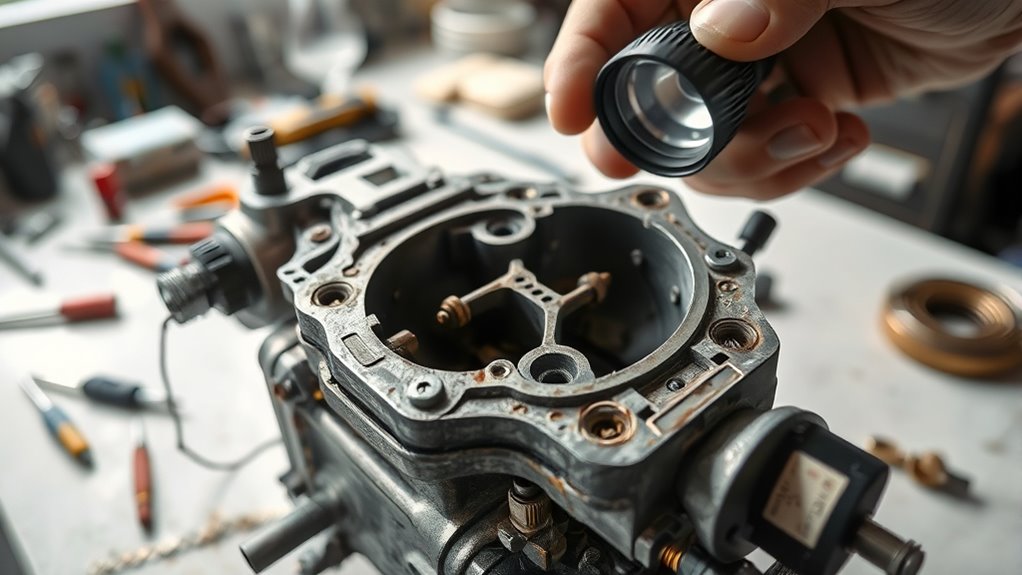
When your engine struggles to start or runs unevenly, it’s important to know the signs of carburetor problems. Poor performance can show up as rough idling or stalling.
When your engine struggles to start or runs unevenly, identifying carburetor issues is crucial for smooth performance.
You might also notice a lack of power during acceleration, which suggests the fuel mixture isn’t right. If your engine backfires or emits black smoke, that’s another clear indication something’s off.
Watch out for fuel leaks or a strong gasoline smell, as these could point to a faulty component. Hard starting, especially after the engine’s warmed up, is another common symptom to look for.
Finally, if your engine doesn’t respond properly to throttle input, it’s time to check your carburetor. Spotting these signs early can save you time and help keep your engine running smoothly.
Gather Your Tools and Materials for Carburetor Cleaning
Noticing symptoms like rough idling or stalling means it’s time to take action. Before diving into the cleaning process, gather your carburetor tools and cleaning materials.
Start with basic tools like screwdrivers, pliers, and a socket set to remove the carburetor from your engine. Make sure you have a clean, well-lit work surface ready.
You’ll also need cleaning materials such as carburetor cleaner spray, a soft brush, and compressed air to remove dirt and debris. A clean cloth or paper towels will help you wipe surfaces down.
Don’t forget safety gear like gloves and goggles to protect yourself during the process. By assembling everything beforehand, you’ll make the cleaning easier and more efficient.
With your tools and materials ready, you’re one step closer to restoring your carburetor’s performance.
Clean Your Carburetor: A Step-by-Step Guide
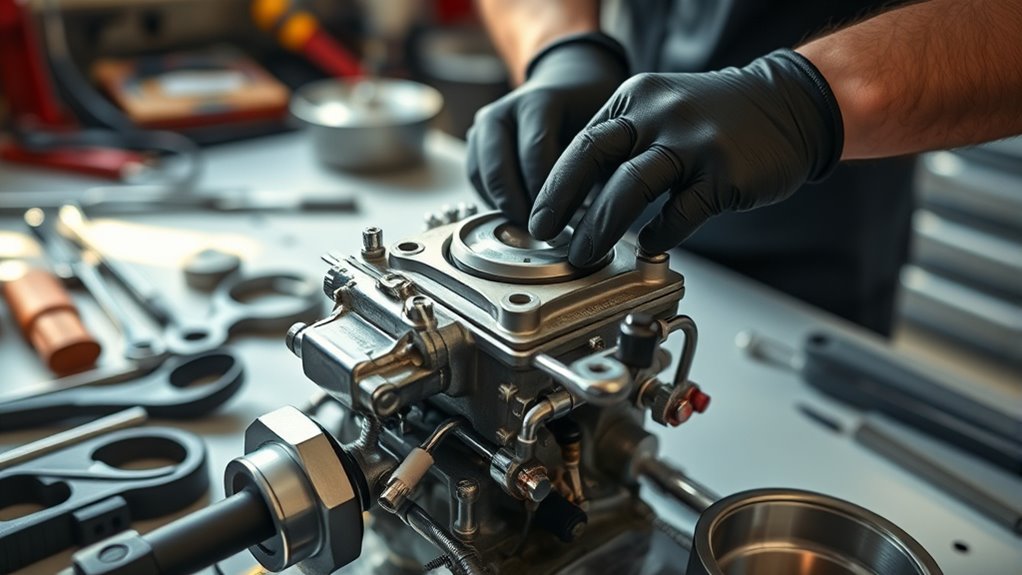
Cleaning your carburetor can really boost your engine’s performance. Start by removing it from the engine, making sure you’ve disconnected all fuel lines and electrical connections.
Use a carburetor cleaner to spray all the internal and external parts, paying close attention to the jets and passages. Let it soak for a few minutes, then gently scrub away any buildup with a brush.
Spray carburetor cleaner on all parts, focusing on jets and passages. Let it soak, then scrub gently to remove buildup.
Next, rinse everything with clean carburetor cleaner and dry it thoroughly. Reassemble the carburetor, checking that all gaskets are intact. This is also a good time to adjust the carburetor; ensure the fuel mixture is set correctly for optimal performance.
Once you’ve reinstalled it, check for leaks and make any needed adjustments. Regular cleaning helps prevent issues and keeps your engine running smoothly, so make it part of your routine!
Common Carburetor Cleaning Mistakes to Avoid
Many DIY enthusiasts overlook key details when cleaning their carburetors, which can lead to poor performance or even damage. To ensure you’re using effective cleaning techniques, avoid these common mistakes:
- Neglecting to remove all parts. Failing to disassemble the carburetor completely can trap dirt inside, affecting how it works.
- Using the wrong cleaning solvents. Some solvents might damage carburetor components, so stick to recommended products for safe and effective cleaning.
- Skipping the final inspection. Always check your work before reassembling. A quick look can save you trouble down the line.
When Should You Call a Mechanic for Carburetor Issues?
If you’ve cleaned your carburetor but still face issues, it might be time to call in a professional. Sometimes, despite your best troubleshooting tips, problems just won’t go away. If your engine won’t start, runs rough, or stalls often, those are signs you need expert help.
Also, think about how often you’ve maintained your vehicle. If your carburetor hasn’t been serviced in a while, neglect can cause deeper problems that are best handled by a mechanic. They have the right tools and experience to diagnose and fix issues you might not be able to.
Don’t wait if you notice fuel leaks, strange noises, or your engine keeps performing poorly. Ignoring these symptoms can lead to more costly repairs down the road. Remember, it’s okay to ask for help when you’re out of your depth. Better safe than sorry!
Frequently Asked Questions
How Often Should I Clean My Carburetor?
You should clean your carburetor at least once a year for peak performance, but if you use your vehicle often or in dusty conditions, consider doing it every 6 months. Regular maintenance helps prevent buildup that can affect engine efficiency.
Keep an eye on how your vehicle runs; if you notice any issues, it might be time for a cleaning. Staying proactive with cleaning can save you headaches later on.
Can I Use Regular Cleaning Solvents for Carburetors?
Using regular cleaning solvents for carburetors is like trying to paint a masterpiece with a broom; it just won’t work. For effective carburetor maintenance, stick to cleaners specifically designed for carburetors. These products target the unique grime and gunk that build up, ensuring your engine runs smoothly.
Utilizing proper cleaning techniques not only improves performance but also extends the life of your carburetor. Trust me, your engine will thank you for it!
What Safety Gear Do I Need for Carburetor Cleaning?
You’ll need safety goggles and chemical gloves for carburetor cleaning. Safety goggles protect your eyes from harmful solvents, while chemical gloves keep your skin safe from harsh chemicals.
It’s also a good idea to wear a mask to avoid inhaling fumes. Make sure you work in a well-ventilated area to minimize exposure.
Are There Specific Brands of Carburetor Cleaner Recommended?
When it comes to carburetor cleaning, think of it as giving your engine a little boost.
Brands like Sea Foam and Gumout are popular choices because they work well at cleaning grime and deposits.
Using these trusted names can help your carburetor run smoothly and efficiently.
Plus, they can help extend the life of your engine.
How Do I Store My Carburetor Cleaning Tools?
To store your carburetor cleaning tools, keep them in a dry, cool place. Use a sturdy toolbox or a dedicated drawer to avoid damage.
Make sure to clean the tools after each use to prevent residue buildup from your cleaning techniques. Label your containers for easy access during carburetor maintenance.
Organizing your tools not only makes future jobs easier but also extends their lifespan, so you’re always ready for your next cleaning task.
Conclusion
To sum up, fixing your carburetor might seem daunting at first, but these five simple steps make it manageable. With a little patience, you can get your engine running smoothly again.
Think of it like restoring a piece of art—your careful cleaning and maintenance will bring your engine back to life. Taking the time to do it right pays off in better performance.
If you find that symptoms still persist after your efforts, don’t hesitate to call a mechanic. Sometimes, professional help is the best way to fix carburetor problems and keep your ride running smoothly.
Remember, addressing carburetor issues early can save you time and money. Keep your engine in top shape, and enjoy every mile ahead!