7 Easy Steps to Replace Your Carburetor Today
Many people struggle with maintaining their small engines and often find themselves stuck when the carburetor needs replacing. If you’re looking to replace your carburetor, you’re not alone—this is a common DIY project that can save you time and money.
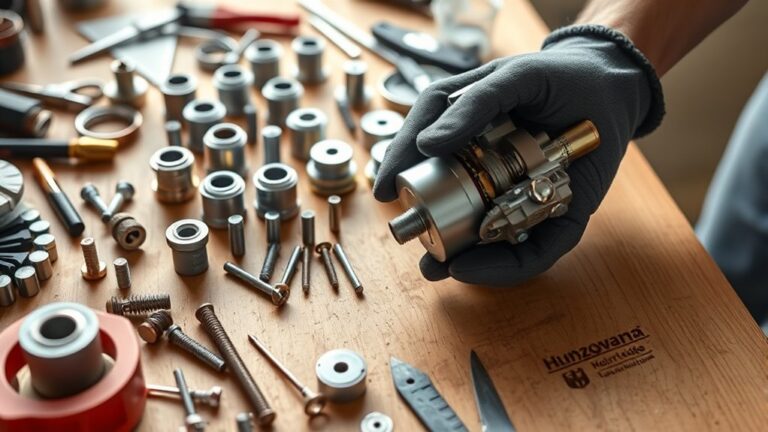
Start by gathering essential tools like wrenches, screwdrivers, and a gasket set. Safety’s key, so wear gloves and goggles.
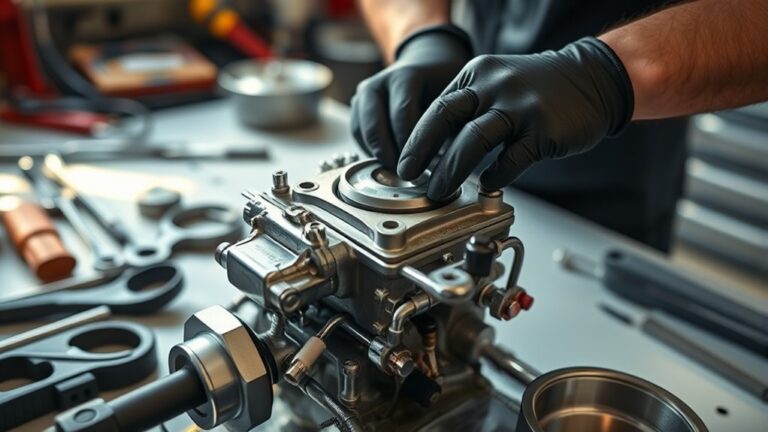
Remove the old carburetor carefully, cleaning parts as you go. Align the new carburetor properly with the intake manifold, and adjust the air-fuel mixture.
Finally, test your engine to verify everything’s running smoothly. For more tips and tricks to make the process seamless, keep going!
Key Takeaways
- Gather essential tools like wrenches, screwdrivers, a gasket set, and carburetor cleaner to make the replacement process smooth. Having everything ready will save you time and hassle.
- Wear gloves and goggles for safety during the removal and installation. It’s always better to protect your eyes and hands from any debris or splashes.
- Carefully remove the old carburetor, noting the order of parts so you can easily reassemble everything later. Taking pictures can help if you’re unsure.
- Align and secure the new carburetor with the intake manifold, making sure all connections are tight and everything fits properly.
- Test the engine for performance, and adjust the air-fuel mixture and idle settings as needed to keep it running smoothly.
Identifying Carburetor Issues: Signs You Need a Replacement
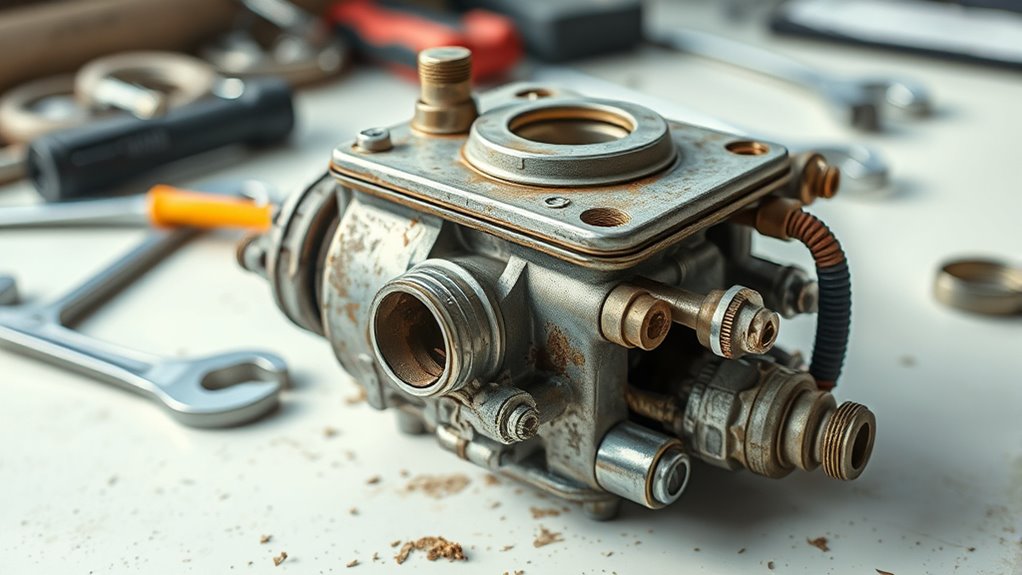
When your engine sputters or struggles to start, it’s a good idea to check for carburetor issues that might mean you need a replacement. Keep an eye out for common symptoms like poor fuel efficiency, rough idling, or an overly rich or lean mixture.
If your vehicle stalls often or has trouble accelerating, those could be signs of carburetor problems. Also, listen for unusual noises like backfiring or popping, which might point to a malfunction.
A visible fuel leak around the carburetor or a strong gasoline smell are red flags you shouldn’t ignore. If you notice these signs, it’s important to act quickly. Ignoring them can lead to bigger engine issues down the line.
What Your Carburetor Does and Why It Matters
Your carburetor is pretty much the heart of your engine when it comes to mixing fuel and air. It’s the part that makes sure everything blends just right so your engine can run smoothly. When it’s working properly, your vehicle handles better, runs more efficiently, and you don’t have to worry about weird stalls or sluggish performance.
Knowing how your carburetor works helps you see why it’s so important to keep it in good shape. If it gets dirty or clogged, your engine might start acting up — things like rough idling or poor fuel economy. So, taking care of your carburetor isn’t just a good idea, it’s essential for keeping your engine running at its best.
Fuel-Air Mixture Regulation
The carburetor is key to regulating the fuel-air mixture that powers your engine, making sure it runs smoothly and efficiently. It mixes the right amount of fuel with air so your engine can burn fuel properly.
If the mixture is off, you’ll notice worse fuel economy and performance problems. With proper tuning, you can adjust the carburetor to find the perfect balance.
This helps improve combustion and makes your vehicle more responsive. Regularly checking and calibrating the fuel-air mixture keeps your engine healthy and helps it last longer.
Engine Performance Impact
Although many overlook it, a well-functioning carburetor has a big impact on your engine’s performance. When it’s tuned correctly, it ensures the right fuel-air mixture, resulting in smoother acceleration and better throttle response.
This precision can really make a difference, especially if you’re thinking about performance upgrades. A properly tuned carburetor not only boosts power but also improves fuel efficiency, helping your engine run at its best.
If your engine feels sluggish or idles rough, it might be time to tune the carburetor. Fixing these issues can unlock your engine’s full potential. Remember, a well-maintained carburetor is key to your vehicle’s reliability and longevity.
Don’t underestimate this component; it’s essential for the best driving experience.
Essential Tools and Materials for Carburetor Replacement
Replacing a carburetor requires a few essential tools and materials to make the process smooth. Having the right gear makes all the difference, especially when working with different carburetor types.
Replacing a carburetor is easier with the right tools, ensuring a smooth process across various carburetor types.
Here’s what you’ll need:
- Wrenches and Socket Set: A variety of sizes will help you tackle bolts with ease.
- Screwdrivers: Both flathead and Phillips for different screws on the carburetor.
- Gasket Set: New gaskets ensure a proper seal and prevent leaks, which is crucial for effective maintenance.
- Carburetor Cleaner: This keeps your new carburetor in top shape and is handy for maintenance tips down the road.
With these tools and materials ready, the replacement process will be more straightforward and efficient. Plus, you’ll be prepared for any future maintenance tasks!
Step-by-Step Guide to Removing Your Old Carburetor
Before you get started on removing your old carburetor, it’s a good idea to gather all the tools you’ll need. Having everything within reach makes the process smoother and less frustrating. And don’t forget safety first—wear gloves and goggles to protect yourself from any surprises. Once you’ve got your gear ready, you’re all set to follow the steps and get that carburetor out with confidence.
Tools You’ll Need
To successfully remove your old carburetor, you’ll want a few essential tools on hand. Having the right equipment makes the process smoother, whether you’re dealing with different carburetor types or just doing routine maintenance.
Here’s what you’ll need:
- Socket wrench set: This is crucial for loosening bolts and nuts.
- Screwdriver set: Make sure to have both flathead and Phillips screwdrivers to handle various screws.
- Pliers: These come in handy for gripping and manipulating small parts.
- Carburetor cleaner: Use this to clean parts and ensure your new carburetor works at its best.
Gather these tools before you start, and you’ll be well-prepared for a successful replacement.
Safety Precautions First
When working on your carburetor, safety should always come first. Wear the right gear, like gloves and goggles, to protect yourself from chemicals and debris.
Make sure your workspace is tidy—keeping it clutter-free helps prevent accidents and keeps you focused.
Here’s a quick safety reference table for you:
| Safety Gear | Purpose | Tips |
|---|---|---|
| Gloves | Protects hands from chemicals | Pick chemical-resistant ones |
| Goggles | Shields eyes from debris | Use anti-fog lenses |
| Fire Extinguisher | Emergency safety tool | Keep it nearby |
How to Install Your New Carburetor Like a Pro
Installing your new carburetor might seem tricky at first, but with a good step-by-step approach, you’ll get it running smoothly in no time.
First, pick the right carburetor for your engine and what you want to achieve. Do a little research to ensure it fits your needs.
Next, carefully remove your old carburetor. Keep track of all bolts and connections so you don’t lose anything.
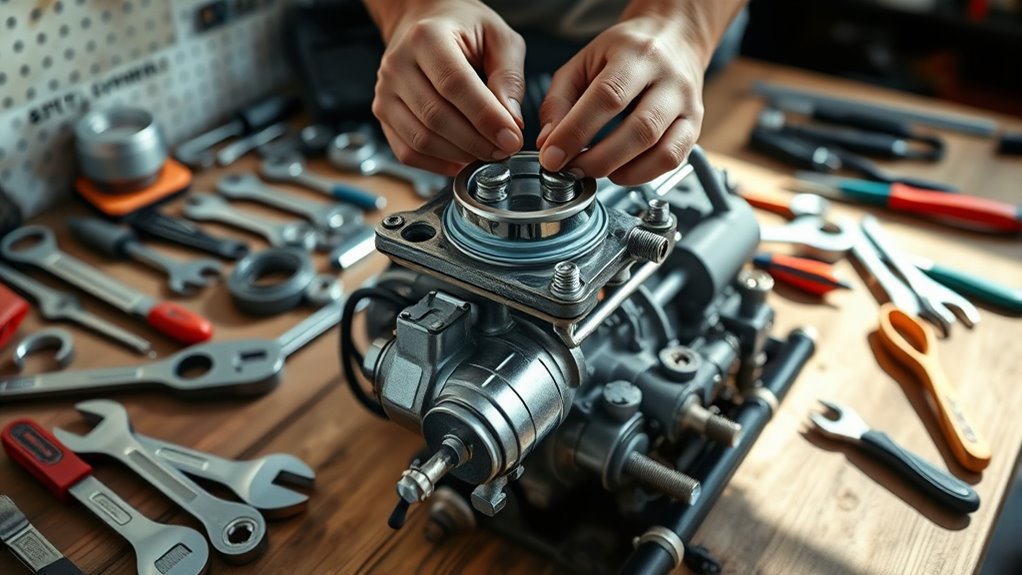
Then, place the new carburetor in position, lining it up with the intake manifold. Secure it with the bolts you saved earlier.
Finally, tweak the air-fuel mixture and idle settings according to your carburetor’s instructions for optimal performance.
Top 5 Mistakes to Avoid When Replacing Your Carburetor
What common pitfalls should you steer clear of while replacing your carburetor? First, don’t skip reading the manufacturer’s manual. Ignoring this can lead to misconceptions about installation.
Second, double-check your connections. Loose hoses can cause leaks and performance issues. Third, avoid rushing the process; take your time to verify everything is aligned correctly.
Double-check connections to prevent leaks and take your time to ensure everything is perfectly aligned for optimal performance.
Fourth, don’t forget to clean the mounting surface. Old gasket material can lead to air leaks and poor performance. Finally, always test your new carburetor thoroughly before hitting the road.
Use troubleshooting tips to spot any issues early, like checking for fuel leaks or unusual engine sounds. By avoiding these mistakes, you’ll have a smoother install and better engine performance.
Testing Your Vehicle After Carburetor Replacement?
After replacing your carburetor, it’s important to test your vehicle to make sure everything’s working right. This helps your ride run smoothly and efficiently. Here’s how to do it effectively:
- Start the Engine: Turn the key and listen for any strange sounds. A smooth startup usually means the installation went well.
- Check Idle Adjustments: Let the engine idle and see if it stays steady at the right RPM. If it’s bouncing around, you might need to tweak the idle settings.
- Accelerate Gradually: Gently press the gas pedal and watch how it responds. If your vehicle hesitates or stutters, it could need some tuning.
- Inspect for Leaks: Look around the carburetor for any fuel leaks. Fixing leaks quickly will keep things safe and prevent problems later.
Following these steps will help you confirm your new carburetor is working properly and set you up for a smooth drive.
Frequently Asked Questions
How Long Does a Carburetor Replacement Typically Take?
Replacing a carburetor usually takes around two to four hours, but it really depends on your experience and the vehicle model.
If you’re new to this, it might take a bit longer as you get familiar with the parts and the process. Make sure you have the right tools ready and follow a detailed guide to keep things smooth.
With some practice, you’ll get faster, and your engine will run better in no time!
Can I Use a Used Carburetor for Replacement?
Yes, you can use a used carburetor for replacement, but make sure it’s compatible with your vehicle. Used parts are often cheaper and easier to find.
However, it’s important to check for wear and damage to avoid problems later on. Inspect the gaskets and seals carefully, and consider cleaning or rebuilding the carburetor before installing it.
If you’re unsure whether it will fit or work properly, it’s a good idea to ask a professional or look at your vehicle’s manual. That way, you can be confident you’re making a good choice.
What Are the Costs Associated With Carburetor Replacement?
Replacing a carburetor can feel like diving into a treasure chest of costs. You’re looking at $100 to $500 for the carburetor itself, depending on the types you choose.
Don’t forget about installation tools, which might add another $50 to $150. If you’re hiring a mechanic, labor can run you an extra $100 to $300.
Do I Need to Adjust My Engine After Installation?
Yes, you’ll probably need to adjust your engine after installation. Carburetors can influence air-fuel mixtures, so tuning is important for maximum performance.
You should check the idle speed, mixture settings, and maybe the float level. If you notice hesitation or slow acceleration, more adjustments might be needed.
Taking the time to fine-tune your engine will help it run smoothly and efficiently. This will improve your overall driving experience.
Where Can I Find a Quality Replacement Carburetor?
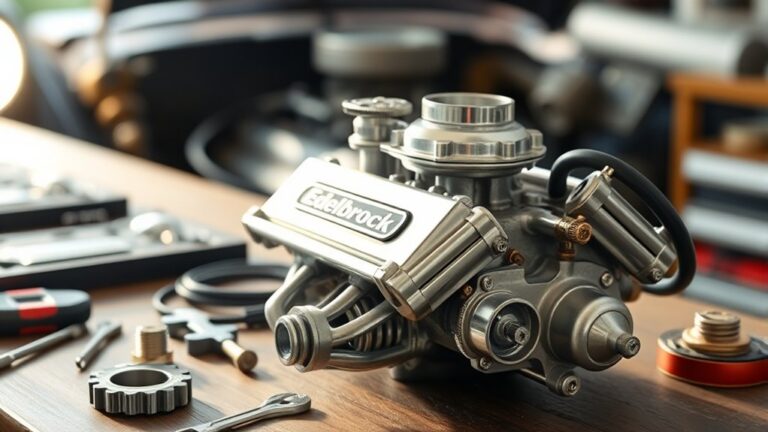
You can find a quality replacement carburetor at local auto parts stores, online retailers, or specialized carburetor brands. Look for trusted names like Edelbrock or Holley, as they often offer replacement warranties.
This way, you’re covered if something goes wrong. Don’t forget to read reviews and check product specifications to make sure it fits your engine properly.
With a little research, you’ll be set up with a reliable carburetor in no time!
Conclusion
Now that you’ve tackled replacing your carburetor, you’re one step closer to keeping your ride purring like a classic car on a sunny Sunday drive. Remember, taking your time and avoiding common pitfalls can save you from a headache down the road.
So, fire up that engine and feel the satisfaction of a job well done. Just like your granddad did back in the day. Happy driving, and enjoy the newfound power under your hood with your new carburetor!