DIY Guide to Charge Your Car Battery Without a Charger
Dealing with a dead car battery can be frustrating, especially when you’re in a rush or far from help. Many people struggle with this common issue and wonder if they need a costly mechanic or special tools to fix it.
Luckily, you’re not alone—there are simple ways to charge your car battery without a traditional charger.
If your car battery’s dead, you can charge it without a traditional charger using a few methods. You can jump-start it with another vehicle by connecting the jumper cables correctly.
Alternatively, household items like baking soda or Coca-Cola can help clean corrosion and revive the battery.
Make sure to check for signs of battery failure beforehand. With these techniques, you’ll get back on the road quickly and uncover even more effective tips ahead.
Key Takeaways
- Use jumper cables to connect your dead battery to a working vehicle for a temporary charge. Make sure the cars are off before connecting and follow the proper sequence.
- Employ a solar charger to harness sunlight and gradually recharge your battery outdoors. It’s a slow process but useful when you have time.
- Utilize a portable jump starter, which can provide a power boost without needing another vehicle. It’s a handy device to keep in your car.
- Mix baking soda with water to clean terminals, improving electrical connection and performance. This helps remove corrosion and ensures better contact.
- If possible, remove the battery and connect it to a trickle charger at home for slow, safe charging. Just be sure to follow safety precautions when handling the battery.
Understanding Why Your Car Battery Died
Another common cause is extreme temperatures. Cold weather can slow down the battery chemistry, making it harder for your engine to start.
On the other hand, heat can speed up the battery’s deterioration. Corroded terminals and loose connections can also lead to battery failure, stopping the electrical flow.
Signs of a Dead Battery: How to Diagnose the Problem
Recognizing the signs of a dead battery can save you time and frustration. One of the first things you might notice is dim headlights or dashboard lights.
Recognizing early signs of a dead battery, like dim headlights, can help prevent unexpected breakdowns.
If you turn the key and hear a clicking sound instead of the engine starting, that’s a pretty strong indicator. You should also watch out for electrical issues, like power windows moving slowly.
To diagnose the problem, try testing the voltage. A fully charged battery should read around 12.6 volts.
If it’s below 12.4 volts, your battery might be weak, and anything under 12 volts usually means it’s time for a replacement.
Also, if your battery is older than three to five years, it’s a good idea to have it tested regularly.
How to Jump-Start Your Car Battery With Another Vehicle
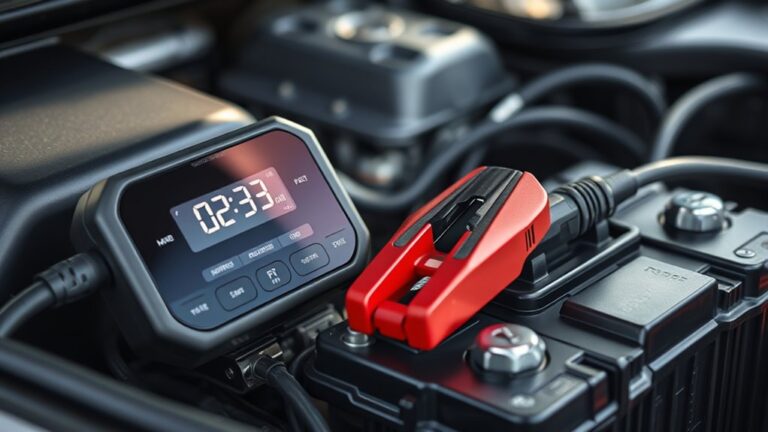
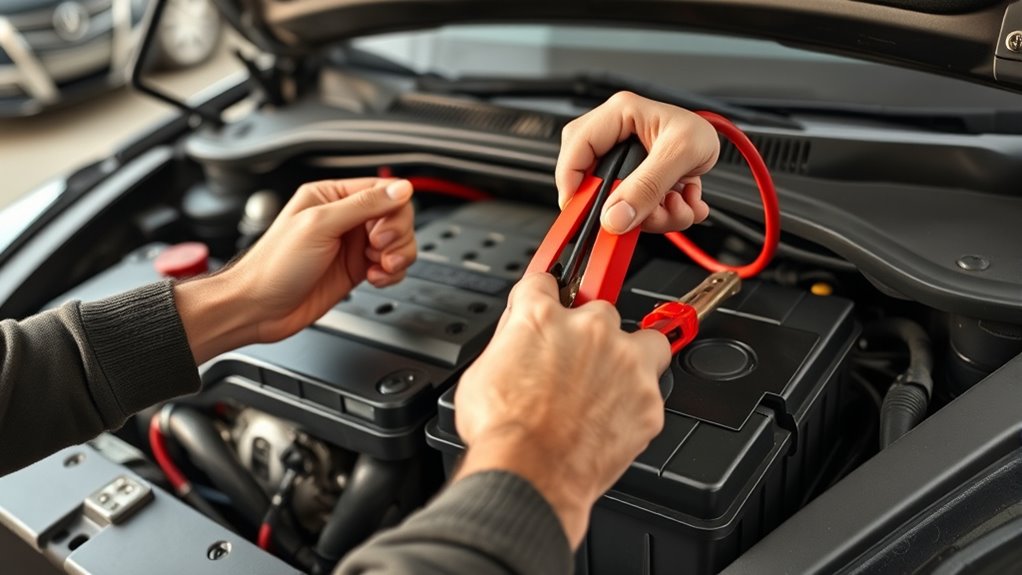
If your battery’s dead and you have access to another vehicle, jump-starting can quickly get you back on the road. Here’s a simple guide to help you with the process using effective jump start techniques:
1. Gather Supplies: You’ll need jumper cables and a working vehicle.
2. Position Vehicles: Park the good vehicle close to yours, making sure they’re not touching. Turn off both engines.
3. Connect Battery Cables:
- Attach one red clamp to the positive terminal of your dead battery.
- Connect the other red clamp to the positive terminal of the good battery.
- Attach one black clamp to the negative terminal of the good battery.
- Finally, connect the last black clamp to a metal ground on your car, not the dead battery.
4. Start the Working Vehicle: Let it run for a few minutes before attempting to start your car.
This method ensures secure battery connections and helps minimize risks.
Using Household Items to Revive a Dead Car Battery
When your car battery’s dead and you’re in a pinch, you might be surprised to learn that common household items can help revive it. Here are some effective alternatives you can try:
| Household Item | How It Helps |
|---|---|
| Baking Soda | Mix with water to clean terminals |
| Coca-Cola | Its acidity can help remove corrosion |
| Epsom Salt | Dissolve in warm water to boost battery life |
To use baking soda, create a paste and scrub the terminals. For Coca-Cola, pour a small amount on corroded areas, then wipe clean. Epsom salt can rejuvenate the battery by dissolving in warm water and pouring into the battery. These household items not only save you time but can also help you get back on the road when you need it most!
Evaluating the Effectiveness of Solar Chargers for Car Batteries
After exploring household items that can revive a dead car battery, you might wonder about other modern solutions like solar chargers. They can be a practical option, especially if you’re eco-conscious. But their effectiveness depends on a few important factors.
First, check the solar panel efficiency. Look for panels with high ratings to get the most energy from the sun. Charging time is also important—solar chargers usually take longer than traditional methods, so you’ll need some patience.
Next, consider your battery size. Larger batteries will need more time to fully charge. And don’t forget the weather—cloudy days can really cut down on the charging efficiency. It’s a good idea to check the forecast before relying solely on solar power.
DIY Battery Charger Methods
While you might think only professionals can charge a car battery, there are several DIY methods that anyone can try. One effective technique involves using a light bulb as a makeshift charger. Connect a 12-volt bulb to your battery terminals—positive to positive and negative to negative. The bulb will draw power, slowly transferring it to the battery.
Another option is a homemade charger using a car’s alternator. If you have an old alternator lying around, you can wire it up to provide a steady current to your battery.
For those interested in DIY power solutions, consider using a solar panel. Connect a small 12V solar panel to your battery to harness sunlight, giving it a slow but consistent charge.
These battery charging techniques can keep you mobile without relying on commercial chargers, ensuring you’re prepared for unexpected situations.
How to Use a Portable Jump Starter Safely
Using a portable jump starter can be a lifesaver, especially during unexpected breakdowns. But it’s really important to follow some safety tips to make sure everything goes smoothly.
First, read the manual. Get familiar with your jump starter’s instructions before you start using it. It helps avoid mistakes that could cause damage or injury.
Familiarize yourself with your jump starter’s manual to prevent mistakes that could lead to damage or injury.
Next, check the car battery. Make sure it isn’t leaking or damaged. If it looks broken or corroded, don’t try to jump-start the car.
Place the jump starter on a flat surface, away from the vehicle. Keeping it apart from the car’s battery reduces the risk of sparks or accidents.
When connecting, attach the positive clamp to the positive terminal first. Then, connect the negative clamp to a grounded metal surface, not directly on the battery.
What to Do After You Recharge Your Battery?
After you’ve recharged your battery, it’s a good idea to take a quick look at it to see if there are any signs of damage or corrosion. Just a simple inspection can save you a lot of trouble down the road.
Then, go ahead and test your vehicle’s performance. Make sure everything’s running smoothly—like starting up without any issues and all the lights and electronics working properly. Doing this helps you catch any little problems early before they turn into bigger ones.
Inspect Battery Condition
Once you’ve recharged your car battery, it’s important to check its condition to make sure it’s working properly. This step helps keep you safe and makes your battery last longer. Here’s what you should look for:
- Battery Age: If your battery is more than three to five years old, think about replacing it. Older batteries might not hold a charge as well.
- Terminal Corrosion: Look for any white, crusty buildup on the terminals. If you see corrosion, clean it off with a mixture of baking soda and water.
- Fluid Levels: Check the electrolyte levels if your battery is serviceable. Low levels can cause damage and reduce performance.
- Physical Damage: Inspect for cracks or bulges in the case. These can be signs of a failing battery and should be addressed.
Test Vehicle Functionality
Testing your vehicle’s functionality after recharging the battery is key to making sure everything’s working properly. Start by checking the battery performance; a multimeter can help you see the voltage levels.
Next, listen for unusual sounds when you start the engine, as they might point to underlying issues. Running vehicle diagnostics can also help spot error codes that could indicate electrical system problems.
| Task | Tools Needed | Purpose |
|---|---|---|
| Check Battery Voltage | Multimeter | Assess battery performance |
| Listen for Sounds | None | Detect mechanical issues |
| Run Diagnostics | OBD-II Scanner | Identify system errors |
| Inspect Lights | None | Confirm all lights function |
| Test Accessories | None | Verify electronic systems’ health |
How to Avoid Battery Problems in the Future
To keep your car battery in good shape, it’s a good idea to stay on top of regular maintenance checks. Just like anything else, catching small issues early can save you a lot of trouble down the line.
Also, how you store your car matters. Keeping it in a cool, shaded spot can really help, especially if you live somewhere with extreme temperatures. Hot and cold weather can both take a toll on your battery, so doing what you can to protect it makes a big difference.
If you follow these simple tips, you’ll be able to avoid a lot of battery problems in the future.
Regular Maintenance Checks
While you might think a car battery can take care of itself, regular maintenance checks are essential to prevent future problems. Following these simple tips can really help extend your battery’s life and keep it running smoothly.
First, make sure to inspect your battery regularly for any signs of wear or damage. It’s a quick step that can catch issues early.
Next, keep the terminals clean to prevent corrosion buildup, which can mess with charging and performance.
Also, double-check that all connections are tight and secure. Loose connections can cause unnecessary power drains.
Finally, don’t forget to do seasonal checks before extreme weather hits. This way, your battery stays in top shape no matter the weather.
Proper Battery Storage
After making sure your battery is in good shape with regular maintenance, proper storage is essential to prevent future issues. Store your battery in a cool, dry place away from direct sunlight and moisture.
This ideal environment helps keep the battery’s charge stable and extends its lifespan. If you’re storing it for a long time, consider disconnecting it from the vehicle to avoid draining.
Be sure to check its charge level periodically, since even well-stored batteries can lose power over time. If possible, keep it on a trickle charger for extra peace of mind.
Avoiding Extreme Temperatures
Extreme temperatures can really affect your car battery’s performance and lifespan, so it’s important to protect it from both heat and cold. Here are some easy insulation tips to help reduce the impact of temperature changes.
Park in Shade: Whenever you can, park your car in shaded areas during hot weather to prevent it from overheating. This simple step can make a big difference.
Use a Battery Blanket: In colder climates, think about using a battery blanket to keep the battery warm and prevent it from freezing. It’s a handy way to protect your battery from cold damage.
Regular Maintenance: Check your battery regularly for corrosion or damage. Extreme conditions can worsen any existing issues, so staying on top helps keep it in good shape.
Keep It Charged: Make sure your battery stays fully charged. A well-charged battery is less likely to be affected by temperature fluctuations.
When to Seek Professional Help for Battery Problems?
When should you consider calling in a professional for battery problems? If your car’s battery shows signs of failure, it’s a good idea to get help. Things like a dead battery after a jump, corrosion on the terminals, or an unusual smell can signal bigger issues. In these cases, you might need to replace the battery or get professional diagnostics to keep your vehicle reliable.
Here’s a quick guide to help you decide:
| Signs | Action |
|---|---|
| Battery won’t hold a charge | Consider replacing the battery |
| Corroded terminals | Seek professional diagnostics |
| Swollen or leaking battery | Get immediate professional help |
| You need jumps often | Check for deeper problems |
Ignoring these signs can lead to bigger problems later on. Don’t hesitate to reach out if you notice any of these symptoms. Your safety is worth it!
Frequently Asked Questions
Can I Use a Laptop Charger to Charge My Car Battery?
No, you can’t use a laptop charger to charge your car battery effectively. Laptop specifications usually don’t match the power needs of a car battery, so the charging won’t be efficient.
A laptop charger typically provides around 60-100 watts, while car batteries require much more power. Trying to use a laptop charger can damage both the charger and the battery.
If you need to charge your car battery, it’s best to use a dedicated car battery charger instead.
Is It Safe to Charge a Battery in Extreme Temperatures?
Charging a battery in extreme temperatures is like trying to grow a flower in a blizzard. It just doesn’t work well. You’re risking damage to the battery and reducing its lifespan.
Extreme cold can slow down chemical reactions, making charging less effective. On the other hand, heat can cause leaks or even explosions.
For proper battery maintenance, aim for a moderate temperature. Protect your battery from extreme temps, and you’ll keep it blooming longer and stronger.
How Long Does It Take to Charge a Car Battery Without a Charger?
Charging a car battery without a charger usually takes several hours, depending on the method you choose.
If you’re using alternative energy sources like solar panels or connecting to another vehicle, expect it to take anywhere from 4 to 24 hours.
The exact time depends on the size of the battery and the power output of your source. Always keep an eye on the process to stay safe and ensure it’s working effectively.
Can I Charge My Battery Using a Power Bank?
Yes, you can charge your car battery using a power bank, but it really depends on the power bank’s capacity and whether it’s compatible with your battery.
Most standard power banks don’t have enough capacity to effectively charge a car battery, especially larger ones.
If you have a high-capacity power bank designed for automotive use, you might be able to do it. Just make sure to check compatibility first.
Otherwise, you probably won’t get the charge you need to start your vehicle.
What Are the Risks of DIY Battery Charging Methods?
When you try to charge your battery with makeshift methods, you’re walking a thin line. The risks include fires, acid leaks, or even explosions—your safety is on the line.
Without proper battery safety, these DIY charging options can cause more problems than they’re worth. You might save a little money, but the potential costs could be much higher.
Always think about the dangers before jumping into DIY battery charging. Your peace of mind is worth more than the risk.
Conclusion
By now, you’ve got some handy methods to recharge your car battery without a charger. Did you know that nearly 50% of all car battery failures happen in winter? Staying proactive can save you from getting stranded.
Whether you choose to jump-start or use a solar charger, having a plan is key. Keep an eye on your battery’s health so you don’t get caught off guard. And if things seem tricky, don’t hesitate to seek professional help.
Remember, knowing how to charge your car battery without a charger can be a real lifesaver. Drive safely!