7 Steps to Check Power Steering Fluid Level
Are you tired of feeling unsure about your car’s performance or worried about unexpected breakdowns? Many drivers struggle with maintaining their vehicle’s systems, especially the power steering.
Keeping an eye on the power steering fluid level is a simple step that can save you time and money in the long run.
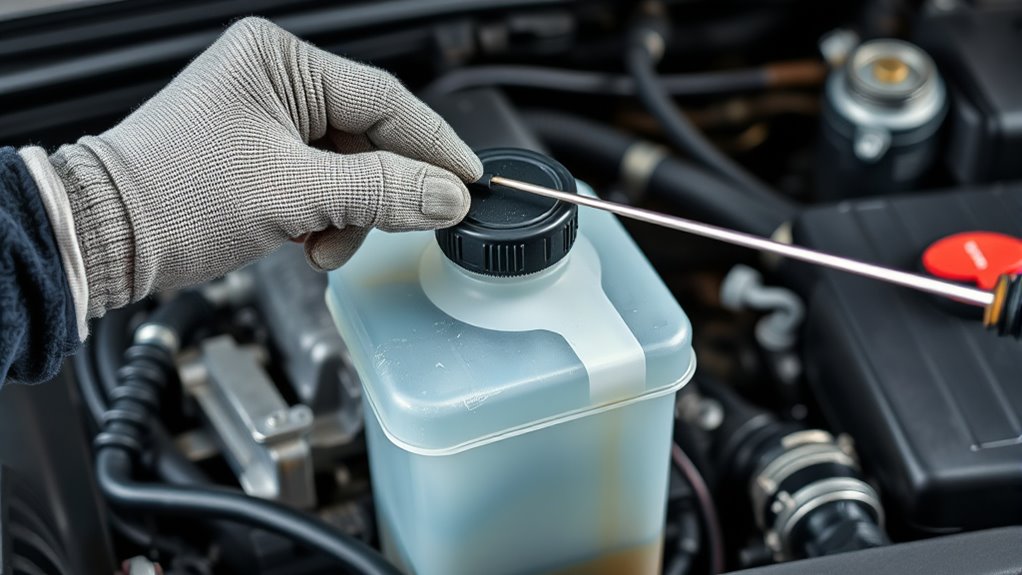
To check your power steering fluid level, start by locating the reservoir near the engine. Use the dipstick to assess the fluid level, making certain to wipe it clean first.
Look for the “MIN” and “MAX” markings and check the fluid’s color. If it’s low, add the correct type of fluid with a funnel, then recheck the level.
Finally, take your car for a test drive to guarantee everything feels smooth. You’ll find more maintenance tips along the way!
Key Takeaways
- Find the power steering fluid reservoir, usually near the engine, and locate the dipstick or cap.
- Wipe the dipstick or cap with a rag before checking the fluid level again.
- Check the fluid level, making sure it’s between the “MIN” and “MAX” marks on the dipstick.
- Look at the fluid color; clear and reddish usually mean it’s in good shape, but cloudy fluid might mean contamination.
- If the level is low, add the correct power steering fluid slowly through a funnel, then recheck the level.
Common Signs of Low Power Steering Fluid and Why You Should Check It
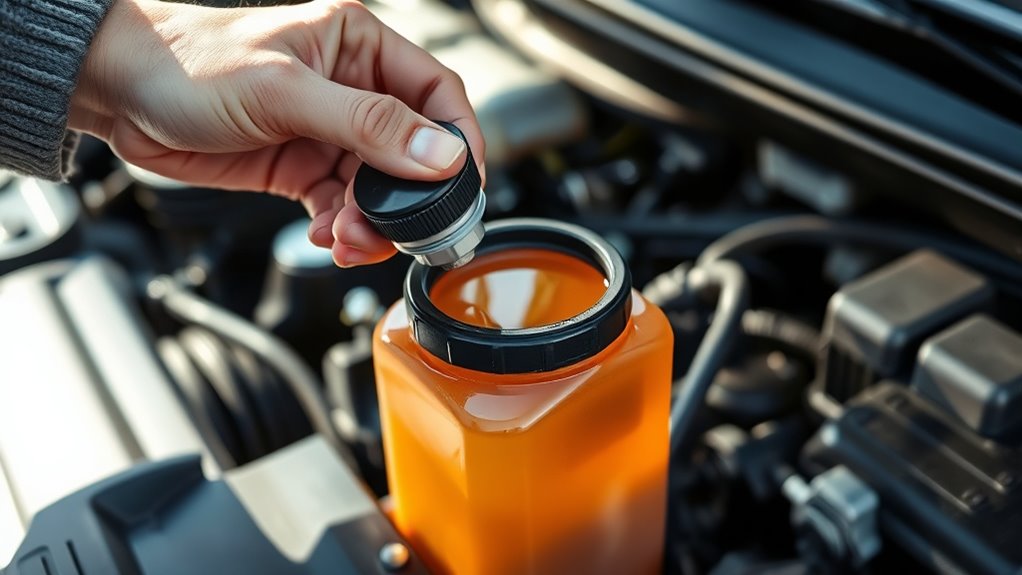
Low power steering fluid can give you some obvious signs that you shouldn’t ignore. If your steering feels stiff or takes more effort to turn, it’s probably time to check your fluid levels.
A whining or groaning noise when turning the wheel is another red flag, signaling that your fluid might be low and needs attention right away. If you see fluid leaks under your vehicle, that’s a clear sign of trouble that can impact your steering.
Regularly checking and maintaining your fluid is key to keeping your steering system running smoothly. Ignoring these signs can cause bigger problems later, like damaging the power steering pump.
What Tools You’ll Need to Check Your Fluid
To guarantee your power steering system stays in top shape, having the right tools makes checking your fluid level easy. Start with a clean rag or paper towels to wipe off the dipstick or reservoir cap. This helps prevent dirt from contaminating the fluid.
You’ll also want a funnel for adding fluid, especially if your reservoir’s neck is narrow. Before you begin, get familiar with the specific fluid types your vehicle recommends. Using the wrong kind can cause damage.
A basic mechanic’s toolset can come in handy if you need to make adjustments or replacements. Keep a container nearby for any spills during the process. Following these tips will help ensure your power steering system runs smoothly.
This will prolong its life and make your driving experience better. With the right tools, checking your fluid level is quick and straightforward.
Step 1: Locate the Power Steering Fluid Reservoir
Finding the power steering fluid reservoir is your first step in maintaining the system. The reservoir is usually located under the hood, near the engine. It’s important to know exactly where it is for more efficient maintenance. Check your car’s manual for specifics, since placement can vary by make and model.
| Car Type | Common Reservoir Location | Maintenance Tips |
|---|---|---|
| Sedans | Near the front, beside the engine | Inspect fluid level monthly |
| SUVs and Trucks | Near the driver’s side | Look for leaks around the area |
| Sports Cars | Close to the air intake | Use the recommended fluid type |
Knowing how to find the reservoir helps you monitor fluid levels easily. Regular checks can prevent steering issues and keep your driving smooth.
Step 2: Check Fluid Level With the Dipstick
Once you’ve found the power steering fluid reservoir, checking the fluid level is simple with the dipstick. First, remove the dipstick from the reservoir. Wipe it clean with a lint-free cloth to get an accurate reading.
Put the dipstick back into the reservoir and pull it out again to see where the fluid level is. Look for markings on the dipstick that show the right level for the fluid.
While you’re checking, also pay attention to the fluid’s color. Good power steering fluid should be clear with a reddish tint. If it looks dark or smells burnt, it might be time for a fluid change or maintenance.
Regularly checking the fluid level and color helps prevent steering problems and keeps your vehicle running smoothly and efficiently.
Step 3: Interpret Your Fluid Level Reading
Now that you’ve checked the fluid level, let’s see what it actually means. If your reading is within the normal range, you’re all set—everything looks good. But if you notice it’s on the low side, that could be a sign of something that might need fixing soon.
Normal Fluid Level Range
Understanding the normal fluid level range for your power steering fluid is key to keeping your vehicle running smoothly. Usually, the fluid should be between the “MIN” and “MAX” marks on the reservoir.
Keep an eye on the fluid color—it should be clear and amber. If it looks cloudy or dark, it might be a sign of contamination or wear.
Check the viscosity by feeling the fluid; it should be smooth and not gritty. Remember, hot fluid expands, so check the level when the engine is cool for an accurate reading.
Making a habit of inspecting your fluid level once a month helps ensure everything is functioning properly and prevents potential issues down the road.
Low Fluid Indicators
If you notice your power steering fluid level is below the “MIN” mark, it’s important to fix it quickly. Low fluid can make steering harder and might damage your system.
Common causes include leaks in the system, worn-out seals, and pump failure. To keep things running smoothly, regularly check your fluid levels and inspect hoses for wear and tear.
It’s also a good idea to replace the fluid as recommended to prevent issues. Keeping an eye on these tips can save you from bigger problems down the road.
Step 4: How to Safely Add Power Steering Fluid
To safely add power steering fluid, start by parking your vehicle on a level surface and turning off the engine. This helps you get an accurate reading and prevents spills.
Follow these simple steps for an easy process:
- Choose the Right Fluid Type: Check your owner’s manual to find out which fluid your vehicle needs.
- Locate the Reservoir: Open the hood and find the power steering fluid reservoir, usually marked with a steering wheel icon.
- Add Fluid Carefully: Use a funnel and pour the fluid slowly into the reservoir, making sure not to overfill.
- Check the Level Again: Wait a moment, then check the fluid level to ensure it’s within the recommended range.
Remember these tips to keep your power steering system working smoothly and avoid problems later on.
Step 5: Give Your Steering a Test Drive After Adding Fluid
Once you’ve added the fluid, it’s a good idea to take your car out for a little test drive. Just see how the steering feels—does it respond smoothly and easily? Also, listen out for any strange noises that might pop up. After your drive, make sure to check the fluid levels again to ensure everything’s still in good shape and running smoothly.
Check Steering Responsiveness
Now’s the time to hit the road and test how responsive your steering is. After adding fluid, it’s important to make sure your steering feels right. Here’s how to check for any responsiveness issues:
- Start Slow: Begin with gentle turns to see how the steering responds.
- Increase Speed: Gradually pick up speed, making sure the steering stays stable and responsive.
- Sharp Turns: Try sharper turns to see if the steering reacts quickly without resistance.
- Straight Line: Drive straight and watch for any pulling to one side, which could be a sign of a problem.
If you notice anything odd, it’s a good idea to look into it further. Smooth steering is key for safety and good control on the road.
Listen for Unusual Noises
As you take your steering for a test drive, pay close attention to any unusual noises that might arise. Steering noises can be early signs of problems with your power steering system.
If you hear whining, grinding, or clunking sounds, it could mean low fluid levels or a failing pump. These noises often indicate your fluid maintenance isn’t up to par, so it’s important to address them quickly.
Listen carefully as you turn the wheel and test both left and right turns to see if the sounds stay consistent. If anything feels off, don’t ignore it—investigating now can save you from bigger repairs later.
Stay attentive and proactive with your vehicle to keep it running smoothly.
Monitor Fluid Levels
Once you’ve addressed any unusual noises and added power steering fluid if needed, it’s important to keep an eye on those fluid levels. Regular maintenance helps ensure your steering stays smooth and responsive.
Start by checking the fluid level after a short drive to make sure it’s within the recommended range. Then, pay attention to how your steering feels— it should be easy and responsive.
Next, look under your vehicle for any signs of fluid leaks. Catching leaks early can save you from bigger issues down the road.
Finally, make checking your power steering fluid a regular habit. Consistent inspections help keep everything running smoothly and prevent potential problems.
Frequently Asked Questions
How Often Should I Check My Power Steering Fluid?
You should check your power steering fluid at least once a month as part of your maintenance routine. Regular inspections help you catch leaks or problems early on.
When you check the fluid, look for any discoloration or debris, and make sure it’s at the right level. Keeping an eye on it can save you from costly repairs later.
Don’t skip this step—it’s simple but important for keeping your steering smooth and your car running well.
Can I Use Any Type of Fluid for My Power Steering?
Think of your car’s power steering as a finely tuned orchestra, where each fluid plays its part. You can’t just toss in any fluid; it needs to be compatible with your power steering type.
Using the wrong fluid could lead to a symphony of problems, like leaks or pump damage. Always check your owner’s manual for the recommended fluid to guarantee harmony in your vehicle’s performance.
Keep the music playing smoothly!
What Happens if I Overfill the Power Steering Fluid?
If you overfill the power steering fluid, you might face serious damage to the system. The extra fluid can create pressure that leads to leaks or even burst seals.
Overflowing fluid can cause noisy steering, make the steering less responsive, and in worst cases, cause the system to fail. It’s really important to keep the fluid at the right level.
Regularly checking your fluid and adjusting it as needed will help avoid these costly problems. Keeping an eye on the fluid level ensures your steering system works smoothly.
Is It Safe to Drive With Low Power Steering Fluid?
Driving with low power steering fluid isn’t safe. You’ll face frustratingly stiff steering, making maneuvers tricky and tiresome.
Power steering symptoms like whining noises or delayed response can signal low fluid causes. If you ignore these signs, you risk serious steering system damage.
Where Can I Find the Correct Fluid Type for My Vehicle?
You can find the correct fluid type for your vehicle by checking the vehicle manual. It’ll list the fluid specifications you need.
If you don’t have the manual handy, consider looking online using your vehicle’s make and model. Many manufacturers provide this information on their websites.
Using the right fluid is essential for maintaining your power steering system, so make sure you confirm it before topping up.
Conclusion
Now that you’ve checked your power steering fluid, you might be wondering what to do if the level was dangerously low. A quick top-off can save you from costly repairs later on.
Imagine this: you’re driving, and suddenly your steering feels heavy and unresponsive. Don’t let that happen! Keeping your power steering fluid topped off ensures smooth handling and keeps your vehicle running well.
So, go ahead—take a quick test drive and see the difference. Maintaining proper power steering fluid levels is key to safe, easy steering. You won’t regret it!