Essential Tools Needed to Adjust Your Stihl Carburetor
Many Stihl chainsaw owners find adjusting their carburetor a bit intimidating. You’re not alone—this is a common challenge for DIY enthusiasts and professionals alike.
Luckily, with the right tools, you can tackle this task confidently and get your saw running smoothly again.
To adjust your Stihl carburetor, you’ll need a few essential tools. Grab a quality screwdriver set—both flathead and Phillips. A tachometer is vital for accurate RPM readings, while wrenches and sockets help you tighten everything properly.
Don’t forget cleaning supplies, like carburetor cleaner and soft brushes, for thorough maintenance.
Finally, wear safety goggles and gloves to protect yourself during the process.
If you want to learn about other important tips and tools, keep going!
Key Takeaways
- A quality screwdriver set is essential for accessing and adjusting the carburetor screws without causing damage. It makes the job easier and helps prevent stripping the screws.
- A tachometer helps accurately measure engine RPM, so you can tune the carburetor precisely for the best performance. It’s a handy tool for getting those numbers just right.
- Wrenches and sockets are necessary tools for smooth and precise carburetor adjustments. They give you the control you need to do the job right.
- High-quality cleaning supplies, including carburetor cleaner and brushes, ensure thorough cleaning of components. Clean parts are key to effective adjustments and proper engine function.
- Safety gear, such as goggles and gloves, is crucial to protect against chemicals and sharp edges during maintenance. Safety first helps you work confidently and avoid accidents.
How to Adjust Your Stihl Carburetor: Step-by-Step Guide
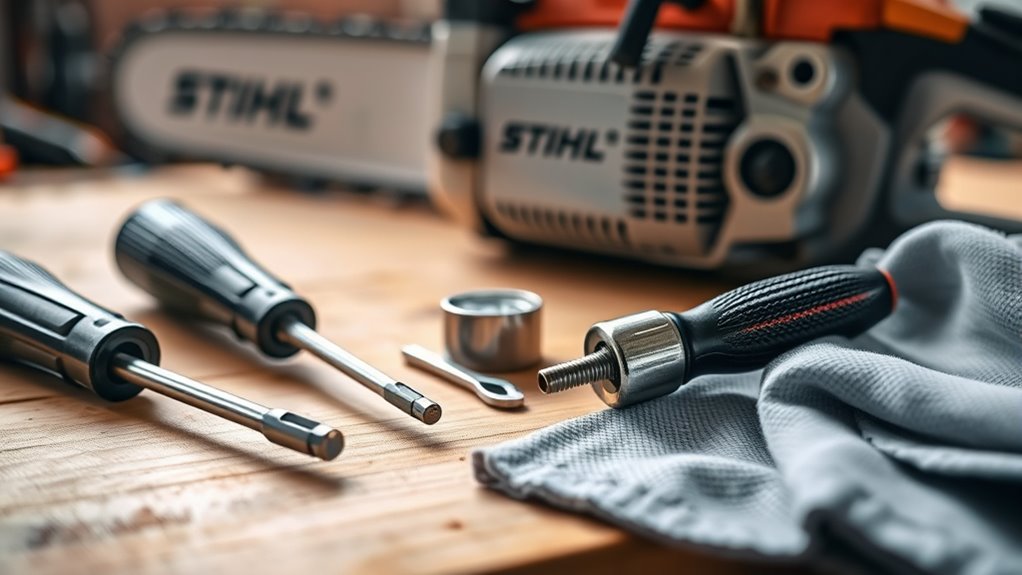
Adjusting your Stihl carburetor might look tricky, but it’s pretty simple and can really boost how well your machine runs. First, make sure your equipment is turned off and has cooled down. Check for any fuel leaks and inspect the air filter—keeping it clean helps your machine run smoothly.
Next, find the adjustment screws, which are usually labeled H (high) and L (low). To start, turn the L screw clockwise until it gently seats, then back it out about 1.5 turns. Do the same with the H screw, setting it about 1.5 turns out.
Start the engine and let it warm up. Then, fine-tune each screw for the best performance. Listen for a smooth idle and make small adjustments until everything runs steady. Regularly check your spark plug and keep the carburetor clean to make sure your Stihl stays in top shape.
Essential Tools for Stihl Carburetor Adjustments
When working on a Stihl carburetor adjustment, having the right tools makes a big difference. Start with a quality screwdriver set—both flathead and Phillips screwdrivers are needed to access the adjustment screws.
A tachometer is also essential for fine-tuning the engine speed and making sure everything runs smoothly. Don’t forget a clean cloth and carburetor cleaner for maintenance—keeping parts clean helps prevent common adjustment mistakes.
You might also want a fuel line wrench to disconnect fuel lines safely without causing damage. Plus, having a pair of pliers handy can help with any tricky connections you might encounter.
Screwdrivers: The Backbone of Carburetor Adjustments
Screwdrivers play an essential role in carburetor adjustments, as they allow you to access the important adjustment screws with ease. Different screwdriver types, including flathead and Phillips, cater to various screw configurations on your Stihl carburetor. Using the right type is vital; a mismatched screwdriver can strip screws, making adjustments difficult.
When you’re ready to adjust, employ specific adjusting techniques. Start by turning the screws gently to avoid damaging them. It’s also wise to keep track of how many turns you make so you can revert to the original settings if needed. A precision screwdriver can be especially helpful for fine-tuning adjustments in tighter spaces.
Ultimately, the right screwdriver not only simplifies the process but also improves your efficiency, ensuring your carburetor runs smoothly. So, stock up on the right types and master those adjusting techniques for peak performance!
Choosing the Right Carburetor Adjustment Tools
Selecting the right tools for carburetor adjustment is key to getting the best performance. You want to make sure you have the right equipment to keep your tools in good shape and optimize your carburetor’s function effectively.
Choosing the right tools for carburetor adjustment is essential for optimal performance and effective maintenance.
Here are three important tools to consider:
- Carburetor Adjustment Screwdriver: A specialized screwdriver helps you make precise adjustments easily.
- Tachometer: While we won’t dive deep into its use now, a tachometer is essential for fine-tuning engine speed.
- Cleaning Kit: Regularly maintaining your tools is important, and a cleaning kit keeps everything in top condition.
Investing in these tools not only boosts your carburetor’s performance but also prepares you for any adjustments. Remember, proper tool maintenance leads to better results, making your adjustments smoother and more efficient.
How to Use a Tachometer for Carburetor Adjustments?
Using a tachometer is really helpful when you’re working on your Stihl equipment’s carburetor. It gives you accurate readings of the engine’s RPMs, so you know exactly how fast your engine is running. This way, you can easily adjust the idle speed and get those high RPMs just right.
Having the right RPM readings means you can fine-tune your carburetor for the best performance. It’s all about making small tweaks to keep your engine running smoothly and efficiently. With a tachometer, you’ll feel more confident in your adjustments and get your equipment running like new.
Importance of Tachometer Usage
While you can make carburetor adjustments by ear, using a tachometer ensures precision and peak performance. It helps you monitor your engine’s RPM, making sure it’s running at its best.
Here are some key benefits of having a tachometer:
- Accurate Readings: You get real-time RPM data, so your adjustments are spot on.
- Better Engine Performance: Proper tuning boosts fuel efficiency and power.
- Consistent Results: It helps you repeat adjustments and keep your settings ideal over time.
With a tachometer, you can fine-tune your carburetor settings and improve your engine’s overall performance. It takes the guesswork out of tuning, so you can be confident in your adjustments. Make it a must-have in your toolkit!
Adjusting Idle Speed
Adjusting the idle speed of your Stihl carburetor is key to getting your engine to run smoothly. Using a tachometer makes this process much easier.
First, warm up your engine to its operating temperature. Attach the tachometer as per the manufacturer’s instructions, making sure it’s securely connected.
Next, look at the current idle speed while you adjust the idle mixture screw. You want the engine to respond smoothly without stalling, usually around 2,800 to 3,200 RPM for most models.
If the idle speed is too high or low, fine-tune it with the idle speed screw. Watch the tachometer as you make adjustments, aiming for a steady RPM that gives you the best performance.
Once you’re satisfied, double-check your settings to ensure everything is consistent and running optimally.
Fine-Tuning High RPMs
To get the best high RPM performance in your Stihl engine, it’s important to use a tachometer accurately when adjusting the carburetor. This tool helps you keep an eye on engine speed and ensures your carb is working at its best.
Start by warming up your engine. Let it reach its normal operating temperature before making any adjustments. This ensures your readings are accurate.
Next, increase the throttle gradually while watching the tachometer. Pay close attention to the RPM readings as you do this.
Finally, adjust the high-speed screw until you hit your desired RPM. Make sure the engine runs smoothly without hesitation or stalling.
Understanding Fuel and Oil Mix for Stihl Equipment
When it comes to your Stihl equipment, getting the fuel and oil mix just right is really important. If the ratio isn’t accurate, your tool might not run as smoothly, and it could even cause some damage over time. So, taking a little extra care to measure everything properly can make a big difference.
And don’t forget, using good-quality oil is key too. It helps your equipment run better and can really extend its lifespan. Overall, sticking to the right mix and using the best oil you can find will keep your Stihl gear working at its best for a long time.
Fuel Ratio Importance
Understanding the right fuel-to-oil ratio is key to getting the best performance from your Stihl equipment. A proper mix ensures your engine runs smoothly and efficiently, helping to reduce wear and tear.
If you don’t get the ratio right, your equipment can suffer. This might lead to performance issues and costly repairs down the line.
Most Stihl tools use a 50:1 ratio. Using too much oil can cause excessive smoke and fouled spark plugs, while too little oil can damage the engine and cause it to overheat.
Oil Quality Matters
Choosing the right oil is crucial for keeping your Stihl equipment running smoothly and lasting longer. Good-quality oil provides the proper lubrication, which reduces wear on engine parts.
Pay attention to oil viscosity because it affects how well your engine performs in different temperatures. Using the right viscosity helps your tools run smoothly and prevents engine problems.
Mixing oil with fuel at the correct ratio is just as important. Low-quality oil can cause deposits and clogging, which hurt performance. Always use manufacturer-recommended oils to keep your equipment in top shape.
Regularly check your oil and fuel mix to ensure your Stihl tools stay efficient. With the right oil, you’ll get better performance and extend the life of your equipment.
Selecting the Right Wrenches and Sockets
To guarantee a successful Stihl carburetor adjustment, choosing the right wrenches and sockets is key. Using the proper tools makes the process smoother and more efficient.
Make sure you have the right wrench types and socket sizes so you can handle any adjustments confidently. Having the right tools on hand can save you time and frustration.
An adjustable wrench is great because it works with various sizes, especially when dealing with different bolt dimensions. It’s a versatile choice for many tasks.
A socket wrench set with multiple sizes ensures you can fit any nut or bolt on your Stihl carburetor. It’s a handy collection to have for precise work.
A torque wrench helps you apply the correct amount of torque, preventing damage to delicate components. It’s essential for proper adjustments and safety.
Cleaning Supplies to Keep Your Carburetor Pristine
Having the right tools is only part of the equation when it comes to Stihl carburetor maintenance. To keep your carburetor in top shape, you need effective cleaning supplies.
Start with a high-quality carburetor cleaner; it will dissolve grime and deposits quickly. A soft brush can help you reach those tight spots, ensuring no residue is left behind.
Don’t forget about compressed air. It’s perfect for blowing out dirt and debris from tiny passages. A clean cloth is also essential for wiping down surfaces and removing excess cleaner.
For stubborn gunk, consider using a soak solution. Just make sure it’s safe for your carburetor materials.
Finally, keep a small container handy for organizing screws and parts during your cleaning process. Using these techniques will help your Stihl carburetor perform at its best and last longer, making maintenance smooth and easy.
Stay Safe: Essential Gear for Stihl Carburetor Work
Safety should always be your top priority when working on a Stihl carburetor. Making sure you have the right gear can make a big difference in your safety and efficiency. Start with proper equipment to protect yourself from potential hazards.
Here are some essential items to keep in mind:
- Safety goggles: Protect your eyes from debris and chemicals.
- Protective gloves: Keep your hands safe from sharp edges and fuel exposure.
- Workbench setup: Make sure your workspace is organized and stable to prevent accidents.
Also, remember to work in a well-ventilated area. Good airflow helps you avoid inhaling fumes from fuel or cleaning agents. It can reduce the risk of respiratory issues. By following these safety tips, you can confidently work on your Stihl carburetor while staying safe.
Best Sources for Stihl Carburetor Tools
With regard to finding the right tools for Stihl carburetor adjustments, you’ve got plenty of options. Your first stop should be authorized Stihl dealers, where you’ll find genuine parts and recommended tools tailored for your model.
Online retailers like Amazon and eBay also offer a variety of carburetor maintenance tools, including the best aftermarket tools that might fit your needs perfectly.
Don’t overlook local hardware stores; they often carry essential tools and can provide valuable carburetor maintenance tips from experienced staff.
Forums and online communities dedicated to Stihl products can also be great resources. They share insights on where to find the best tools and offer advice from fellow enthusiasts.
Whether you’re a DIYer or a seasoned pro, knowing where to source your tools can make all the difference in your carburetor adjustment process.
Frequently Asked Questions
What Symptoms Indicate a Stihl Carburetor Needs Adjustment?
If your Stihl’s engine struggles to start, runs rough, or stalls frequently, it’s time to check the carburetor. These are common signs that it might need some tuning.
You might also notice poor acceleration or reduced power when you’re using it. Those symptoms often point to carburetor adjustment being needed.
Excessive smoke or unusual fuel consumption are other clues. Addressing these signs quickly can help improve your engine’s performance.
Can I Adjust the Carburetor Without Special Tools?
Yes, you can adjust the carburetor without special tools. Understanding carburetor basics helps you know what adjustments are needed, and simple tuning tips can guide you.
You might use a screwdriver for the adjustment screws or even a small wrench for the bolts. Focus on the idle speed, mixture, and choke settings.
With patience and attention, you can achieve a well-tuned engine even without fancy equipment.
How Often Should I Clean My Stihl Carburetor?
You should clean your Stihl carburetor at least once a season for peak performance. If you use your equipment often or in dusty conditions, consider cleaning it more frequently.
Regular carburetor maintenance helps prevent buildup that can reduce engine efficiency. Keep an eye out for any changes in how your tool runs, as that might mean it’s time for a cleaning.
Keeping your carburetor clean ensures your tool runs smoothly and lasts longer.
Is It Safe to Use Non-Stihl Parts for Adjustments?
Using non-Stihl parts for adjustments isn’t always safe.
While aftermarket parts might seem tempting, they can hurt performance and reliability. These components might not fit properly or work as they should, which could cause damage.
It’s best to stick with original parts to keep your equipment running smoothly and efficiently. Always consider the trade-offs—you want your Stihl to perform at its best!
What Should I Do if Adjustments Don’T Resolve Issues?
If adjustments don’t fix your issues, give some troubleshooting a shot. First, double-check your adjustments to make sure they’re correct.
Look for common carburetor problems like clogged jets or a dirty air filter. Also, inspect your fuel lines for leaks or blockages and confirm you’re using the right fuel mix.
If you’re still having trouble, it might be time to call in a professional or think about replacing the carburetor altogether.
Conclusion
To sum up, having the right tools makes all the difference. With screwdrivers, wrenches, and a tachometer, you’re ready to fine-tune your Stihl carburetor with confidence.
Cleaning supplies keep everything in top shape, while safety gear protects you during the process.
So, gather your essentials, seize the task, and enjoy the satisfaction of a well-tuned Stihl carburetor.
Whether you’re a beginner or experienced, the right tools empower you to get great results.